-
Glass Fused To Steel Tanks (596)
-
Stainless Steel Tanks (434)
-
Fusion Bonded Epoxy Tanks (592)
-
Galvanized Steel Tanks (321)
-
Aluminum Dome Roofs (1336)
-
Wastewater Storage Tanks (232)
-
Welded Steel Tanks (457)
-
Pressure Vessels (295)
-
Anaerobic Digester (201)
-
Industrial Water Tanks (349)
-
Glass Lined Steel Tanks (180)
-
Bolted Steel Tanks (389)
-
Sludge Storage Tank (115)
-
Biogas Storage Tank (173)
-
Leachate Storage Tanks (133)
-
Agricultural Water Storage Tanks (179)
-
Fire Water Tank (166)
-
Grain Storage Silos (146)
-
Biogas Projects (425)
-
Wastewater Treatment Projects (908)
-
Double Membrane Roof (223)
|
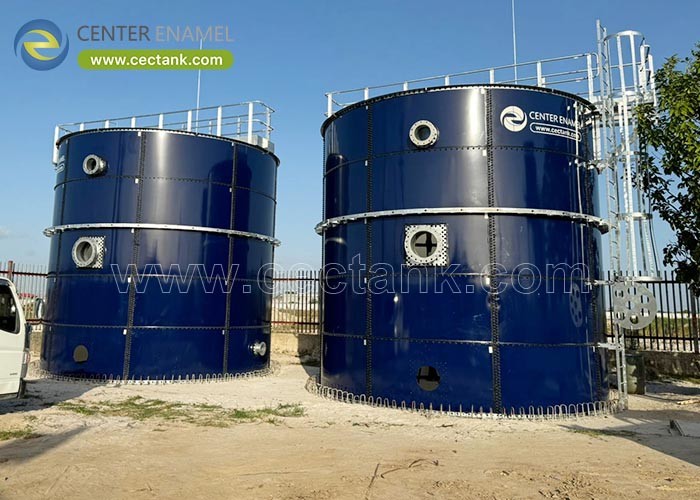
Bolted Steel Potable Water Storage Tanks: Engineering Safety & Reliability with Center Enamel
| Place of Origin: | China |
| Brand Name: | CEC TANKS |
| Certification: | ISO 9001:2008, AWWA D103 , OSHA , BSCI |
| Model Number: | W |
| Minimum Order Quantity: | 1set |
| Price: | $5000~$20000 one set |
| Packaging Details: | PE poly-foam between each two steel plates ; wooden pallet and wooden |
| Delivery Time: | 10-30 days after deposit received |
| Payment Terms: | L/C,T/T |
| Supply Ability: | 60 sets per month |
|
Detail Information |
|||
Product Description
For municipal water utilities, private developers, and industrial water providers, the containment of potable water is a mission-critical responsibility. The integrity of the storage system directly impacts public health, system uptime, and long-term operational costs. Bolted steel tanks have become the global industry standard for potable water storage, offering a sophisticated alternative to traditional concrete or field-welded steel tanks by combining factory-controlled precision with modular versatility.
Center Enamel, a leader in modular storage solutions, has standardized the engineering of these tanks to meet the most rigorous international safety and hygiene requirements.
Potable water systems require containment that is chemically inert, structurally robust, and resistant to environmental degradation. Center Enamel’s bolted steel tanks utilize advanced coating technologies—Glass-Fused-to-Steel (GFS) and Fusion-Bonded Epoxy (FBE)—to ensure zero-leaching and long-term structural integrity. These tanks are designed to meet AWWA D103 standards and are certified to NSF/ANSI 61, making them the premier choice for public drinking water supply, residential development, and emergency fire-water backup.
For decades, the water industry relied on poured concrete and field-welded steel. However, these methods often fail to keep pace with modern engineering standards. Bolted steel tanks provide distinct advantages:
-
Factory-Controlled Quality: Every panel is manufactured, grit-blasted, and coated in a climate-controlled facility. This eliminates the variables of on-site weather, humidity, and human error that often plague field-welded tanks.
-
Rapid, Modular Installation: Panels are containerized and shipped, then assembled using a top-down jacking method. This reduces construction time by up to 60% compared to traditional concrete construction.
-
Inert Surface Chemistry: Center Enamel’s GFS and FBE coatings are smooth, non-porous, and resistant to biofilm formation. This prevents the microbial growth often found in the cracks and porous surfaces of concrete reservoirs.
Potable water storage is strictly regulated to prevent contamination. Center Enamel’s infrastructure is engineered to satisfy the highest global compliance benchmarks, giving engineers and municipal stakeholders total peace of mind.
-
NSF/ANSI 61: The definitive standard for drinking water system components. This ensures that the tank materials (panels, gaskets, and sealants) do not leach harmful chemicals or contaminants into the water supply.
-
AWWA D103: The American Water Works Association standard for bolted carbon steel tanks. Compliance ensures the tank is engineered for site-specific seismic, wind, and hydrostatic loads.
-
ISO 28765: Governing the application and quality of vitreous enamel coatings, ensuring long-term corrosion resistance and thermal shock durability.
When evaluating the Total Cost of Ownership (TCO), bolted steel technology is consistently identified as the most efficient investment for municipal utilities.
| Feature | Center Enamel Bolted Tank | Field-Welded Steel | Poured Concrete |
| Coating Quality | Factory-Applied (Superior) | Field-Applied (Variable) | N/A (Porous) |
| Construction Time | Days to Weeks | Months | Months |
| Maintenance | Low (Minimal cleaning) | High (Periodic repainting) | High (Crack repair) |
| Seismic Performance | Excellent (Flexible) | Moderate | Moderate/Low |
| Potable Compliance | NSF/ANSI 61 Certified | Requires specialized liners | High leaching/Biofilm risk |
The longevity of a potable water tank is defined by its coating. Center Enamel employs two state-of-the-art technologies:
-
Glass-Fused-to-Steel (GFS): Silica-based enamel frit is fused to steel at 820°C–930°C. This creates an inorganic, molecular bond that is practically impervious to corrosion, oxidation, and UV degradation. It is the "gold standard" for municipal water towers and reservoirs.
-
Fusion-Bonded Epoxy (FBE): A high-performance thermoset polymer is electrostatically applied and cured, creating a cross-linked coating that offers exceptional mechanical durability and flexibility, ideal for various environmental conditions.
Q: Are bolted steel tanks safe for long-term potable water storage?
A: Yes. Center Enamel’s tanks are specifically engineered to comply with NSF/ANSI 61 requirements. The materials are inert, do not leach chemicals, and the smooth internal surface prevents bacterial accumulation, ensuring water remains safe for consumption.
Q: How do you prevent leaks at the panel joints?
A: We use high-grade, food-safe elastomeric sealants and high-tensile, self-locking bolts. These components are specifically tested for water-tightness and are designed to withstand the internal hydrostatic pressure and external structural loads of the tank.
Q: Can these tanks be expanded if the population grows?
A: Absolutely. One of the greatest benefits of the bolted design is modularity. A tank can be disassembled, moved, or vertically expanded by adding additional panel rings, allowing utilities to scale capacity without building new infrastructure from scratch.
Center Enamel is Asia’s leading manufacturer of modular bolted storage containment systems, with successful installations in over 100 countries. By holding nearly 200 proprietary patents and operating under strict ISO-certified quality frameworks, we provide the technical expertise required to solve complex municipal and industrial water challenges.
Whether you are upgrading aging infrastructure or designing a new water treatment plant, Center Enamel provides the engineering certainty you need to protect your community's most valuable resource.
Ready to start your project?
Contact our engineering team to discuss your capacity requirements, local seismic codes, and project timelines.