-
Glass Fused To Steel Tanks (596)
-
Stainless Steel Tanks (434)
-
Fusion Bonded Epoxy Tanks (592)
-
Galvanized Steel Tanks (321)
-
Aluminum Dome Roofs (1336)
-
Wastewater Storage Tanks (232)
-
Welded Steel Tanks (457)
-
Pressure Vessels (295)
-
Anaerobic Digester (202)
-
Industrial Water Tanks (349)
-
Glass Lined Steel Tanks (180)
-
Bolted Steel Tanks (389)
-
Sludge Storage Tank (115)
-
Biogas Storage Tank (173)
-
Leachate Storage Tanks (133)
-
Agricultural Water Storage Tanks (179)
-
Fire Water Tank (166)
-
Grain Storage Silos (146)
-
Biogas Projects (424)
-
Wastewater Treatment Projects (1078)
-
Double Membrane Roof (223)
|
Leading Wastewater Technology IC Process Empowers Brewery Wastewater Treatment Projects: High-Efficiency Biological Solutions
| Place of Origin: | China |
| Brand Name: | CEC TANKS |
| Certification: | ISO 9001:2008, AWWA D103 , OSHA , BSCI |
| Model Number: | W20161227006 |
| Minimum Order Quantity: | 1set |
| Price: | $5000~$20000 one set |
| Packaging Details: | PE poly-foam between each two steel plates ; wooden pallet and wooden box |
| Delivery Time: | 0-60 days after deposit received |
| Payment Terms: | L/C,T/T |
| Supply Ability: | 60 sets per month |
|
Detail Information |
|||
Product Description
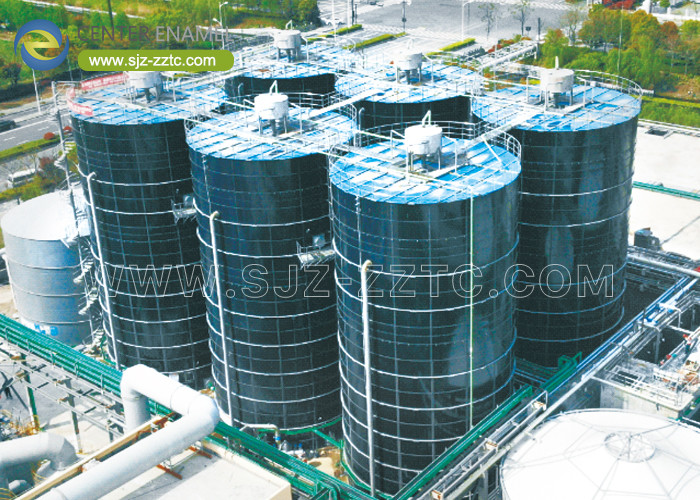
The production of beer and malt beverages is water-intensive, generating high volumes of complex, strength-variable industrial effluent. The leading wastewater technology IC (Internal Circulation) process empowers brewery wastewater treatment projects by delivering high-rate anaerobic digestion capable of handling massive organic loads within a compact physical footprint. Brewery wastewater is rich in dissolved sugars, starches, ethanol, and cleaning agents, resulting in exceptionally high Chemical Oxygen Demand (COD) and Biochemical Oxygen Demand (BOD). By combining advanced multi-stage anaerobic reactions with internal biogas-driven liquid circulation, IC reactors—housed in robust Glass-Fused-to-Steel (GFS) containment structures engineered by Center Enamel—enable breweries to achieve superior environmental compliance, lower operational expenditure (OpEx), and recover valuable renewable energy.
Brewing facilities face unique environmental and operational hurdles that render traditional wastewater treatment methods inefficient and costly:
-
Extremely High Organic Loadings (COD/BOD): Effluents from mashing, lautering, tank washing, and bottling contain concentrated organic residuals that create heavy oxygen-depleting loads in municipal sewer systems.
-
Drastic Flow and pH Fluctuations: Brewery operations involve batch production cycles, causing rapid swings in hydraulic flow rates, temperature, and pH (due to caustic and acidic cleaning chemicals).
-
Exorbitant Aerobic Energy Costs: Relying solely on conventional aerobic activated sludge systems to treat high-strength brewery waste demands continuous, high-energy mechanical aeration, leading to skyrocketing electricity bills.
The Internal Circulation (IC) reactor is an evolutionary leap beyond traditional Upflow Anaerobic Sludge Blanket (UASB) technology, operating essentially as a vertical stack of two anaerobic expansion chambers.
The defining feature of the IC process is its built-in self-circulation system. Biogas produced in the lower reaction chamber drives gas-lift liquid circulation, carrying water and sludge up to a gas-liquid separator at the top. The separated liquid is then recycled back to the bottom inlet via an internal downcomer pipe. This creates a high upflow velocity that expands the granular sludge bed, ensuring superior biomass-to-wastewater contact without external pumping equipment.
Because the IC reactor maintains high concentrations of active granular biomass, it can process organic loading rates three to five times higher than standard anaerobic systems. This allows brewery expansion projects to treat massive volumes of wastewater inside tall, space-saving vertical tanks.
During the anaerobic digestion of brewery sugars, the IC process converts up to 80% of removed COD into high-purity biogas ($CH_4$ and $CO_2$). Breweries can capture and utilize this methane-rich gas to fuel boiler systems, drastically reducing plant carbon footprints.
| Performance Metric | IC Anaerobic Reactor (Center Enamel GFS Tank) | Conventional UASB Reactor | Aerobic Activated Sludge System |
|---|---|---|---|
| Organic Loading Capacity | Very High (Handles peak brewery COD surges effortlessly) | Moderate | Low to Moderate |
| Footprint / Space Required | Compact (Tall vertical design saves valuable plant real estate) | Moderate | Very Large (Requires extensive aeration basins) |
| Energy Consumption | Low (Net energy producer via biogas generation) | Low | Very High (Continuous intensive mechanical aeration) |
| Resistance to Shock Loads | High (Internal circulation buffers pH and concentration spikes) | Moderate | Low (Vulnerable to toxic or shock organic loads) |
| Design Lifespan | 30–50+ Years (When housed in GFS bolted tanks) | 20–25 Years | 15–20 Years |
To ensure complete reliability under continuous industrial operation, Center Enamel supplies high-integrity Glass-Fused-to-Steel (GFS) and heavy-duty bolted steel tanks to house advanced IC treatment systems. All containment structures comply with premier international benchmarks:
-
AWWA D103: The definitive standard for bolted steel tank structural calculations.
-
ISO 28765: Dedicated to bolted steel tanks for liquid and wastewater storage.
-
ISO 9001: Guaranteeing stringent factory quality control and precision manufacturing management.
A: The IC (Internal Circulation) process is a high-rate anaerobic wastewater treatment technology that uses an internal circulation loop and specialized granular sludge to break down high-strength organic pollutants in brewery effluent efficiently.
A: IC reactors feature an internal circulation mechanism that handles significantly higher organic loading rates, provides better resistance to hydraulic and organic shock loads, and requires a much smaller physical footprint than standard UASB systems.
A: Yes. The anaerobic digestion taking place inside the IC reactor converts organic pollutants into methane-rich biogas, which breweries can capture and use as a renewable energy source to offset thermal and electrical requirements.
A: Center Enamel's Glass-Fused-to-Steel (GFS) tanks provide an inert, corrosion-proof interior surface that withstands aggressive chemical environments, alongside rapid modular erection and multi-decade structural durability.
At Center Enamel, we combine cutting-edge environmental engineering support with robust manufacturing capabilities to deliver high-performance containment solutions for brewery wastewater treatment and biogas recovery projects worldwide.
Are you planning a brewery wastewater upgrade or industrial effluent treatment project? Contact our engineering team today for a technical consultation, capacity sizing, and a customized proposal.