
-
Glass Fused To Steel Tanks (596)
-
Stainless Steel Tanks (434)
-
Fusion Bonded Epoxy Tanks (592)
-
Galvanized Steel Tanks (321)
-
Aluminum Dome Roofs (1336)
-
Wastewater Storage Tanks (232)
-
Welded Steel Tanks (457)
-
Pressure Vessels (295)
-
Anaerobic Digester (202)
-
Industrial Water Tanks (349)
-
Glass Lined Steel Tanks (180)
-
Bolted Steel Tanks (389)
-
Sludge Storage Tank (115)
-
Biogas Storage Tank (173)
-
Leachate Storage Tanks (133)
-
Agricultural Water Storage Tanks (179)
-
Fire Water Tank (166)
-
Grain Storage Silos (146)
-
Biogas Projects (424)
-
Wastewater Treatment Projects (1078)
-
Double Membrane Roof (223)

|
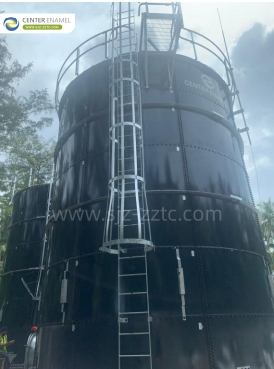
Advanced EPC Contractor with GFS Tanks for Malaysia’s Kitchen Waste Treatment
| Place of Origin: | China |
| Brand Name: | CEC TANKS |
| Certification: | ISO 9001:2008, AWWA D103 , OSHA , BSCI |
| Model Number: | W |
| Minimum Order Quantity: | 1set |
| Price: | $5000~$20000 one set |
| Packaging Details: | PE poly-foam between each two steel plates ; wooden pallet and wooden |
| Delivery Time: | 10-30 days after deposit received |
| Payment Terms: | L/C,T/T |
| Supply Ability: | 60 sets per month |
|
Detail Information |
|||
| Place of Origin | China | Brand Name | CEC TANKS |
|---|---|---|---|
| Certification | ISO 9001:2008, AWWA D103 , OSHA , BSCI | Model Number | W |
| Tank Body Color: | Dark Green / Can Be Customized | Corrosion Integrity: | Excellent |
| Steel Plates Thickness: | 3mm To 12mm , Depends On The Tank Structure | Chemical Resistance: | Excellent |
| Size Of Panel: | 2.4M * 1.2M | Easy To Clean: | Smooth, Glossy, Inert, Anti-adhesion |
| Highlight: | EPC contractor for kitchen waste treatment,GFS tanks for wastewater treatment,Malaysia kitchen waste treatment project |
||
Product Description
This article highlights cutting-edge kitchen waste treatment methodologies and advanced GFS tank containment solutions implemented across Malaysia. As an experienced EPC contractor, Center Enamel delivers integrated organic waste processing systems that convert food refuse into renewable bio-energy. Discover our innovative engineering designs, robust equipment manufacturing, and complete turnkey project capabilities. Learn how sustainable waste management technologies drive environmental excellence in the Malaysian market.
Kitchen waste is generated abundantly through daily household food preparation, bustling commercial restaurants, hospitality hotels, institutional canteens, municipal wet markets, and industrial food processing facilities. This waste stream poses severe handling challenges characterized by an extremely high moisture content of 80% to 95%, making it prone to rapid acidification and putrefaction. Furthermore, the material contains rich concentrations of organic matter, proteins, starches, and fats, alongside high levels of salt, chili residues, and acetic acid. Pathogenic bacteria and microorganisms proliferate rapidly within these substrates, creating persistent odors and attracting disease vectors if left untreated.
Effective kitchen waste management requires a structured, multi-stage process flow to achieve harmless reduction, volume minimization, and resource recovery. Operations commence with raw material collection, where heavy uncrushable objects are sorted out before dual-shaft crushers and multi-function crushing machines shred the material. Mixed pulping tanks and heating oil separator tanks condition the organic slurry, followed by mechanical solid-liquid separation and oil-water separation to extract valuable greases. The treated organic slurry is then directed into regulating tanks and pumped into anaerobic fermentation systems. Finally, generated biogas undergoes purification for energy utilization while digestates are dewatered and stabilized into safe solid residues and process water.
Center Enamel provides professional, bespoke engineering design solutions tailored specifically for complex kitchen waste treatment facilities. Our multidisciplinary design team formulates comprehensive layouts that integrate pre-processing, anaerobic digestion, biogas upgrading, and wastewater treatment into a cohesive operational workflow. Each engineering blueprint is optimized for high organic loading rates, energy efficiency, and strict regulatory compliance. By leveraging advanced simulation tools and industry expertise, we deliver customized plant designs that guarantee long-term reliability and maximum economic return for our clients.
The core biological stabilization of food waste relies heavily on the Continuous Stirred Tank Reactor (CSTR) anaerobic digestion process. This advanced technology maintains fermentation raw materials and active microorganisms in a completely mixed and suspended state inside a sealed reactor vessel. Continuous or semi-continuous feeding at controlled mesophilic temperatures ensures that high-solid organic slurries undergo stable, uniform degradation. The mechanical stirring mechanism prevents localized acidification, eliminates scum formation, and optimizes microbial contact, resulting in high biogas yields and exceptional organic matter reduction efficiency.
Glass-Fused-to-Steel (GFS) tanks provide the ultimate containment infrastructure for anaerobic digestion and biogas storage applications. Created by fusing specialized glass enamel onto premium steel plates at high temperatures of 820°C to 930°C, these tanks form an inseparable inorganic bond. This advanced double-coating layer structure (2C2F) merges the mechanical strength of steel with outstanding resistance to chemical corrosion and abrasion. GFS tanks offer rapid on-site bolting installation, extended service lifespans, minimal maintenance requirements, and full certification under international standards such as WRAS, ISO, FDA, NSF, and EN.
Center Enamel offers a diverse array of complementary storage tanks and specialized roof configurations to suit exact project specifications. Galvanized Steel Tanks utilize hot-dip galvanizing to deliver durable, wear-resistant protective layers with superior corrosion resistance. Fusion Bonded Epoxy (FBE) Tanks incorporate cutting-edge coating technology developed in collaboration with AkzoNobel for robust surface protection. Stainless Steel Tanks utilize high-grade AISI 304 or 316 stainless steel to handle ultra-pure liquids and aggressive chemical environments. For containment covers, Aluminum Geodesic Dome Roofs provide large clear spans and excellent weather resistance. Glass-Fused-to-Steel Roofs ensure superior air-tightness and odour control for enclosed tanks. Single and Double Membrane Roofs offer optimal biogas storage and airtight integration. Aluminum Alloy Trough Deck Roofs deliver economical protection against wind and rain without gas-tightness requirements. Stainless Steel Roofs provide maximum corrosion resistance in harsh industrial atmospheres. FRP Roofs offer versatile dome or flat cover options for non-pressurized applications.
Our project execution integrates a complete suite of specialized auxiliary equipment to ensure seamless plant operation. Gas Holders provide flexible, weather-proof storage for generated biogas. Dual-shaft Crushers tackle large, heavy, and unbreakable foreign items in the initial sorting phase. Multi-function Crushing and Sorting Machines separate light plastics and packaging debris from organic matter. Mixed Pulping Tanks prepare uniform feed slurries prior to digestion. Dehydration and Desulfurization Tanks eliminate moisture and hydrogen sulfide from raw biogas streams. Lifting Pumps ensure dependable fluid transfer across process stages. Submersible Mixers maintain consistent internal turbulence within fermentation tanks. Solid-liquid Separators efficiently dewater digested sludge fractions.
Center Enamel serves as a comprehensive one-stop solution provider, delivering turnkey execution for kitchen waste treatment plants worldwide. Our core capabilities encompass end-to-end engineering, proprietary manufacturing of storage tanks and mechanical equipment, technical consultation, and installation supervision. By maintaining complete oversight over product quality and supply chain logistics, we ensure optimal equipment integration and plant performance. Clients benefit from reduced project risks, single-point accountability, and dedicated technical assistance throughout the operational lifecycle of their facilities.
Deploying advanced kitchen waste treatment infrastructure is essential for achieving sustainable environmental management and renewable energy generation. Center Enamel combines innovative process engineering, world-class GFS tank manufacturing, and complete EPC capabilities to support Malaysia's green transition. By turning challenging organic waste into valuable resources, we help build resilient circular economies. Partner with Center Enamel to realize efficient, reliable, and future-proof environmental engineering projects.
Why are GFS tanks preferred over welded steel tanks for anaerobic digestion in Malaysia?
GFS tanks offer superior corrosion resistance against organic acids and hydrogen sulfide produced during anaerobic digestion, eliminating the need for periodic repainting and significantly lowering long-term maintenance costs.
What advantages does Center Enamel provide as a turnkey EPC contractor?
As a one-stop provider, Center Enamel coordinates every project phase from custom design and in-house manufacturing to equipment supply and installation guidance, ensuring seamless integration and quality control.
How are light plastic contaminants handled in the kitchen waste pre-treatment stage?
Multi-function crushing and sorting machines are employed in the initial treatment line to automatically separate and extract light plastics and films from the organic kitchen waste slurry before anaerobic digestion.