
-
Glass Fused To Steel Tanks (596)
-
Stainless Steel Tanks (434)
-
Fusion Bonded Epoxy Tanks (592)
-
Galvanized Steel Tanks (321)
-
Aluminum Dome Roofs (1336)
-
Wastewater Storage Tanks (232)
-
Welded Steel Tanks (457)
-
Pressure Vessels (295)
-
Anaerobic Digester (202)
-
Industrial Water Tanks (349)
-
Glass Lined Steel Tanks (180)
-
Bolted Steel Tanks (389)
-
Sludge Storage Tank (115)
-
Biogas Storage Tank (173)
-
Leachate Storage Tanks (133)
-
Agricultural Water Storage Tanks (179)
-
Fire Water Tank (166)
-
Grain Storage Silos (146)
-
Biogas Projects (424)
-
Wastewater Treatment Projects (1078)
-
Double Membrane Roof (223)
|
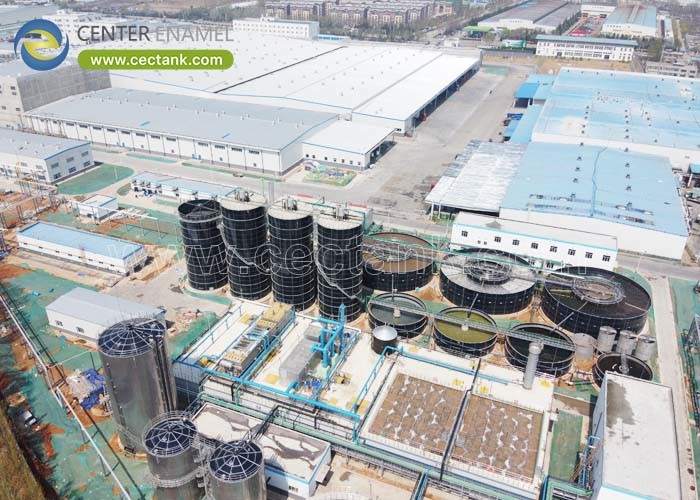
Glass-Fused-to-Steel Tanks (GFS): The Ideal Solution for Wastewater Treatment Plants
| Place of Origin: | China |
| Brand Name: | CEC TANKS |
| Certification: | ISO 9001:2008, NSF - 61 , AWWA D103 , OSHA , BSCI |
| Model Number: | W20160831001 |
| Minimum Order Quantity: | 1set |
| Price: | $5000~$20000 one set |
| Packaging Details: | PE poly-foam between each two steel plates ; wooden pallet and wooden box |
| Delivery Time: | 30 days after deposit received |
| Supply Ability: | 60 sets per month |
|
Detail Information |
|||
Product Description
A Glass-Fused-to-Steel (GFS) tank is a high-performance, modular containment vessel engineered specifically to withstand the punishing physical and chemical environments encountered in municipal and industrial wastewater treatment plants (WWTPs). Wastewater infrastructure operates under severe stress, where moisture, organic acids, and hydrogen sulfide gas (H_2S) can rapidly destroy ordinary carbon steel or porous concrete basins. By thermally fusing inorganic glass enamel to high-tensile structural steel panels at temperatures exceeding 800°C, Center Enamel delivers GFS tanks that combine unyielding structural strength with a non-porous, corrosion-proof vitreous glass shield designed for a multi-decade operational lifespan.
Designing and operating reliable wastewater treatment facilities involves overcoming major engineering hurdles:
-
Aggressive Chemical and Biological Corrosion: Wastewater streams contain complex mixes of industrial effluents, cleaning agents, and municipal waste. In anaerobic digestion or headspace zones, biological activity generates hydrogen sulfide, which converts to sulfuric acid and aggressively attacks unprotected metal and concrete.
-
Structural Integrity and Gastight/Liquid-Tight Sealing: Treatment tanks—whether equalization basins, clarifiers, or anaerobic digesters—must maintain an absolute seal under fluctuating hydrostatic pressures and varying operational temperatures.
-
Long-Term Maintenance Overhead: Traditional welded steel or cast-in-place concrete tanks require frequent draining, surface preparation, and periodic recoating to combat rust and structural micro-cracking, resulting in costly operational downtime.
The vitreous glass enamel fused to Center Enamel's steel panels creates an inert, chemical-resistant barrier. This surface is completely impervious to most acids, alkalis, and organic solvents, eliminating the need for periodic interior painting and maintenance.
Unlike monolithic concrete basins that require extensive formwork, steel reinforcement, and weeks of weather-dependent curing delays, GFS wastewater tanks arrive as pre-engineered modular kits. Local crews can erect massive tanks rapidly using standard bolting techniques, accelerating project commissioning schedules.
Center Enamel GFS tanks are easily configured with specialized nozzles, internal baffles, mixers, aeration bridges, and cover systems (such as aluminum geodesic domes or double-membrane gas holders), making them ideal for every phase of a wastewater treatment plant:
-
Primary Clarification & Equalization Basins
-
Aeration and Sequencing Batch Reactors (SBR)
-
Anaerobic Digestion and Biogas Storage
-
Sludge Thickening and Effluent Holding Tanks
| Performance Metric | Center Enamel GFS Tank | Cast-in-Place Concrete Basin | Field-Welded Carbon Steel Tank |
|---|---|---|---|
| Corrosion Resistance | Superior (Inert glass enamel barrier against acids & H_2S) | Moderate (Vulnerable to biogenic sulfuric acid attack) | Low (Requires continuous field coating maintenance) |
| Installation Speed | Fast (Prefabricated modular bolted kit) | Very Slow (Months of formwork and curing) | Slow (Extended field welding and testing) |
| Maintenance Requirements | Very Low (No periodic interior recoating required) | Moderate (Requires crack injection and waterproof sealing) | High (Requires continuous rust prevention and repainting) |
| Design Lifespan | 30–50+ Years | 20–25 Years | 15–20 Years |
| Future Expansion | High (Modular panels allow capacity upgrades) | None (Fixed monolithic structure) | Low |
To ensure complete reliability and satisfy municipal regulatory bodies, Center Enamel manufactures all GFS wastewater tanks in strict compliance with international engineering benchmarks:
-
ISO 28765: Dedicated to bolted steel tanks for liquid and sludge storage.
-
AWWA D103: The definitive standard for bolted steel tank structural calculations.
-
ISO 9001: Guaranteeing stringent factory quality control and precision manufacturing management.
A: GFS tanks combine the high tensile strength of structural steel with the chemical inertness of glass, providing superior resistance to aggressive wastewater chemicals, biological corrosion (H_2S), and rapid modular installation without concrete curing delays.
A: Yes. GFS tanks are highly versatile and widely deployed across all stages of wastewater treatment, including aerobic aeration basins, equalization tanks, and sealed anaerobic digesters.
A: Because all steel panels are precision-engineered and prefabricated in our factory, on-site assembly of a modular GFS tank is exceptionally fast—typically completed in a fraction of the time required for traditional concrete construction.
A: No. The high-temperature thermal fusion of glass enamel to steel creates a permanent, maintenance-free surface that does not require periodic interior recoating, significantly lowering long-term operating costs (OpEx).
At Center Enamel, we combine advanced manufacturing capabilities with deep environmental engineering expertise to deliver robust, high-performance, and cost-effective liquid storage and treatment solutions for municipal and industrial wastewater projects worldwide.
Are you planning a wastewater treatment plant upgrade or effluent containment project? Contact our engineering team today for a technical consultation, capacity sizing, and a customized proposal.



