-
Glass Fused To Steel Tanks (596)
-
Stainless Steel Tanks (434)
-
Fusion Bonded Epoxy Tanks (592)
-
Galvanized Steel Tanks (321)
-
Aluminum Dome Roofs (1336)
-
Wastewater Storage Tanks (232)
-
Welded Steel Tanks (457)
-
Pressure Vessels (295)
-
Anaerobic Digester (201)
-
Industrial Water Tanks (349)
-
Glass Lined Steel Tanks (180)
-
Bolted Steel Tanks (389)
-
Sludge Storage Tank (115)
-
Biogas Storage Tank (173)
-
Leachate Storage Tanks (133)
-
Agricultural Water Storage Tanks (179)
-
Fire Water Tank (166)
-
Grain Storage Silos (146)
-
Biogas Projects (425)
-
Wastewater Treatment Projects (1028)
-
Double Membrane Roof (223)
|
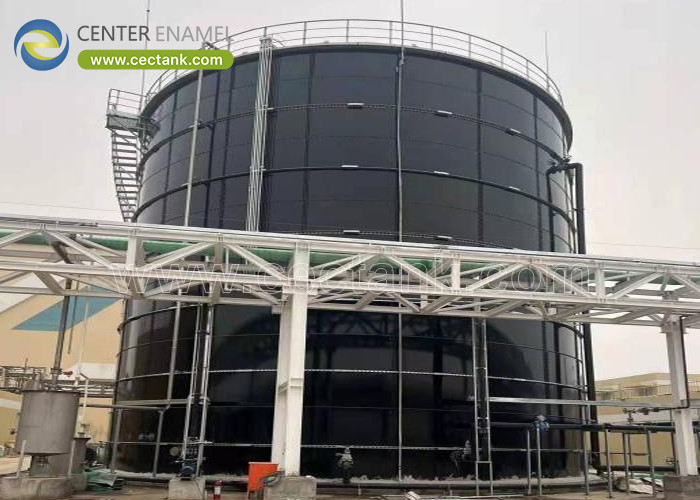
Cost-Effective Bolted Steel Tanks as EGSB Reactor and Wastewater Tanks
| Place of Origin: | China |
| Brand Name: | CEC TANKS |
| Certification: | ISO 9001:2008, AWWA D103 , OSHA , BSCI |
| Model Number: | W20160126004 |
| Minimum Order Quantity: | 1set |
| Price: | $5000~$20000 one set |
| Packaging Details: | PE poly-foam between each two steel plates ; wooden pallet and wooden box |
| Delivery Time: | 0-60 days after deposit received |
| Payment Terms: | L/C,T/T |
| Supply Ability: | 60 sets per month |
|
Detail Information |
|||
Product Description
-
High-Rate Anaerobic Excellence: Expanded Granular Sludge Bed (EGSB) reactors are the premier choice for high-strength organic wastewater treatment, demanding tall, tower-like vessels with precise hydraulic parameters.
-
The Bolted Steel Advantage: Prefabricated bolted steel tanks—primarily Glass-Fused-to-Steel (GFS)—provide a cost-effective alternative to concrete and welded steel, slashing CAPEX by up to 30% to 40% and reducing on-site construction timelines to days instead of months.
-
Structural Optimization: Engineered to easily withstand the high hydrostatic pressures associated with tall EGSB tower aspect ratios, using variable plate thicknesses that match the pressure gradient.
-
Key Standards: Fully compliant with global municipal and industrial standards including AWWA D103-09, ISO 28765, and regional seismic codes.
The Expanded Granular Sludge Bed (EGSB) reactor represents a major evolutionary step in high-rate anaerobic wastewater treatment. It is widely used in industries with high-load organic streams, such as breweries, paper and pulp mills, starch factories, and chemical processing plants.
Unlike its predecessor, the UASB (Upflow Anaerobic Sludge Blanket) reactor, an EGSB reactor features a much higher aspect ratio (height-to-diameter ratio typically > 3:1 or even 5:1) and utilizes high hydraulic recirculation. This design enables a significantly increased upflow velocity, expanding the granular sludge bed and keeping the biomass in a fluidized state. This fluidization maximizes wastewater-to-biomass contact, allowing the system to handle organic loading rates (OLRs) of up to 20 to 35 kg COD/m³·day.
The hydraulic upflow velocity is mathematically defined as:
To maintain the high $v_{up}$ required to fluidize the bed (typically 4 to 10 m/h), the reactor vessel must be structurally optimized as a tall, vertical tower.
Designing a tall EGSB reactor presents unique structural challenges. As the height of the tower increases, the hydrostatic pressure acting on the bottom walls increases linearly.
The hydrostatic pressure at any given height $z$ from the bottom of the tank is expressed as:
Because of this linear pressure gradient, the bottom of the reactor requires heavy structural support, while the upper rings can utilize thinner materials.
-
Graduated Plate Thickness: Bolted steel manufacturing allows engineers to vary the thickness of individual rings. The bottom rings can be made of thick, high-tensile steel plates to handle the maximum pressure $P(0)$, while the upper plates are progressively thinner. This minimizes material waste and lowers overall tank weight.
-
No On-Site Welding: Traditional welded steel towers require skilled field welders, radiographic weld testing (X-raying), and on-site sandblasting and coating. Bolted tanks are fully fabricated, pre-coated, and tested in a controlled factory environment, then bolted together on-site using specialized jacks.
-
Minimal Site Footprint: Because EGSB plants are often integrated into existing industrial facilities where space is tight, the top-down jacking method used to install bolted steel tanks is highly advantageous. It eliminates the need for massive scaffolding, heavy cranes, and large construction staging areas.
Selecting the correct material for the reactor wall is critical. The inner environment of an EGSB reactor is highly corrosive, characterized by organic acids, dissolved carbon dioxide, and hydrogen sulfide gas in the headspace.
| Performance Metric | Glass-Fused-to-Steel (GFS) | Fusion Bonded Epoxy (FBE) | Field-Welded Carbon Steel | Cast-in-Place Concrete |
|---|---|---|---|---|
| Corrosion Resistance | Excellent (pH 1–14) | Good (pH 3–11) | Poor (subject to HAZ corrosion) | Very Poor (acid etching and MIC) |
| High Aspect Ratio Suitability | Excellent (optimized plate grading) | Good | Moderate (highly labor-intensive) | Poor (requires massive formwork) |
| On-Site Install Timeline | Days to Weeks | Days to Weeks | Weeks to Months | Months (requires curing time) |
| Initial CAPEX | Low to Moderate | Lowest | High (due to field labor) | Extremely High (heavy civil works) |
| Lifespan | 30+ Years | 20 to 25 Years | 10 to 15 Years (needs repainting) | 15 to 20 Years (needs major liners) |
To function reliably as a high-rate EGSB reactor, a bolted steel tank must integrate several specialized engineering components:
The three-phase separator is located at the top of the EGSB tower. It separates treated effluent, biogas, and granular sludge, allowing the biomass to settle back into the digestion zone while the gas is captured. Bolted steel tanks are engineered with custom internal brackets and flanges to support the weight of this complex stainless steel or FRP separator assembly.
Because anaerobic digestion produces corrosive H_2S, Glass-Fused-to-Steel (GFS) is the preferred bolted tank option. The glass enamel coating is completely non-porous and chemically inert, meaning it remains unaffected by sulfuric acid condensation in the gas zone or organic acids in the liquid zone.
For biogas storage and pressure management, bolted EGSB tanks are easily fitted with Double Membrane Roofs. These roofs are designed to handle pressure fluctuations and integrate seamlessly with the top rim of the bolted steel plates.
Concrete is porous and highly susceptible to chemical etching from organic acids and microbial-induced corrosion (MIC) from H_2S gas. Additionally, concrete towers require extensive foundation preparation, structural formwork, and long curing times. Bolted steel tanks—specifically Glass-Fused-to-Steel—are chemically inert, fully pre-fabricated, and can be installed in a fraction of the time at a much lower cost.
Yes. Bolted steel tanks are custom-engineered for each project. By utilizing thicker, higher-grade steel plates for the lower rings of the tower and thinner plates for the upper sections, structural engineers can optimize the tank to withstand high hydrostatic pressures while keeping material costs to a minimum. All designs strictly comply with the AWWA D103-09 standard.
The seams of bolted steel tanks are sealed using high-durability, industrial-grade elastomeric sealants (polyurethane or silicone-based) combined with self-locking bolts. These sealants are highly resistant to the chemical compounds, temperatures, and pressures found in industrial wastewater treatment, ensuring long-term leak-proof performance.
Yes. Anaerobic digestion processes rely on stable mesophilic (35°C to 38°C) or thermophilic (50°C to 55°C) temperatures. Bolted steel tanks are easily insulated by installing external polyurethane insulation boards covered by protective aluminum or steel cladding panels, which can be completed during the standard jacking assembly.