-
Glass Fused To Steel Tanks (896)
-
Stainless Steel Tanks (434)
-
Fusion Bonded Epoxy Tanks (660)
-
Galvanized Steel Tanks (321)
-
Aluminum Dome Roofs (1336)
-
Wastewater Storage Tanks (280)
-
Welded Steel Tanks (457)
-
Pressure Vessels (485)
-
Anaerobic Digester (217)
-
Industrial Water Tanks (384)
-
Glass Lined Steel Tanks (180)
-
Bolted Steel Tanks (389)
-
Sludge Storage Tank (115)
-
Biogas Storage Tank (173)
-
Leachate Storage Tanks (133)
-
Agricultural Water Storage Tanks (179)
-
Fire Water Tank (166)
-
Grain Storage Silos (146)
-
Biogas Projects (424)
-
Wastewater Treatment Projects (1832)
-
Double Membrane Roof (223)

|
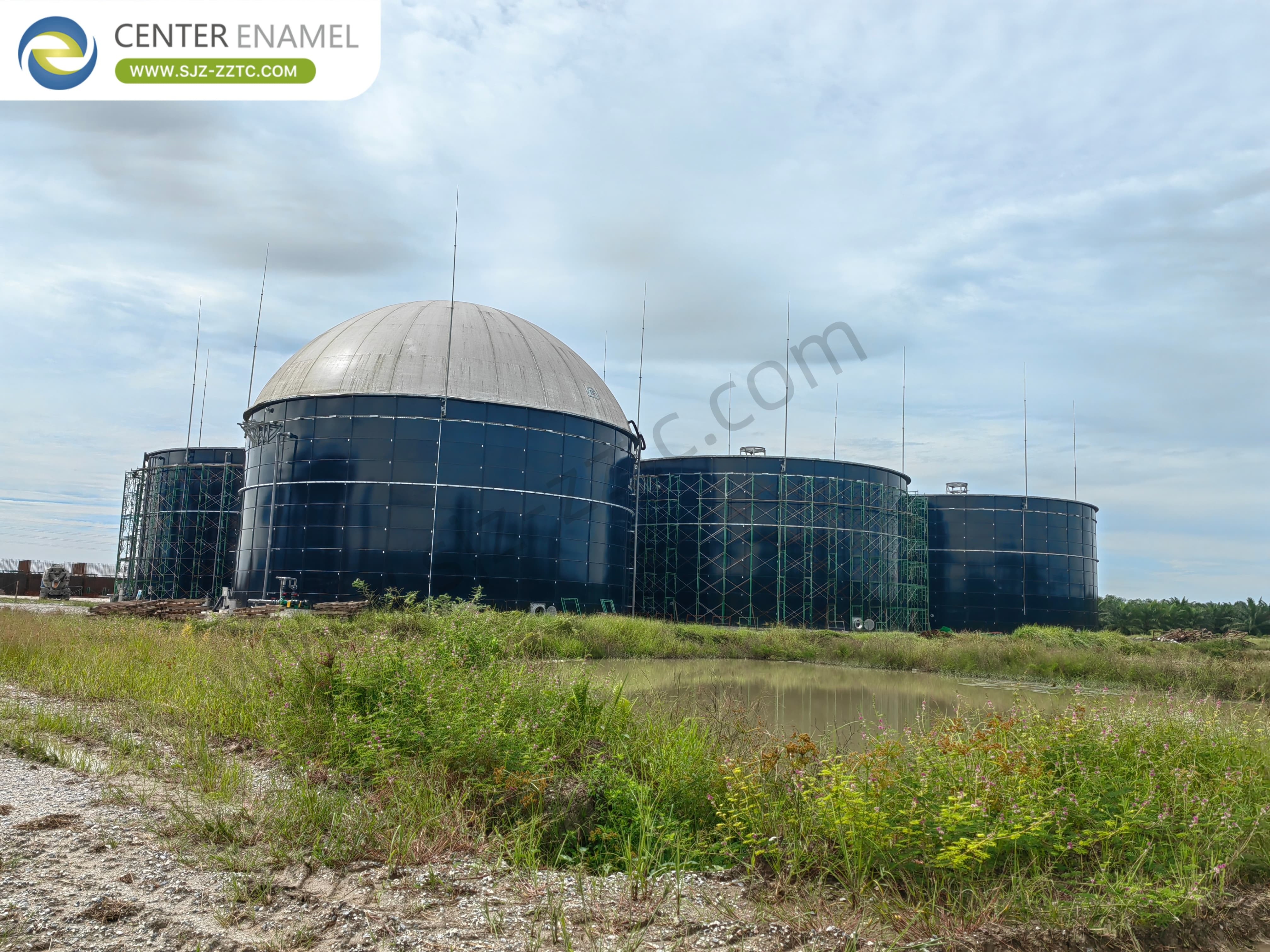
Turnkey Solution for Converting POME into Biogas in Papua New Guinea
| Place of Origin: | China |
| Brand Name: | CEC TANKS |
| Certification: | ISO 9001:2008, AWWA D103 , OSHA , BSCI |
| Model Number: | W |
| Minimum Order Quantity: | 1set |
| Price: | $5000~$20000 one set |
| Packaging Details: | PE poly-foam between each two steel plates ; wooden pallet and wooden |
| Delivery Time: | 10-30 days after deposit received |
| Payment Terms: | L/C,T/T |
| Supply Ability: | 60 sets per month |
|
Detail Information |
|||
| Place of Origin | China | Brand Name | CEC TANKS |
|---|---|---|---|
| Certification | ISO 9001:2008, AWWA D103 , OSHA , BSCI | Model Number | W |
| Tank Body Color: | Dark Green / Can Be Customized | Corrosion Integrity: | Excellent |
| Steel Plates Thickness: | 3mm To 12mm , Depends On The Tank Structure | Chemical Resistance: | Excellent |
| Size Of Panel: | 2.4M * 1.2M | Easy To Clean: | Smooth, Glossy, Inert, Anti-adhesion |
| Highlight: | POME biogas turnkey solution,POME wastewater treatment project,biogas conversion Papua New Guinea |
||
Product Description
Papua New Guinea’s palm oil industry is a vital economic driver, but it generates large volumes of palm oil mill effluent (POME) that threaten rivers and release methane into the atmosphere. This article explains how a complete turnkey solution converts POME into biogas, covering pretreatment, USR anaerobic digestion, gas utilization, GFS tanks, double membrane roofs, and auxiliary equipment. It also shows why Center Enamel’s integrated engineering, procurement, and construction model gives PNG mills a single, reliable partner from design to commissioning.
Papua New Guinea is a significant palm oil producer in the Pacific region, with large estates and smallholder blocks concentrated in West New Britain and Oro Province. Each tonne of fresh fruit bunches processed generates roughly 0.7–1 m³ of POME, a hot, acidic effluent loaded with organic matter, oil, and suspended solids. Many mills rely on open ponds and lagoons, which consume large land areas and release methane directly into the atmosphere. Methane is a far more potent greenhouse gas than CO₂, and poorly managed effluent can contaminate streams and coastal waters that local communities depend on for fishing and drinking. As environmental expectations tighten and energy costs rise, PNG mills are turning to closed anaerobic digestion to convert POME into biogas for on-site electricity and heat.
The conversion of POME into biogas starts with pretreatment, which protects downstream equipment and stabilizes the biological process. Raw effluent passes through a mechanical bar screen that removes fibers, shells, and large suspended solids capable of clogging pipes and damaging pumps. A horizontal flow oil separator then removes grease and floating oil, reducing the organic load on the reactor and preventing fatty acid accumulation that can inhibit methane-producing bacteria. The pretreated POME flows into a regulating tank, where flow rate, temperature, and pH are equalized to create consistent conditions for anaerobic digestion. This buffering step is essential because POME arrives hot and acidic, and sudden fluctuations can destabilize the microbial community. Only after these conditioning steps does the wastewater enter the anaerobic reactor, where bacteria break down organic matter and produce methane-rich biogas.
The Upflow Solids Reactor (USR) is specifically designed for organic wastewater with total solids content between 3% and 6%, making it an ideal match for raw POME. Inside the vertical, cylindrical tank, wastewater is distributed evenly across the bottom and flows upward through a dense bed of anaerobic sludge. Microorganisms digest the suspended organic particles, converting COD into biogas while the treated liquid exits through an outlet at the top. The reactor’s gas holder collects methane as it rises, and a recycle line maintains optimal upflow velocity to prevent sludge washout. For mesophilic digestion of POME, the volumetric loading rate should be designed at 3–5 kg COD/(m³·d) to balance treatment efficiency with process stability. The USR’s airtight roof and robust mixing design ensure reliable biogas production even when feed characteristics vary.
Raw biogas leaving the USR is saturated with water vapor and contains hydrogen sulfide, which is corrosive to engines and boilers. The gas first passes through a dehydration unit to remove moisture, followed by a desulfurization vessel filled with media that adsorbs H₂S. A booster fan then pressurizes the clean gas, and a flowmeter measures production for process control. The treated biogas can be routed to several end uses: a biogas generator produces electricity and heat for the mill, a boiler supplies hot water or steam for sterilization and clarification, or a flare provides safe destruction of surplus gas during maintenance. Capturing and utilizing this methane transforms an environmental liability into a reliable energy asset.
Two core products anchor every biogas project: Glass-Fused-to-Steel (GFS) tanks and double membrane roofs. GFS tanks are manufactured by fusing molten glass to steel at approximately 820–930°C, creating an inert, inorganic bond that combines steel’s structural strength with glass’s exceptional corrosion resistance. This dual-layer coating withstands the aggressive hydrogen sulfide, volatile fatty acids, and pH swings found inside anaerobic digesters, delivering a long service life. The double membrane roof is the preferred cover for USR tanks under normal operating conditions. Its outer membrane protects against weather while the inner membrane stores biogas directly above the digester, eliminating the need for a separate ground-mounted gas holder. This design reduces material costs, saves valuable land, and lowers foundation construction expenses.
Center Enamel offers a range of tank configurations to match specific project requirements and site conditions. Galvanized steel tanks provide a tough, wear-resistant coating for cost-sensitive applications where moderate corrosion resistance is sufficient. Fusion Bonded Epoxy (FBE) tanks, developed with AkzoNobel, deliver advanced coating technology for enhanced chemical resistance and long-term durability. Stainless steel tanks in AISI 304/316 are available for high-purity water storage or extremely harsh environments where glass and epoxy coatings may not be appropriate. This diversified portfolio allows every biogas project to specify the optimal tank material for its process stream, budget, and lifespan expectations.
Beyond digestion and storage, a fully functional biogas plant requires auxiliary equipment that ensures safety, efficiency, and byproduct management. A gas holder provides buffer storage to balance gas production against fluctuating demand. A black membrane lagoon handles excess liquid digestate, containing it safely while preventing groundwater contamination. A hot water boiler recovers heat from the biogas generator or burns biogas directly to supply process hot water. An emergency torch system safely burns off excess gas during upset conditions or maintenance, protecting the double membrane roof from overpressure. Lifting pumps transfer POME and sludge between process stages with reliability, while dehydration and desulfurization tanks house the media that clean the gas. Finally, a screw sludge dewatering machine separates digested sludge into a solid fraction suitable for composting or land application and a liquid fraction returned to the lagoon or used as fertilizer.
Center Enamel delivers complete, single-source biogas solutions rather than isolated equipment. As a turnkey solution provider, the company handles process design, equipment manufacturing, civil works coordination, installation, and commissioning under one contract, eliminating the interface risks and delays that plague multi-vendor projects. The USR and GFS tank technologies are developed and manufactured in-house, ensuring seamless compatibility between reactor design, roof selection, and gas handling equipment. With certifications including CE/EN1090, ISO9001, NSF61, WARS, and EN28765, and designs conforming to AWWA D103, OSHA, and EuroCode, every project meets rigorous international standards. Local support and spare parts availability in the Pacific region further reduce downtime and lifecycle costs. For PNG mills seeking a reliable partner to convert POME into biogas, this integrated capability translates directly into faster project delivery, lower total cost of ownership, and predictable operational performance.
Papua New Guinea’s palm oil industry faces mounting pressure to manage POME responsibly while controlling energy costs. Anaerobic digestion through the USR process offers a proven pathway to convert this high-strength wastewater into biogas, and the right infrastructure—GFS tanks, double membrane roofs, and complete auxiliary equipment—determines how reliably and economically that conversion performs. By choosing a turnkey solution provider with in-house engineering, manufacturing, and construction capabilities, PNG mills can transform an environmental burden into a long-term energy asset.
What is POME and why is it harmful to the environment?
Palm oil mill effluent is the wastewater generated during palm oil extraction. It contains extremely high organic matter, oil, and suspended solids. If released untreated, it depletes oxygen in water bodies, harms aquatic life, and releases methane, a potent greenhouse gas.
How much biogas can be produced from POME?
Biogas yield depends on POME characteristics and digestion conditions, but anaerobic digestion typically produces 20–28 m³ of biogas per m³ of POME, with methane content around 50–60%. This gas can generate electricity or heat for mill operations.
Can treated POME be used as fertilizer?
Yes. Digested POME contains nitrogen, phosphorus, potassium, magnesium, and calcium. After solid-liquid separation and appropriate stabilization, the liquid and solid fractions can be applied to palm plantations as organic fertilizer, closing the nutrient loop.