-
Glass Fused To Steel Tanks (882)
-
Stainless Steel Tanks (434)
-
Fusion Bonded Epoxy Tanks (622)
-
Galvanized Steel Tanks (321)
-
Aluminum Dome Roofs (1336)
-
Wastewater Storage Tanks (280)
-
Welded Steel Tanks (457)
-
Pressure Vessels (295)
-
Anaerobic Digester (202)
-
Industrial Water Tanks (349)
-
Glass Lined Steel Tanks (180)
-
Bolted Steel Tanks (389)
-
Sludge Storage Tank (115)
-
Biogas Storage Tank (173)
-
Leachate Storage Tanks (133)
-
Agricultural Water Storage Tanks (179)
-
Fire Water Tank (166)
-
Grain Storage Silos (146)
-
Biogas Projects (424)
-
Wastewater Treatment Projects (1650)
-
Double Membrane Roof (223)

|
Advanced EPC Contractor for Ethiopia Poultry Farm Wastewater Treatment
| Place of Origin: | China |
| Brand Name: | CEC TANKS |
| Certification: | ISO 9001:2008, AWWA D103 , OSHA , BSCI |
| Model Number: | W |
| Minimum Order Quantity: | 1set |
| Price: | $5000~$20000 one set |
| Packaging Details: | PE poly-foam between each two steel plates ; wooden pallet and wooden |
| Delivery Time: | 10-30 days after deposit received |
| Payment Terms: | L/C,T/T |
| Supply Ability: | 60 sets per month |
|
Detail Information |
|||
| Place of Origin | China | Brand Name | CEC TANKS |
|---|---|---|---|
| Certification | ISO 9001:2008, AWWA D103 , OSHA , BSCI | Model Number | W |
| Tank Body Color: | Dark Green / Can Be Customized | Corrosion Integrity: | Excellent |
| Steel Plates Thickness: | 3mm To 12mm , Depends On The Tank Structure | Chemical Resistance: | Excellent |
| Size Of Panel: | 2.4M * 1.2M | Easy To Clean: | Smooth, Glossy, Inert, Anti-adhesion |
| Highlight: | EPC Contractor for Poultry Farm Wastewater,Ethiopia Poultry Farm Wastewater Treatment,Poultry Farm Wastewater Treatment Project |
||
Product Description
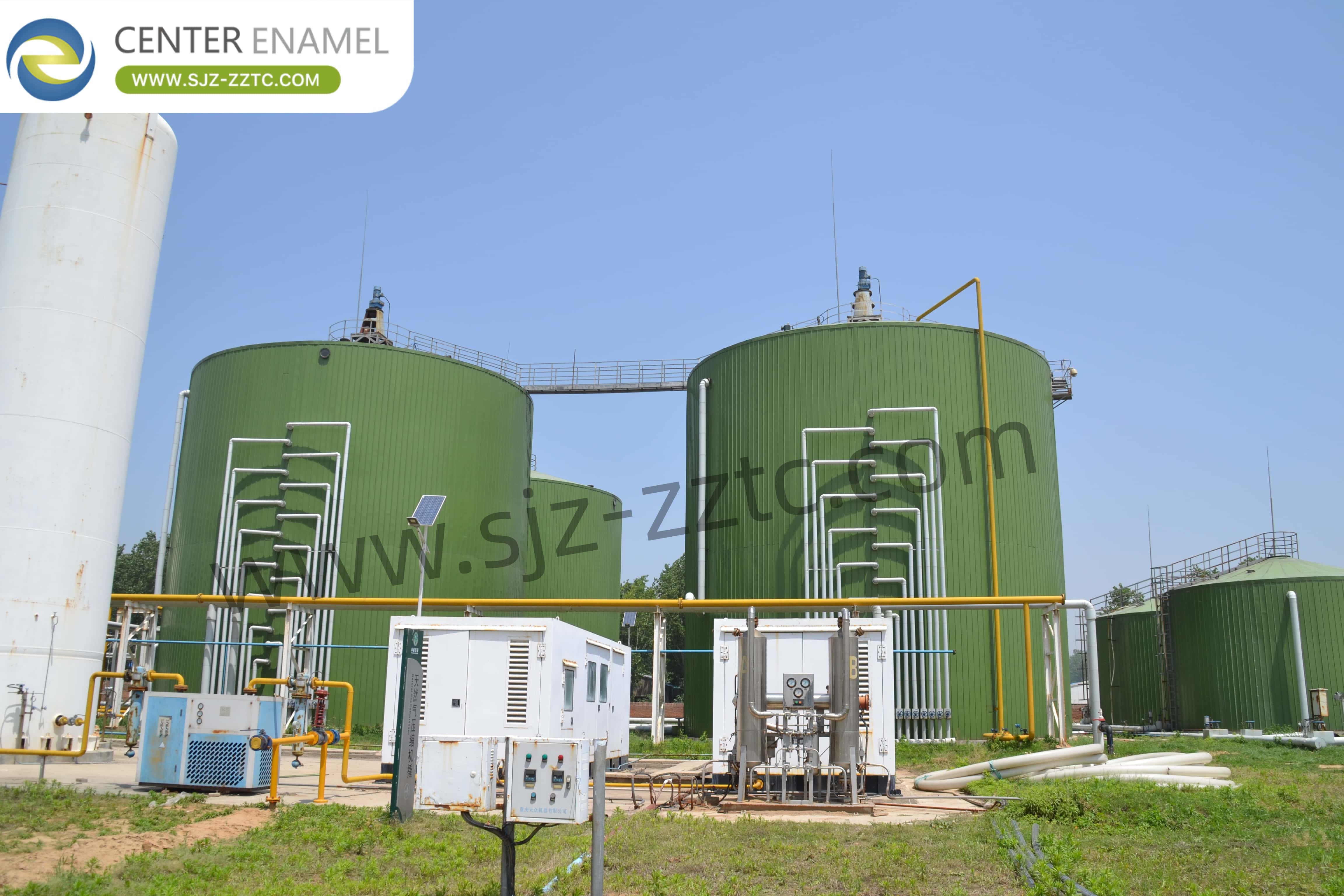
This article addresses the management of poultry farm wastewater in Ethiopia, presenting biogas production as a sustainable solution. It details the anaerobic digestion process, the importance of the CSTR Process, and the utilization of biogas. The piece highlights Center Enamel’s role as an EPC Contractor, showcasing how GFS Tanks, Double Membrane Roofs, and a full suite of equipment provide a robust, one-stop solution for Ethiopia's renewable energy and agricultural wastewater management needs.
Ethiopia’s growing poultry industry generates substantial quantities of wastewater daily. This effluent contains high concentrations of organic matter, nitrogen, and pathogens, posing a significant environmental challenge if not managed properly. Traditionally, poultry farm wastewater has been discharged into open pits or applied to land, leading to groundwater contamination, soil degradation, and unpleasant odors. As environmental regulations tighten and the demand for sustainable practices grows, poultry farmers and agricultural businesses are seeking more effective treatment solutions. Recognizing poultry farm wastewater as a valuable biomass resource rather than just waste is the first step toward a sustainable, circular economy in Ethiopia.
The transformation of poultry farm wastewater into biogas offers numerous advantages, including waste stabilization, renewable energy production, and odor control. The process begins with anaerobic digestion, where microorganisms break down organic matter in an oxygen-free environment. This digestion process stabilizes the waste, reducing its organic load and eliminating pathogens. The byproduct is biogas, a mixture primarily composed of methane and carbon dioxide. This biogas is a clean, renewable fuel. The process not only mitigates the environmental hazards of poultry wastewater disposal but also provides a decentralized energy source that can power farm operations or be used in the surrounding community.
The Continuous Stirred-Tank Reactor (CSTR) is the core technology used to convert poultry farm wastewater into biogas efficiently. This reactor is designed to process organic waste by maintaining a completely mixed environment. A mechanical stirring device ensures that the fermentation raw materials and microorganisms are fully mixed, promoting optimal digestion. The CSTR Process operates at a constant temperature and is fed continuously or semi-continuously. This allows it to effectively degrade organic matter with high suspended solids. The CSTR Process is renowned for its reliability and high biogas yield, making it a critical component in Ethiopia's agricultural wastewater treatment projects.
After generation, biogas requires treatment to remove moisture and sulfide before it can be utilized. The treated biogas is then ready for various applications. It can be directly combusted in a boiler to produce thermal energy for farm operations. It can also be used to drive a generator to produce electricity, reducing reliance on the grid. To prevent explosion risks, a flare system is employed to safely burn off excess gas. Furthermore, biogas can be purified to a methane content of over 95% and compressed into CNG, providing a high-value fuel for vehicles or industrial use.
For biogas projects in Ethiopia, Center Enamel offers two key solutions: GFS Tanks and Double Membrane Roofs. GFS (Glass-Fused-to-Steel) tanks are manufactured by firing glass at high temperatures to create a strong, inorganic bond with steel. This provides outstanding corrosion resistance and structural strength, making them ideal for storing poultry wastewater slurry and digestate. Double Membrane Roofs are the superior choice for anaerobic digestion, offering air-tightness for biogas collection and odor control. They are specifically designed to handle the pressure variations in biogas storage, ensuring a safe and efficient operation.
To cater to diverse project requirements, Center Enamel provides a range of roof and tank options. For roofs, we offer Aluminum Geodesic Dome Roofs for cost-effective protection, Glass-Fused-to-Steel Roofs for demanding applications, and Single/Double Membrane Roofs for flexible gas storage. For tanks, we supply Galvanized Steel Tanks for durability, Fusion Bonded Epoxy Tanks for advanced coating, and Stainless Steel Tanks for high-purity liquids. This extensive selection allows us to customize the optimal storage solution for any poultry farm wastewater treatment facility in Ethiopia.
A successful biogas plant relies on a suite of specialized equipment. Center Enamel provides all necessary components, including Gas Holders for gas storage, Black Membranes for flexible covers, and Solid-liquid Separators for digestate management. Our Lifting Pumps ensure efficient fluid handling, while Dehydration and Desulfurization Tanks clean the gas. Screw Sludge Dewatering Machines reduce waste volume, and Torch Systems provide critical safety. This comprehensive equipment ensures that every stage of the biogas process is covered, from input to final energy output.
Center Enamel serves as a comprehensive EPC Contractor for projects. Our advantages include:
For Ethiopia, converting poultry farm wastewater into biogas offers a dual benefit: effective waste management and renewable energy generation. Utilizing proven CSTR Process technology and robust GFS Tanks, this process can significantly reduce environmental pollution. With Center Enamel’s expertise as an EPC Contractor and a full range of equipment, Ethiopia can build efficient biogas facilities that turn a growing agricultural challenge into a sustainable source of power.