
-
Glass Fused To Steel Tanks (690)
-
Stainless Steel Tanks (434)
-
Fusion Bonded Epoxy Tanks (592)
-
Galvanized Steel Tanks (321)
-
Aluminum Dome Roofs (1336)
-
Wastewater Storage Tanks (237)
-
Welded Steel Tanks (457)
-
Pressure Vessels (295)
-
Anaerobic Digester (202)
-
Industrial Water Tanks (349)
-
Glass Lined Steel Tanks (180)
-
Bolted Steel Tanks (389)
-
Sludge Storage Tank (115)
-
Biogas Storage Tank (173)
-
Leachate Storage Tanks (133)
-
Agricultural Water Storage Tanks (179)
-
Fire Water Tank (166)
-
Grain Storage Silos (146)
-
Biogas Projects (424)
-
Wastewater Treatment Projects (1389)
-
Double Membrane Roof (223)

|
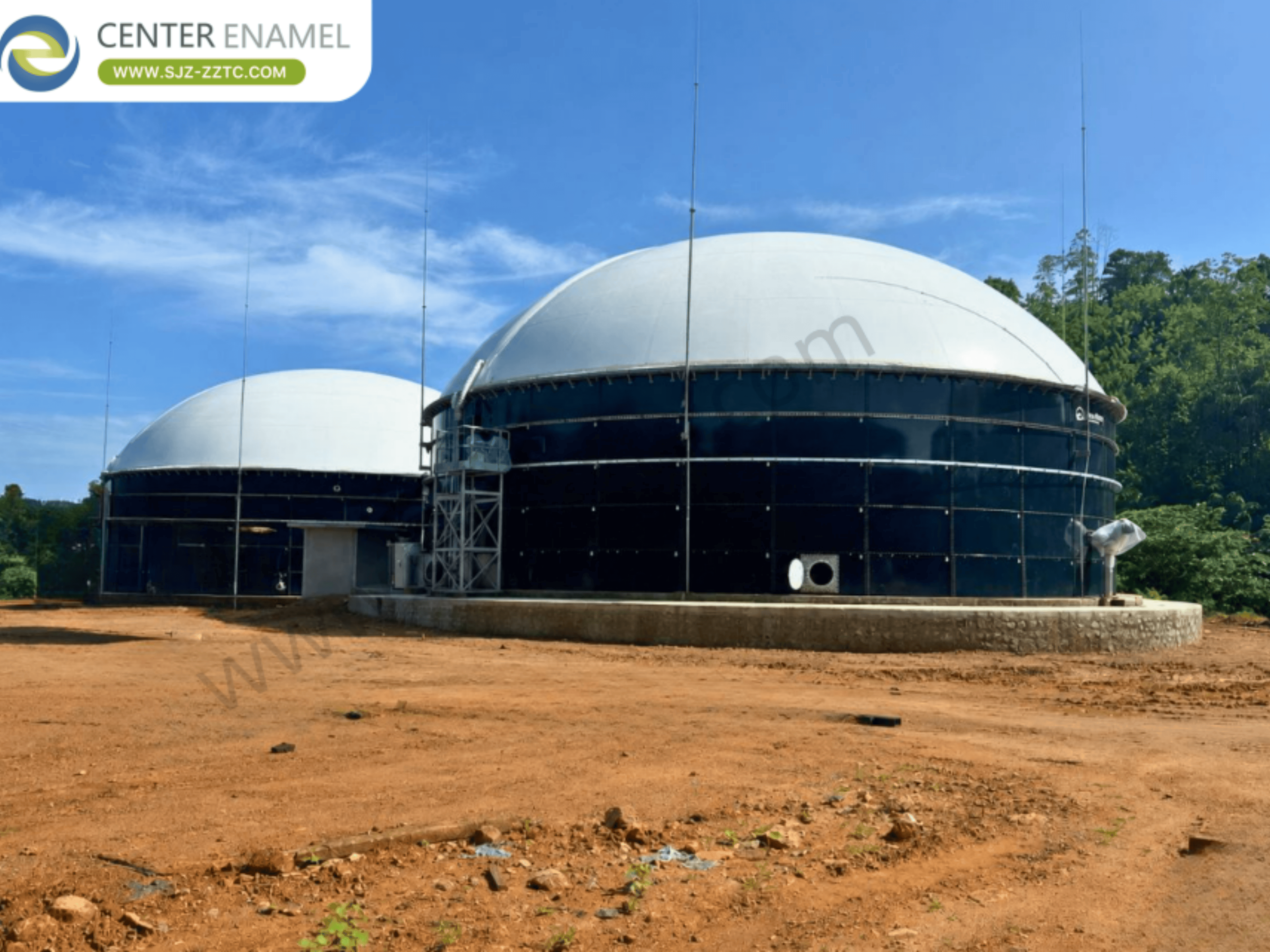
Bagasse into Biogas in Thailand: GFS Tanks by a Trusted Biogas Solution Provider
| Place of Origin: | China |
| Brand Name: | CEC TANKS |
| Certification: | ISO 9001:2008, AWWA D103 , OSHA , BSCI |
| Model Number: | W |
| Minimum Order Quantity: | 1set |
| Price: | $5000~$20000 one set |
| Packaging Details: | PE poly-foam between each two steel plates ; wooden pallet and wooden |
| Delivery Time: | 10-30 days after deposit received |
| Payment Terms: | L/C,T/T |
| Supply Ability: | 60 sets per month |
|
Detail Information |
|||
| Place of Origin | China | Brand Name | CEC TANKS |
|---|---|---|---|
| Certification | ISO 9001:2008, AWWA D103 , OSHA , BSCI | Model Number | W |
| Tank Body Color: | Dark Green / Can Be Customized | Corrosion Integrity: | Excellent |
| Steel Plates Thickness: | 3mm To 12mm , Depends On The Tank Structure | Chemical Resistance: | Excellent |
| Size Of Panel: | 2.4M * 1.2M | Easy To Clean: | Smooth, Glossy, Inert, Anti-adhesion |
| Highlight: | bagasse biogas conversion Thailand,GFS tanks wastewater treatment,trusted biogas solution provider |
||
Product Description
Thailand's thriving sugarcane industry produces millions of tons of bagasse each year, presenting both a waste management challenge and a significant renewable energy opportunity. Through advanced anaerobic digestion technology, this fibrous agricultural byproduct can be efficiently converted into biogas, providing sustainable energy for the nation. This article explores how a professional Biogas Solution Provider, utilizing premium GFS Tanks and comprehensive EPC solutions, can transform Thai bagasse into clean energy while supporting the country's renewable energy goals under the Alternative Energy Development Plan (AEDP).
Bagasse is the dry, fibrous residue remaining after sugarcane stalks are crushed to extract their juice. In Thailand, one of the world's leading sugar producers, bagasse is generated in massive quantities at sugar mills across the central plains and northeastern regions. This lignocellulosic biomass typically contains 30-50% cellulose, 20-35% hemicellulose, and 15-25% lignin, making it an excellent substrate for anaerobic digestion. Traditionally used as a low-value boiler fuel, bagasse is increasingly recognized for its potential in biogas production. Under Thailand's AEDP, which targets increased renewable energy deployment, bagasse-to-biogas projects are gaining momentum. Thai sugarcane plantations produce sufficient residues to support large-scale biogas operations, offering a pathway to convert agricultural waste into energy while reducing environmental impacts from open burning.
Converting bagasse into biogas involves a carefully controlled biological process known as anaerobic digestion, which occurs in the absence of oxygen. The process proceeds through four distinct stages: hydrolysis, acidogenesis, acetogenesis, and methanogenesis. Specialized microorganisms break down the complex organic compounds in bagasse, producing biogas primarily composed of methane and carbon dioxide. Studies have demonstrated that sugarcane bagasse is a highly suitable substrate, achieving methane ratios up to 81.6% under optimal conditions. The biogas produced can be utilized for electricity generation, heat production, or upgraded to biomethane for vehicle fuel. By converting this abundant agricultural waste into energy, Thailand can significantly reduce its environmental footprint while creating a new, sustainable energy stream that supports national energy security and the circular economy.
The Continuous Stirred-Tank Reactor (CSTR) is a core processing unit that effectively converts organic waste into biogas through the action of anaerobic microorganisms. CSTR is an anaerobic treatment technology specifically designed to handle challenging feedstocks like bagasse, keeping fermentation raw materials and microorganisms fully mixed in a closed tank. The reactor is equipped with a mechanical stirring device that continuously agitates the slurry, preventing the formation of floating scum layers and ensuring uniform distribution of nutrients and microorganisms. By feeding continuously or semi-continuously at a constant temperature—typically under mesophilic conditions around 38°C—the CSTR maintains a stable fermentation environment. This continuous mixing maximizes biogas production and ensures consistent operation, making it ideal for large-scale industrial applications in Thailand's sugarcane sector.
For biogas projects handling corrosive feedstocks and requiring durable infrastructure, Glass-Fused-to-Steel (GFS) Tanks are the preferred solution. The glass coating is fused to steel at extremely high temperatures, creating a vitreous, non-porous, and chemically resistant surface that withstands the corrosive environment inside digesters, including hydrogen sulfide and volatile fatty acids. These tanks are delivered as prefabricated panels and bolted together on-site, allowing rapid assembly even in remote locations. The Double Membrane Roof serves as the standard gas holder for biogas collection, providing significant advantages: cost optimization by directly reducing roof costs, excellent space efficiency by eliminating the need for separate ground-mounted gas holders, and integrated design that saves foundation construction costs. This combination is particularly advantageous for Thai farms where land and budget considerations are paramount.
As a leading Biogas Solution Provider, Center Enamel offers a diverse range of storage tank options to suit various project requirements. Galvanized Steel Tanks provide a tough, wear-resistant protective coating offering superior corrosion resistance. Fusion Bonded Epoxy Tanks, developed with AkzoNobel, deliver innovative coating technology. Stainless Steel Tanks (AISI 304/316) meet stringent requirements for high-purity applications. Regarding tank covers, multiple solutions are available: the Aluminum Geodesic Dome Roof features advanced corrosion resistance and cost-effective construction; the Glass-Fused-to-Steel Roof delivers air-tightness suitable for pressurized structures and demanding applications; Single and Double Membrane Roofs offer superior performance for anaerobic digestion processes; the Aluminum Alloy Trough Deck Roof serves as an economical option for potable water and wastewater storage; Stainless Steel Roofs provide super anti-corrosion performance and long service life; and FRP Roofs suit applications where air-tightness is not required.
A complete bagasse-to-biogas plant requires a range of auxiliary equipment for efficient operation. Gas Holders store biogas and maintain constant pressure for stable flow. Torch Systems safely combust excess biogas or during maintenance. Lifting Pumps transport feedstocks into the digester. Black Membrane serves for digestate storage or lagoon covers. Dehydration and Desulfurization Tanks remove moisture and hydrogen sulfide from biogas, protecting downstream equipment. Solid-liquid Separators separate liquid fertilizer from digestate solids for agricultural use. Screw Sludge Dewatering Machines further process digestate, reducing sludge volume for easier handling and disposal. These components work in concert to ensure the entire biogas production chain operates smoothly and efficiently.
As an experienced Biogas Solution Provider, Center Enamel delivers comprehensive turnkey solutions for bagasse-to-biogas projects in Thailand:
- Complete EPC Services: Managing all phases from engineering and procurement to construction and commissioning, ensuring seamless project delivery with a single accountable contractor.
- Premium Equipment Manufacturing: Producing high-quality GFS Tanks and related equipment that withstand Thailand's tropical conditions and corrosive feedstocks, with a production capacity exceeding 250,000 sheets annually.
- Customized Engineering Designs: Tailoring systems to match specific waste volumes, land availability, and energy requirements in different Thai regions, with high anti-corrosion materials suitable for the tropical climate.
- Rapid Construction Capability: Utilizing bolted assembly methods that eliminate on-site welding, enabling installation of a typical 3,000m³ to 5,000m³ tank in just 2-3 weeks.
- International Certifications: Holding CE/EN1090, ISO9001, NSF61, and EN28765 certifications, adhering to AWWA D103, OSHA, and EuroCode standards.
- Full Lifecycle Support: Providing design, manufacturing, installation, commissioning, and long-term after-sales support, reducing client coordination difficulty and investment risks.
Transforming bagasse into biogas presents a significant opportunity for Thailand to convert agricultural waste into sustainable energy. By leveraging advanced CSTR technology, durable GFS Tanks, and integrated EPC services, projects can achieve high biogas yields while addressing environmental challenges. A professional Biogas Solution Provider like Center Enamel ensures efficient project execution, reliable equipment, and long-term operational stability, supporting Thailand's renewable energy goals.


