-
Glass Fused To Steel Tanks (659)
-
Stainless Steel Tanks (434)
-
Fusion Bonded Epoxy Tanks (592)
-
Galvanized Steel Tanks (321)
-
Aluminum Dome Roofs (1336)
-
Wastewater Storage Tanks (237)
-
Welded Steel Tanks (457)
-
Pressure Vessels (295)
-
Anaerobic Digester (202)
-
Industrial Water Tanks (349)
-
Glass Lined Steel Tanks (180)
-
Bolted Steel Tanks (389)
-
Sludge Storage Tank (115)
-
Biogas Storage Tank (173)
-
Leachate Storage Tanks (133)
-
Agricultural Water Storage Tanks (179)
-
Fire Water Tank (166)
-
Grain Storage Silos (146)
-
Biogas Projects (424)
-
Wastewater Treatment Projects (1359)
-
Double Membrane Roof (223)
|
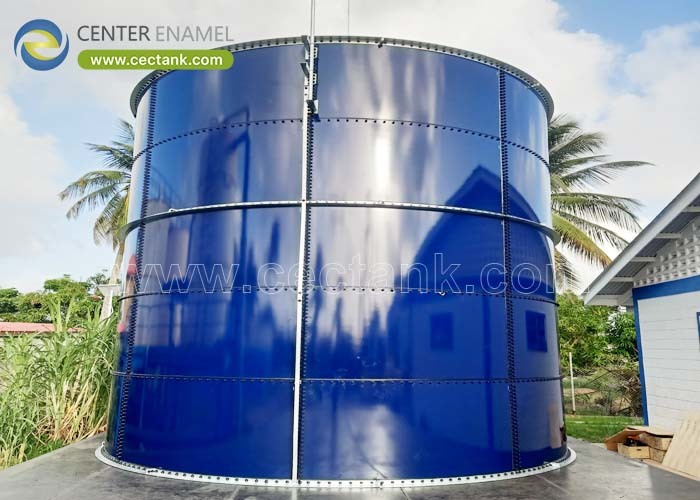
Fire Water Tank NFPA and FM Compliant Bolted Fire Protection Storage
| Place of Origin: | China |
| Brand Name: | CEC TANKS |
| Certification: | ISO 9001:2008, AWWA D103 , OSHA , BSCI |
| Model Number: | J2016012106 |
| Minimum Order Quantity: | 1set |
| Price: | $5000~$20000 one set |
| Packaging Details: | PE poly-foam between each two steel plates ; wooden pallet and wooden box |
| Delivery Time: | 0-60 days after deposit received |
| Payment Terms: | L/C,T/T |
| Supply Ability: | 60 sets per month |
|
Detail Information |
|||
Product Description
A fire protection system is only as reliable as its water supply. Sprinklers, hydrants, and deluge systems depend on a reserve that must be available at a moment's notice, year after year — yet many fire water tanks corrode quietly from the inside until the day they are needed most. Unlined steel rusts, field coatings fail at seams, and concrete reservoirs crack and leak, often without visible warning.
Bolted steel fire water tanks from Shijiazhuang Zhengzhong Technology Co., Ltd (Center Enamel) are engineered to NFPA 22 and FM requirements, with factory-applied corrosion protection that keeps the reserve clean and ready for decades. The GFS or FBE surface resists internal corrosion without recoating cycles, and the bolted design erects in weeks on almost any site. Center Enamel has delivered fire protection tanks worldwide — including the tallest GFS tank supplied by an Asian manufacturer, 34.8 m high in Indonesia (2018) — since 2008.
Fire water tanks must meet code requirements that dictate capacity, structural integrity, seismic performance, and water quality.
- NFPA 22: the governing standard for water tanks for private fire protection, covering design, construction, installation, and maintenance of steel and other tank types.
- FM Global (FM) approvals: many industrial and commercial facilities require FM-approved tanks and foundations for insurance compliance.
- NSF/ANSI 61: when the fire reserve is shared with potable supply or must meet drinking water contact standards, the tank surface must be NSF/ANSI 61 certified.
- Seismic and wind design: fire tanks must survive the event that triggers them; FEA-verified design to local codes is mandatory.
Bolted steel fire tanks combine code compliance, corrosion resistance, and fast delivery — the three things a fire protection project needs most.
- Corrosion-proof surfaces: GFS (fired glass at 820-930 degrees Celsius) or FBE (factory-cured epoxy) coatings keep the interior free of rust that could clog sprinklers and block suction screens.
- Rapid erection: factory panels bolt together in weeks — not the months a concrete reservoir or field-welded tank requires, protecting project schedules.
- Code-verified design: tanks are FEA-verified to NFPA 22 and FM requirements for capacity, structural loads, wind, and seismic conditions.
- Expandability: as facilities grow, bolted tanks can be extended or additional tanks manifolded without demolishing the existing reserve.
Fire water tank sizing follows the fire demand calculation for the facility — duration, flow rate, and simultaneous hazards — then the tank geometry is matched to the site.
- Sizing basis: capacity is set by code fire flow and duration (commonly 30-120 minutes or up to 4 hours for high-hazard occupancies), plus any process or domestic reserve.
- Suction and layout: tank height and location are engineered to maintain required suction head for fire pumps while fitting the site footprint.
- Accessories: frost-proof valves, overflow, level instrumentation, ladders, platforms, and cathodic protection are configured per duty and climate.
- Delivery logistics: panels ship flat-packed in containers and erect with small crews — a decisive advantage at remote industrial, mining, and airport sites.
| Evaluation Criterion | Bolted Fire Tank (Center Enamel) | Field-Welded Steel | Concrete Reservoir |
|---|---|---|---|
| NFPA 22 / FM compliance | Yes — FEA-verified design, FM options | Yes, with site QC burden | Yes, with long construction |
| Corrosion defense | Superior — GFS or FBE factory coating | Poor — internal rust without lining | Moderate — cracking, leakage |
| Construction velocity | Fast — weeks, bolted erection | Slow — welding and testing | Very slow — months of casting |
| Expandability | High — add rings or tanks | Moderate — rework needed | None — demolish to expand |
| Lifecycle and maintenance | Minimal — 30-50 year design life | Recoating and rust removal cycles | Repair and waterproofing |
Center Enamel fire water tanks are engineered to NFPA 22 and FM requirements, FEA-verified for wind and seismic loads, manufactured under ISO 9001/45001, and 100% holiday spark tested — with fire protection references including a 34.8 m GFS tank in Indonesia (2018).
A fire water tank is insurance you never want to test — which is why the inside matters as much as the outside. A factory-fused surface keeps the reserve clean and corrosion-free for the 30 years you hope never to need it.
NFPA 22 is the primary standard for water tanks for private fire protection in the United States, covering design, construction, and maintenance. Many facilities additionally require FM Global approvals, and tanks in potable-adjacent systems need NSF/ANSI 61 certified surfaces.
A bolted fire water tank with a GFS or FBE factory coating offers a 30-50 year design life with minimal maintenance. Unlined or field-coated steel requires internal recoating every 5-10 years, and concrete reservoirs develop cracking and leakage over time.
Bolted steel erects in weeks rather than months, carries factory-applied corrosion protection, is FEA-verified to NFPA 22 and FM requirements, and can be expanded later. Concrete reservoirs take months to cast and typically require ongoing crack and waterproofing maintenance.
Yes — capacity, diameter-to-height ratio, coating (GFS or FBE), NSF/ANSI 61 certification when needed, frost protection, level and alarm instrumentation, suction and overflow arrangements, and accessories such as ladders, platforms, and cathodic protection are engineered per facility and code.