-
Glass Fused To Steel Tanks (617)
-
Stainless Steel Tanks (434)
-
Fusion Bonded Epoxy Tanks (592)
-
Galvanized Steel Tanks (321)
-
Aluminum Dome Roofs (1336)
-
Wastewater Storage Tanks (237)
-
Welded Steel Tanks (457)
-
Pressure Vessels (295)
-
Anaerobic Digester (202)
-
Industrial Water Tanks (349)
-
Glass Lined Steel Tanks (180)
-
Bolted Steel Tanks (389)
-
Sludge Storage Tank (115)
-
Biogas Storage Tank (173)
-
Leachate Storage Tanks (133)
-
Agricultural Water Storage Tanks (179)
-
Fire Water Tank (166)
-
Grain Storage Silos (146)
-
Biogas Projects (424)
-
Wastewater Treatment Projects (1303)
-
Double Membrane Roof (223)

|
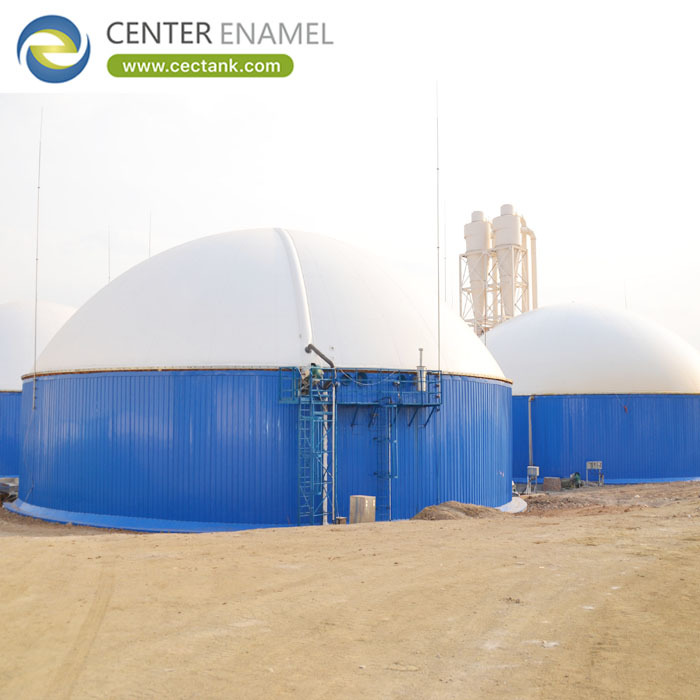
Biogas Plant Project Complete Anaerobic Digestion Tank Solutions
| Place of Origin: | China |
| Brand Name: | CEC TANKS |
| Certification: | ISO 9001:2008, AWWA D103 , OSHA , BSCI |
| Model Number: | W201609013 |
| Minimum Order Quantity: | 1set |
| Price: | $5000~$20000 one set |
| Packaging Details: | PE poly-foam between each two steel plates ; wooden pallet and wooden box |
| Delivery Time: | 0-60 days after deposit received |
| Payment Terms: | L/C,T/T |
| Supply Ability: | 60 sets per month |
|
Detail Information |
|||
| Place of Origin | China | Brand Name | CEC TANKS |
|---|---|---|---|
| Certification | ISO 9001:2008, AWWA D103 , OSHA , BSCI | Model Number | W201609013 |
| Coating Thickness: | 0.25mm~0.40mm & Double Coating | Adhesion: | 3,450N/cm |
| Service Life: | ≥30 Years | Holiday Test: | >1500v |
| Elastic: | Same As Steel Sheet ,around 500KN /mm | Capacity: | 20 M3 To 18,000 M3 |
| Highlight: | biogas plant anaerobic digestion tank,glass fused steel biogas tank,complete biogas project solutions |
||
Product Description
Biogas Plant Project Complete Anaerobic Digestion Tank Solutions
A biogas plant project converts organic waste — livestock manure, food processing residues, sewage sludge, energy crops — into renewable energy and valuable digestate. Across the USA, Europe, Southeast Asia, and Latin America, developers, farms, and municipalities are launching anaerobic digestion facilities to monetize waste streams and cut emissions. Yet the heart of every project is the digester tank, and tank failure is the most common cause of biogas underperformance: concrete digesters leak methane through cracks, and coated welded steel corrodes under hydrogen sulfide attack within years, silently bleeding both gas and revenue.
Center Enamel, the first Glass-Fused-to-Steel (GFS) tank manufacturer in China with nearly 200 enameling patents, delivers complete biogas plant tank systems — digesters, gasholders, and feed/storage tanks — engineered to AWWA D103-09, ISO 28765, NFPA, and OSHA. Since 2008 its tanks have been exported to more than 100 countries, making it one of the most experienced biogas tank suppliers in Asia.
1. What Tank Assets Does a Biogas Plant Project Need?
A typical biogas plant requires a coordinated set of vessels, not a single tank: reception and hydrolysis storage, the anaerobic digester itself, a gasholder, and digestate storage — all matched in engineering and coating chemistry.
· Anaerobic digester: the sealed, heated reactor where mesophilic (35-38°C) or thermophilic (50-55°C) bacteria generate methane-rich biogas; it demands gas-tightness and resistance to hydrogen sulfide and volatile fatty acids.
· Gasholder: low-pressure storage of produced biogas — engineered membrane or dome systems integrated with the digester envelope, with pressure/vacuum relief and flame arrestors per NFPA.
· Feed and digestate tanks: reception and hydrolysis tanks ahead of the digester and post-digestion storage after it, all facing aggressive, variable chemistry.
· Complete-system consistency: Center Enamel engineers every vessel in the train with matched GFS panels, sealing systems, and accessories — eliminating the interface failures that plague multi-vendor projects.
2. Why GFS Digester Tanks Define Biogas Project Success
Methane retention is revenue. The digester envelope determines how much generated biogas actually reaches the engine or upgrading unit — and GFS's inert, gas-tight glass surface maximizes it.
· Gas-tight envelope: engineered panel and roof sealing systems keep biogas in and air out, protecting methane yield and preventing explosive oxygen ingress.
· Corrosion immunity: glass fused at 820-930°C is inert to H2S, ammonia, and acids — the gas headspace that destroys coated steel and concrete digesters leaves GFS unaffected for a 30-50 year life.
· Thermal efficiency: GFS surfaces pair naturally with external insulation and heating systems for stable 35-38°C or 50-55°C operation, the key to consistent gas output.
· Verifiable quality: 100% high-voltage holiday spark testing on every panel, plus ISO 28765 enameling discipline, gives lenders and EPCs the documentation biogas projects require.
3. Delivering a Biogas Project: From Feasibility to Commissioning
Biogas projects succeed on schedule discipline and single-source responsibility across all tank assets.
· Right-sized engineering: digesters from small farm scale to municipal vessels above 10,000 m³, with FEA-verified structures to AWWA D103-09 for wind, seismic, and sludge loads.
· Schedule compression: bolted erection delivers tank readiness in weeks, aligning with EPC critical paths for mechanical and electrical scope.
· Safety compliance: gas detection provisions, NFPA-compliant relief and arrestor interfaces, and OSHA-compliant access systems are engineered into the tank design.
· Global delivery: container-optimized shipments and erection supervision across 100+ countries support projects from feasibility through commissioning.
|
Evaluation Criterion |
Center Enamel GFS Biogas System |
Concrete Digester Plant |
Coated Welded Steel Plant |
|
Methane retention |
High — engineered gas-tight sealing |
Low — cracking releases biogas |
Moderate — degrades as coatings fail |
|
Corrosion defense (H2S/NH3/acids) |
Superior — inert glass, 100% spark tested |
Poor — sulfide and acid attack |
Moderate — headspace coating failure |
|
Construction velocity |
Fast — bolted erection in weeks |
Very slow — months of cast works |
Slow — welding and field lining |
|
Lifecycle and maintenance |
Minimal — 30-50 year design life |
High — relining programs |
High — recoating cycles |
|
System completeness |
Digester + gasholder + feed/digestate tanks from one manufacturer |
Multi-vendor interfaces |
Multi-vendor interfaces |
Engineering Assurance
Every biogas plant tank project ships with AWWA D103-09 and ISO 28765 engineering files, gas-tightness detail drawings, NFPA-aligned safety interfaces, and ISO 9001/45001 manufacturing certification — the package that satisfies EPC procurement, lender due diligence, and plant HSE audits.
Every unretained cubic meter of methane is lost revenue. Choose the envelope first: an inert, gas-tight GFS digester pays for the difference within the first operating years. — Biogas Projects Engineer, Shijiazhuang Zhengzhong Technology Co., Ltd (Center Enamel)
Frequently Asked Questions (FAQ)
What tanks does a biogas plant project require?
At minimum an anaerobic digester and a biogas gasholder; most plants also need feed reception/hydrolysis tanks and digestate storage. Center Enamel supplies all vessels as one matched GFS system with consistent engineering and accessories.
What temperature do biogas digesters operate at?
Mesophilic digestion runs at 35-38°C and thermophilic at 50-55°C. Center Enamel digesters integrate heating and insulation provisions for either regime, keeping output stable year-round.
How does the tank affect biogas output?
Gas-tightness and lining chemistry directly set recoverable methane. GFS's inert glass surface resists the H2S-rich headspace that destroys coated tanks, and engineered sealing prevents methane loss — protecting revenue for 30-50 years.
Can Center Enamel support custom biogas project scales?
Yes — from farm-scale digesters to municipal plants above 10,000 m³, with custom diameter, height, roof, insulation, and safety interfaces, delivered with erection supervision in more than 100 countries.
·