-
Glass Fused To Steel Tanks (617)
-
Stainless Steel Tanks (434)
-
Fusion Bonded Epoxy Tanks (592)
-
Galvanized Steel Tanks (321)
-
Aluminum Dome Roofs (1336)
-
Wastewater Storage Tanks (237)
-
Welded Steel Tanks (457)
-
Pressure Vessels (295)
-
Anaerobic Digester (202)
-
Industrial Water Tanks (349)
-
Glass Lined Steel Tanks (180)
-
Bolted Steel Tanks (389)
-
Sludge Storage Tank (115)
-
Biogas Storage Tank (173)
-
Leachate Storage Tanks (133)
-
Agricultural Water Storage Tanks (179)
-
Fire Water Tank (166)
-
Grain Storage Silos (146)
-
Biogas Projects (424)
-
Wastewater Treatment Projects (1303)
-
Double Membrane Roof (223)
|
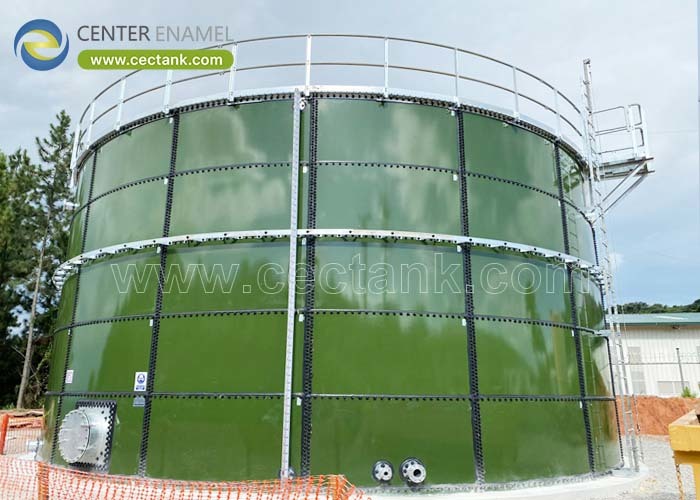
Anaerobic Sludge Digester GFS Digester Tanks for Sludge Stabilization
| Place of Origin: | China |
| Brand Name: | CEC TANKS |
| Certification: | ISO 9001:2008, AWWA D103 , OSHA , BSCI |
| Model Number: | W20160504020 |
| Minimum Order Quantity: | 1set |
| Price: | $5000~$20000 one set |
| Packaging Details: | PE poly-foam between each two steel plates ; wooden pallet and wooden box |
| Delivery Time: | 0-60 days after deposit received |
| Payment Terms: | L/C,T/T |
| Supply Ability: | 60 sets per month |
|
Detail Information |
|||
Product Description
Anaerobic Sludge Digester Distributor GFS Digester Tanks for Sludge Stabilization
Municipal and industrial wastewater plants worldwide are upgrading sludge handling from open drying beds to anaerobic sludge digesters — sealed, heated vessels where microorganisms stabilize sludge, destroy pathogens, cut disposal mass, and generate biogas. Distributors who supply this equipment category face a demanding specification: the digester must be gas-tight, corrosion-proof against hydrogen sulfide and volatile fatty acids, thermally efficient, and delivered on project timelines. Concrete digesters leak gas through cracks; field-welded steel digesters lose their coating inside the gas headspace within years.
Center Enamel — the first Glass-Fused-to-Steel (GFS) tank manufacturer in China, with nearly 200 enameling patents and exports to more than 100 countries as of 2023 — builds anaerobic sludge digesters that hold biogas and withstand digester chemistry for decades. Its GFS bolted digesters, engineered to AWWA D103-09, ISO 28765, NFPA, and OSHA, are the reference design for distributors serving wastewater utilities, biogas developers, and agri-industrial processors.
1. What Is an Anaerobic Sludge Digester and What Must Its Tank Withstand?
An anaerobic sludge digester is a sealed, temperature-controlled vessel in which anaerobic bacteria decompose organic sludge, producing stabilized biosolids and methane-rich biogas. The tank must be simultaneously gas-tight, chemically resistant, and structurally robust.
· Digester chemistry: the liquid phase attacks with volatile fatty acids and sulfides; the gas headspace attacks with hydrogen sulfide and condensation — a dual front that destroys field-applied coatings and leaches from cracked concrete.
· Gas-tightness: a digester must retain methane (CH4) with minimal loss. Center Enamel GFS digesters use engineered roof-to-shell and panel-to-panel sealing systems tested for gas retention, keeping valuable biogas in and oxygen out.
· Thermal regimes: mesophilic digestion operates at 35-38°C and thermophilic at 50-55°C; tanks require integrated heating, insulation, and a lining unaffected by thermal cycling — glass fused at 820-930°C is immune.
· Structural loads: sludge at high solids content, mixer forces, gas pressure, wind, and seismicity are all resolved through FEA-based design to AWWA D103-09.
2. Why GFS Bolted Digesters Dominate Sludge Stabilization Projects
Glass-Fused-to-Steel digester tanks outperform concrete and coated welded steel on every criterion sludge digestion stresses: corrosion, gas-tightness, schedule, and lifecycle cost.
· Inert glass barrier: the fired glass surface neither reacts with digester chemistry nor provides habitat for biofilm anchorage the way rough concrete does — protecting both the vessel and the stabilized biosolid quality.
· 30-50 year life without recoating: concrete digesters require gas-tightness repairs and relining; coated welded steel requires headspace recoating cycles. GFS digesters do not.
· Speed on project sites: bolted panels erect in weeks, not the months demanded by cast-in-place digester construction — critical when plants must meet compliance deadlines.
· Proven biogas record: Center Enamel GFS anaerobic digesters operate across bio-energy, municipal sewage, and agricultural projects on six continents, standardized to ISO 28765 enameling practice with 100% holiday spark testing.
3. What Distributors Gain from a Center Enamel Digester Partnership
Digester projects are engineered-to-order sales that reward distributors with strong technical backing and penalize those without it.
· Complete digester packages: digester tank plus matching gasholder, mixing interfaces, heating provisions, and safety accessories (pressure/vacuum relief, flame arrestors per NFPA) — one purchase order, one warranty.
· Engineering deliverables: FEA calculations, process datasheets, and gas-tightness details issued for each project let distributors bid design-build tenders credibly.
· Compliance file: ISO 9001, ISO 45001, NSF/ANSI 61 (water contact), EN 1090, and BSCI documentation satisfies utility procurement audits in regulated markets.
· Global logistics: container-optimized bolted shipments and erection supervision in 100+ countries de-risk delivery terms on turnkey projects.
|
Evaluation Criterion |
Center Enamel GFS Bolted Digester |
Cast-in-Place Concrete Digester |
Coated Welded Steel Digester |
|
Corrosion defense (H2S, VFA) |
Superior — inert glass fired 820-930°C, 100% spark tested |
Poor — cracking, gas leakage, sulfide attack |
Moderate — coating fails in gas headspace |
|
Gas-tightness |
High — engineered sealing system |
Low — cracks under thermal cycling |
Moderate — seam and coating dependence |
|
Construction velocity |
Fast — bolted erection in weeks |
Very slow — months of forming and curing |
Slow — welding plus multi-coat field lining |
|
Lifecycle and maintenance |
Minimal — 30-50 year design life |
High — relining and gas-tightness repairs |
High — periodic headspace recoating |
|
Biogas recovery |
High methane retention supports energy capture |
Losses through cracks |
Losses escalate as coatings age |
Engineering Assurance
Every digester is engineered to AWWA D103-09, ISO 28765, NFPA, and OSHA with FEA verification, and manufactured under ISO 9001 and ISO 45001 systems — a certification package that passes utility and lender technical due diligence in regulated markets.
Digesters are chemistry reactors wrapped in a structure. Give the chemistry an inert glass surface and the structure bolted-steel speed, and sludge stabilization becomes the plant's most profitable unit process. — Process Engineering Advisor, Shijiazhuang Zhengzhong Technology Co., Ltd (Center Enamel)
Frequently Asked Questions (FAQ)
What is an anaerobic sludge digester?
It is a sealed, heated tank in which anaerobic bacteria stabilize sewage or industrial sludge, reducing its mass and pathogen content while producing methane-rich biogas. Digesters operate mesophilically at 35-38°C or thermophilically at 50-55°C.
Why is GFS the preferred digester tank material?
Glass-Fused-to-Steel is inert to hydrogen sulfide and volatile fatty acids, provides a gas-tight envelope for biogas retention, and delivers a 30-50 year life without recoating — concrete cracks and leaks gas, while field-coated welded steel corrodes in the headspace.
Do you supply gasholders and complete digester systems?
Yes. Center Enamel supplies digesters with matching gasholders, mixing and heating interfaces, safety accessories per NFPA, and erection supervision — a single-source package for distributors and EPC contractors.
Can digester tanks be customized for distributor projects?
Yes. Capacities from small farm digesters to municipal-scale vessels above 10,000 m³ are engineered per project — diameter, height, roof type, heating, and insulation options are all configurable.
·