-
Glass Fused To Steel Tanks (596)
-
Stainless Steel Tanks (434)
-
Fusion Bonded Epoxy Tanks (592)
-
Galvanized Steel Tanks (321)
-
Aluminum Dome Roofs (1336)
-
Wastewater Storage Tanks (232)
-
Welded Steel Tanks (457)
-
Pressure Vessels (295)
-
Anaerobic Digester (202)
-
Industrial Water Tanks (349)
-
Glass Lined Steel Tanks (180)
-
Bolted Steel Tanks (389)
-
Sludge Storage Tank (115)
-
Biogas Storage Tank (173)
-
Leachate Storage Tanks (133)
-
Agricultural Water Storage Tanks (179)
-
Fire Water Tank (166)
-
Grain Storage Silos (146)
-
Biogas Projects (424)
-
Wastewater Treatment Projects (1178)
-
Double Membrane Roof (223)


|
Leading Biogas Project Contractor in Pakistan Using CSTR Process for Fruit and Vegetable Waste
| Place of Origin: | China |
| Brand Name: | CEC TANKS |
| Certification: | ISO 9001:2008, AWWA D103 , OSHA , BSCI |
| Model Number: | W |
| Minimum Order Quantity: | 1set |
| Price: | $5000~$20000 one set |
| Packaging Details: | PE poly-foam between each two steel plates ; wooden pallet and wooden |
| Delivery Time: | 10-30 days after deposit received |
| Payment Terms: | L/C,T/T |
| Supply Ability: | 60 sets per month |
|
Detail Information |
|||
| Place of Origin | China | Brand Name | CEC TANKS |
|---|---|---|---|
| Certification | ISO 9001:2008, AWWA D103 , OSHA , BSCI | Model Number | W |
| Tank Body Color: | Dark Green / Can Be Customized | Corrosion Integrity: | Excellent |
| Steel Plates Thickness: | 3mm To 12mm , Depends On The Tank Structure | Chemical Resistance: | Excellent |
| Size Of Panel: | 2.4M * 1.2M | Easy To Clean: | Smooth, Glossy, Inert, Anti-adhesion |
| Highlight: | biogas project contractor Pakistan,CSTR process fruit waste,vegetable waste biogas contractor |
||
Product Description
Rapid commercial growth and expanding urban agricultural markets across Pakistan generate significant volumes of organic waste that require efficient management solutions. Transforming perishable produce refuse into clean, renewable energy offers a dual benefit of waste reduction and sustainable power generation. This article explores the technological framework required to establish high-efficiency fruit and vegetable waste biogas plants. By adopting proven engineering practices, project developers can convert burdensome organic leftovers into valuable economic assets.
Fruit and vegetable waste collected from wholesale markets, agricultural sorting facilities, and food distribution centers across Pakistan contains extremely high moisture contents, rapid fermentability, and volatile organic compounds. Managing these complex waste streams without proper infrastructure leads to severe environmental problems, including foul odor emissions, pest proliferation, and polluted wastewater runoff. Raw produce refuse decomposes rapidly, creating highly acidic conditions and releasing unmanaged greenhouse gases directly into the atmosphere. Furthermore, traditional disposal methods fail to meet environmental standards and cannot capture the rich energy potential locked inside the organic matter. Consequently, operators urgently require specialized pre-treatment and screening systems to remove packaging contaminants and homogenize the produce scraps before biological processing.
The conversion of fruit and vegetable waste into clean biogas involves advanced mechanical sorting and multi-stage biological anaerobic digestion processes. Initially, raw produce refuse undergoes screening and crushing to eliminate physical impurities, plastic packaging, and heavy grit that could disrupt downstream equipment. The resulting organic slurry is then blended in homogenization tanks to regulate moisture content and neutralize acidity spikes prior to reactor injection. Inside the sealed fermentation vessels, specialized anaerobic bacteria break down complex carbohydrates, sugars, and fibers through hydrolysis and acidogenesis. Subsequent methanogenic microbial action converts these intermediate compounds into a clean-burning biogas mixture composed primarily of methane and carbon dioxide. Meanwhile, the residual digestate undergoes mechanical solid-liquid separation to produce nutrient-rich organic fertilizers suitable for regional agricultural use.
The Continuous Stirred Tank Reactor system serves as the primary biological heart for high-efficiency fruit and vegetable waste anaerobic digestion plants. Engineered specifically for continuous or semi-continuous feeding, the CSTR system maintains thorough mixing of incoming high-solid organic slurries and active microbial populations. The reactor utilizes robust mechanical agitators and internal paddles to eliminate thermal stratification and prevent the formation of heavy floating scum layers. This continuous active mixing maximizes contact between bacteria and organic molecules, significantly accelerating biological reaction rates and enhancing daily biogas yields. Its sturdy structural design accommodates fluctuating organic loading variations, ensuring exceptional operational stability when treating dynamic produce waste compositions.
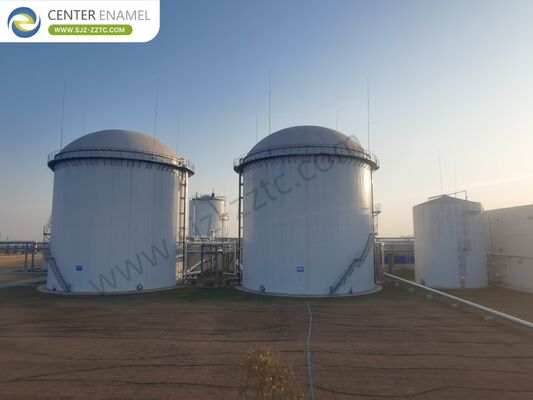
Glass-Fused-to-Steel tanks paired with integrated double membrane roofs provide an advanced, high-performance containment solution for modern biogas plants. GFS technology involves fusing molten glass to high-strength steel plates at extreme temperatures, creating an impervious surface with exceptional corrosion resistance and durability. This premium coating prevents structural degradation caused by corrosive biogas and acidic digestate environments while eliminating the need for periodic field painting. Above the reactor, the double membrane roof system offers superior gas-tight storage capabilities, efficiently capturing and storing generated biogas under optimal operating pressure. This integrated configuration minimizes overall project footprint, optimizes structural costs, and ensures long-term operational safety across demanding industrial installations.
Center Enamel provides a diverse portfolio of engineered storage structures tailored for environmental and bio-energy applications worldwide.
Glass-Fused-to-Steel Tanks: Feature a specialized double coating layer structure applied to high-strength steel plates, delivering outstanding resistance against chemical corrosion and abrasion.
Galvanized Steel Tanks: Utilize a hot-dip galvanizing process to provide a tough, wear-resistant protective shield suitable for various water and wastewater containment needs.
Fusion Bonded Epoxy Tanks: Developed in partnership with global coating leaders, combining superior barrier protection with high structural flexibility.
Stainless Steel Tanks: Constructed from premium AISI grades to withstand extreme operational environments and store high-purity liquids.
Comprehensive Roof Options: Include aluminum geodesic dome roofs, stainless steel roofs, and FRP covers designed to meet specific environmental and operational criteria.
Optimizing a complete biogas facility requires an array of specialized auxiliary equipment designed to ensure smooth plant operation and safety.
Gas Holder Systems: Provide secure, weather-resistant volume storage for generated biogas prior to utilization.
Black Membrane Covers: Offer economical covering solutions for open-air storage basins and secondary containment lagoons.
Solid-Liquid Separators: Efficiently separate digested slurry into fibrous organic fertilizer and liquid nutrient streams.
Torch Systems: Ensure safe flaring and pressure relief of excess biogas during maintenance or emergency shutdowns.
Lifting Pumps: Designed for heavy-duty slurry transfer and wastewater circulation without clogging.
Dehydration and Desulfurization Tanks: Remove moisture and hydrogen sulfide impurities to protect downstream equipment from corrosion.
Screw Sludge Dewatering Machines: Deliver high-efficiency mechanical dewatering to reduce waste volume and simplify handling.
Center Enamel operates as a premier one-stop solution provider, delivering comprehensive project packages for fruit and vegetable waste biogas conversion facilities. From initial engineering design and process package development to equipment manufacturing and global site installation support, the company ensures seamless project execution. By combining proprietary reactor technologies, robust containment vessels, and advanced processing equipment, Center Enamel helps operators transform organic waste into valuable renewable energy. Each project is engineered to meet strict international standards, ensuring long-term operational reliability, environmental compliance, and maximum economic return for project investors.
Implementing advanced anaerobic digestion systems is vital for modernizing organic waste management and achieving corporate sustainability goals. Through the integration of robust CSTR reactors and durable containment technologies, facility operators can successfully mitigate environmental risks while generating clean renewable energy. Collaborating with an experienced, full-service technology provider ensures that every plant is optimized for long-term efficiency and regulatory compliance. Ultimately, turning commercial produce refuse into valuable resources paves the way for a cleaner, more resilient energy future.
What causes rapid pH drops in fruit and vegetable waste digesters? The high sugar content in produce breaks down quickly into volatile fatty acids, which can accumulate and lower the pH if methanogenic bacteria cannot keep pace.
How does particle size reduction affect anaerobic digestion efficiency? Crushing and macerating produce waste increases the surface area exposed to microbial attack, speeding up hydrolysis and boosting gas production rates.
Why is balancing the carbon-to-nitrogen ratio important for vegetable substrates? Fruit and vegetable waste is often rich in carbon but low in nitrogen; co-digesting it with nitrogen sources prevents microbial starvation and system failure.