-
Glass Fused To Steel Tanks (596)
-
Stainless Steel Tanks (434)
-
Fusion Bonded Epoxy Tanks (592)
-
Galvanized Steel Tanks (321)
-
Aluminum Dome Roofs (1316)
-
Wastewater Storage Tanks (231)
-
Welded Steel Tanks (457)
-
Pressure Vessels (295)
-
Anaerobic Digester (201)
-
Industrial Water Tanks (349)
-
Glass Lined Steel Tanks (180)
-
Bolted Steel Tanks (390)
-
Sludge Storage Tank (115)
-
Biogas Storage Tank (173)
-
Leachate Storage Tanks (133)
-
Agricultural Water Storage Tanks (179)
-
Fire Water Tank (166)
-
Grain Storage Silos (146)
-
Biogas Projects (425)
-
Wastewater Treatment Projects (788)
-
Double Membrane Roof (223)

|
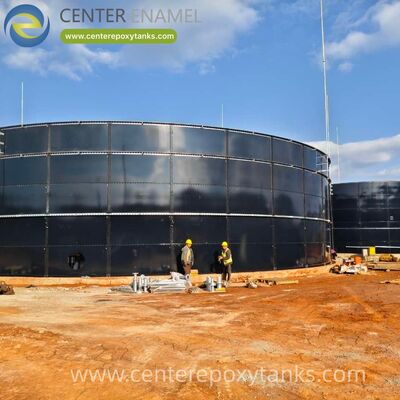
Bolted Steel Tanks as Mini Biogas Digester Tanks: Compact, modular units for efficient small-scale organic waste conversion.
| Place of Origin: | China |
| Brand Name: | CEC TANKS |
| Certification: | ISO 9001:2008, AWWA D103 , OSHA , BSCI |
| Model Number: | W |
| Minimum Order Quantity: | 1set |
| Price: | $5000~$20000 one set |
| Packaging Details: | PE poly-foam between each two steel plates ; wooden pallet and wooden |
| Delivery Time: | 10-30 days after deposit received |
| Payment Terms: | L/C, T/T |
| Supply Ability: | 60 sets per month |
|
Detail Information |
|||
Product Description
Bolted Steel Tanks as Mini Biogas Digester Tanks: Compact, modular units for efficient small-scale organic waste conversion.
As the global push for decentralized energy and circular economies intensifies, the role of small-scale organic waste conversion has become increasingly significant. For community-level projects, research institutions, and small processing facilities, the requirement is for a digestion system that offers industrial-grade performance within a compact footprint. A mini biogas digester serves as a controlled biological reactor where microorganisms decompose organic matter—such as food scraps or green waste—to produce methane for heating or power. Because this process involves the production of biogas and the presence of organic acids, the containment vessel must be more than just a simple tank; it must be a precision-engineered reactor.
Traditional small-scale solutions, such as plastic or standard fiberglass containers, often lack the structural rigidity and gas tightness required for efficient long-term operation. Conversely, custom-welded steel tanks are often cost-prohibitive at this scale. To bridge this gap, the industry has turned to Epoxy Coated Tanks, specifically Epoxy Bonded Steel Bolted Tanks. These modular units provide a professional, airtight, and chemically resistant environment that maximizes gas yield while maintaining a manageable and compact profile.
The Precision Demands of Mini-Scale Anaerobic Digestion
A mini biogas digester must be engineered to handle complex biological and chemical interactions within a limited volume:
Airtight Gas Containment: To maintain anaerobic conditions and prevent the loss of valuable methane, the tank must be hermetically sealed. Epoxy Bonded Steel Bolted Tanks utilize high-performance, gas-resistant sealants at every joint, ensuring the system remains leak-proof under internal gas pressure.
Resistance to Organic Acid Corrosion: The early stages of digestion produce volatile fatty acids that can be aggressive toward carbon steel. A factory-applied epoxy barrier provides a chemically inert interior, preventing internal oxidation and ensuring a long service life.
Thermal Regulation Support: Efficient gas production requires stable internal temperatures. The steel structure of these bolted tanks is perfectly suited for the application of external insulation jackets, allowing the mini-digester to maintain mesophilic or thermophilic conditions.
Space-Efficient Footprint: In community or urban settings, space is at a premium. The modular nature of the bolted system allows for flexible height-to-diameter ratios, providing significant volume in a compact horizontal footprint.
By providing a molecularly bonded barrier, Epoxy Coated Tanks ensure that the mini-digestion process remains a clean, safe, and productive asset for the user.
Engineering Excellence: The Fusion Bonded Epoxy Barrier
The technical reliability of a mini biogas digester is rooted in the Fusion Bonded Epoxy (FBE) manufacturing process. Unlike paints applied in the field, FBE is a thermosetting polymer applied in a strictly controlled factory environment.
The process begins with the precision preparation of high-strength steel panels. Each panel is grit-blasted to achieve a near-white finish, creating an ideal mechanical anchor profile. A specialized epoxy powder is then electrostatically applied. The panels are cured in industrial ovens at extreme temperatures, causing the epoxy to melt, flow, and undergo a chemical cross-linking reaction with the steel substrate.
This results in a dense, uniform, and incredibly tough barrier. Because the panels are coated before assembly, every edge and pre-punched bolt hole is fully encapsulated. On-site, these panels are joined using high-strength fasteners, creating a structure that is immune to the corrosive byproducts of organic decomposition, such as hydrogen sulfide and organic acids.
Enhancing Process Integrity with Aluminum Dome Roofs
For a mini biogas digester, the roof is a functional component of the reactor, serving as the gas collection zone. This is why the integration of Aluminum Dome Roofs is highly effective:
Corrosion Resistance to Biogas Vapors: The headspace of a digester is a high-corrosion zone due to humidity and trace hydrogen sulfide. Aluminum naturally resists these vapors, providing a maintenance-free cover that will not rust or degrade over time.
Lightweight Gas-Tight Design: The geodesic design provides immense structural strength while remaining lightweight. This allows for easier installation and maintenance of gas outlets and pressure relief valves.
Light Exclusion for Biological Stability: By blocking all sunlight, the aluminum dome prevents the growth of algae or unwanted biological films within the reactor, ensuring the primary microbial population remains dominant.
Weather Resilience: The dome protects the system from rainwater and debris, ensuring that the feedstock volume remains consistent and the digestion process remains undisturbed.
Rapid Deployment and Scalable Design
One of the primary advantages of the Epoxy Bonded Steel Bolted Tank for mini-digesters is the speed of installation. Because the components are prefabricated, a small-scale unit can be assembled on-site in a fraction of the time required for concrete or welded alternatives. No on-site welding is required, which is a major safety advantage in environments where flammable biogas is produced.
Furthermore, the modular nature allows for future expansion. If a community project grows, additional rings can often be added to increase capacity. This scalability ensures that the initial investment remains a long-term, economical asset for the energy project.
Project Cases: Proven Performance in Biogas and Waste Management
The following non-fictitious projects illustrate the successful implementation of our Epoxy Coated Tanks in demanding organic waste and treatment environments:
Inner Mongolia Xing'an League Bio-natural Gas Project: This project highlights the reliability of the bolted system in diverse climates for biogas production. The facility utilized 4 units of tanks to provide a secure environment for anaerobic digestion.
Shandong Large-Scale Breeding Wastewater Project: Managing high-organic loads from livestock, this project utilized 2 units of tanks. It demonstrates the structural stability and chemical resistance required for processing aggressive organic slurries.
Sichuan Chengdu Wastewater Treatment Plant Project: This high-capacity project utilized 16 units of tanks for large-scale liquid management. It serves as a testament to the structural stability and modular efficiency required for modern waste infrastructure.
Conclusion: A Compact Standard for Clean Energy
Efficient small-scale waste conversion requires infrastructure that is durable, airtight, and chemically resilient. The Epoxy Bonded Steel Bolted Tank represents the most advanced solution for mini biogas digesters.
By providing a factory-fused barrier that resists organic acids and by incorporating the advanced protection of Aluminum Dome Roofs, these tanks ensure that small-scale biogas assets are managed with absolute security. They offer a high-strength, low-maintenance, and scalable solution that supports the global transition toward sustainable, decentralized energy.