-
Glass Fused To Steel Tanks (596)
-
Stainless Steel Tanks (434)
-
Fusion Bonded Epoxy Tanks (592)
-
Galvanized Steel Tanks (321)
-
Aluminum Dome Roofs (1336)
-
Wastewater Storage Tanks (232)
-
Welded Steel Tanks (457)
-
Pressure Vessels (295)
-
Anaerobic Digester (201)
-
Industrial Water Tanks (349)
-
Glass Lined Steel Tanks (180)
-
Bolted Steel Tanks (389)
-
Sludge Storage Tank (115)
-
Biogas Storage Tank (173)
-
Leachate Storage Tanks (133)
-
Agricultural Water Storage Tanks (179)
-
Fire Water Tank (166)
-
Grain Storage Silos (146)
-
Biogas Projects (425)
-
Wastewater Treatment Projects (908)
-
Double Membrane Roof (223)

|
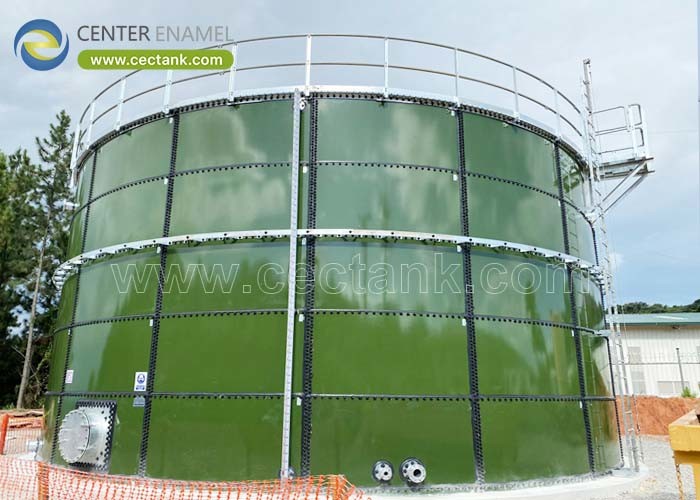
The Definitive Guide to Wastewater Storage Tanks: Design, Standards, and Material Selection
| Place of Origin: | China |
| Brand Name: | CEC TANKS |
| Certification: | ISO 9001:2008, AWWA D103 , OSHA , BSCI |
| Model Number: | W20160705006 |
| Minimum Order Quantity: | 1set |
| Price: | $5000~$20000 one set |
| Packaging Details: | PE poly-foam between each two steel plates ; wooden pallet and wooden box |
| Delivery Time: | 0-60 days after deposit received |
| Payment Terms: | L/C,T/T |
| Supply Ability: | 60 sets per month |
|
Detail Information |
|||
| Place of Origin | China | Brand Name | CEC TANKS |
|---|---|---|---|
| Certification | ISO 9001:2008, AWWA D103 , OSHA , BSCI | Model Number | W20160705006 |
| Coating Thickness: | 0.25mm~0.40mm , Two Layer Of Coating Internal And External | Tank Material: | Glass Fused To Steel |
| Steel Grade: | ART 310 | Roof Available: | Glass Fused Steel Roof , Membrane Roof, Aluminum Roof , GRP Roof |
| Highlight: | Glass fused steel wastewater tanks,Anti-corrosion GFS storage tanks,Wastewater storage tanks with warranty |
||
Product Description
Effective wastewater containment is the backbone of modern industrial and municipal operations. As environmental regulations tighten in 2026—with stricter limits on BOD (Biochemical Oxygen Demand), COD (Chemical Oxygen Demand), and emerging contaminants like PFAS—the selection of wastewater storage tanks has shifted from a purely structural decision to a critical strategic investment.
Modern facilities are moving away from the "take, use, dispose" model toward circularity, resource recovery (such as biogas generation), and decentralized, modular treatment systems. This guide evaluates the engineering parameters and material technologies that ensure long-term regulatory compliance and operational resilience.
Infrastructure planning today is driven by three core pressures:
- Regulatory Rigor: New mandates require real-time monitoring and significantly lower effluent parameters, making reliable, leak-proof storage mandatory.
- Modular Scalability: Utilities are prioritizing phased infrastructure strategies, using modular, factory-fabricated tanks that allow capacity to scale alongside community or industrial growth.
- Resilience: Design now factors in climate-related risks (flooding, extreme weather) and the need for backup emergency storage to prevent environmental violations during process upsets.
Selecting the right material determines the lifecycle cost and maintenance burden of your facility.
| Tank Material | Corrosion Resistance | Lifespan | Maintenance Needs | Best Application |
|---|---|---|---|---|
| Glass-Fused-to-Steel (GFS) | Elite (Inert Glass) | 30+ Years | Minimal | Municipal sewage, biogas, harsh industrial effluent. |
| Powder-Coated Epoxy | Moderate (Coating Dependent) | Mid-term | Periodic Inspection | Baseline industrial water, stormwater storage. |
| Stainless Steel | Superior | 40+ Years | Very Low | Pharmaceutical wastewater, high-purity industrial reuse. |
| Welded Steel | Variable (Field Coated) | Long (if maintained) | High (Requires recoating) | Large-volume, long-term legacy infrastructure. |
| Concrete | Moderate (Requires Lining) | Long | Medium/High | Massive civil engineering projects (often needs liners). |
Compliance is non-negotiable. Modern tanks must be engineered in accordance with rigorous global frameworks:
- TR-16 (2026 Edition): The industry benchmark for planning and designing wastewater treatment facilities, with critical updates on climate resilience and contaminant removal.
- AWWA D103-09: The gold standard for bolted steel tanks, governing wind, seismic, and structural load calculations.
- ISO 28765: Specifies performance requirements for vitreous enamel (glass-fused) finishes, ensuring resistance to chemical attack and mechanical stress.
- CEMS Integration: For industrial applications, tanks are increasingly being designed with integration points for Continuous Effluent Monitoring Systems, allowing for automated data transmission to regulatory servers.
When procuring wastewater storage, avoid the "initial price trap." Consider these three pillars:
A lower capital expenditure (CAPEX) for field-coated or epoxy tanks often leads to higher operational expenditure (OPEX) due to frequent inspections, recoating cycles, and potential leak remediation. GFS and Stainless Steel generally offer a superior TCO over 20+ years.
- Bolted/Modular: Ideal for space-constrained sites and phased growth. These are factory-fabricated, meaning quality control is insulated from site conditions.
- Welded: Often favored for massive, centralized facilities where large-scale, unified steel structures are required, but they demand highly skilled on-site labor and longer construction windows.
Can the tank support modern sensors? Look for designs that allow for easy installation of ultrasonic level sensors, pH probes, and aeration controllers. The future of wastewater management is AI-driven optimization—ensure your tank is a platform for this technology, not an obstacle to it.
Why is "Glass-Fused-to-Steel" becoming the preferred choice for industrial wastewater?
GFS tanks fuse the strength of steel with the chemical inertness of glass. Unlike paint or epoxy, which can delaminate or degrade in chemically aggressive (acidic/alkaline) wastewater, the glass-fused surface is virtually non-porous and incredibly durable, significantly reducing downtime for repairs.
Are there specific requirements for storing highly toxic or hazardous wastewater?
Yes. In such cases, standard materials may not suffice. Dual-laminate tanks (combining structural FRP with thermoplastic liners) or premium-grade stainless steel (316L/Duplex) are often required. Always perform a chemical compatibility analysis of your effluent before specifying tank materials.
How does modular tank construction help with regulatory compliance?
Modular tanks are pre-engineered to meet stringent international standards (like AWWA D103). Because they are factory-fabricated in a controlled environment, there is far less risk of "human error" during construction compared to field-welded or field-coated tanks, leading to more predictable performance and easier regulatory audit trails.
Are you currently evaluating a wastewater infrastructure project, and would you like to compare the structural load-bearing requirements for a GFS tank versus a traditional welded steel tank for your specific site footprint?