-
Glass Fused To Steel Tanks (596)
-
Stainless Steel Tanks (434)
-
Fusion Bonded Epoxy Tanks (592)
-
Galvanized Steel Tanks (321)
-
Aluminum Dome Roofs (1336)
-
Wastewater Storage Tanks (232)
-
Welded Steel Tanks (457)
-
Pressure Vessels (295)
-
Anaerobic Digester (202)
-
Industrial Water Tanks (349)
-
Glass Lined Steel Tanks (180)
-
Bolted Steel Tanks (389)
-
Sludge Storage Tank (115)
-
Biogas Storage Tank (173)
-
Leachate Storage Tanks (133)
-
Agricultural Water Storage Tanks (179)
-
Fire Water Tank (166)
-
Grain Storage Silos (146)
-
Biogas Projects (424)
-
Wastewater Treatment Projects (1078)
-
Double Membrane Roof (223)

|
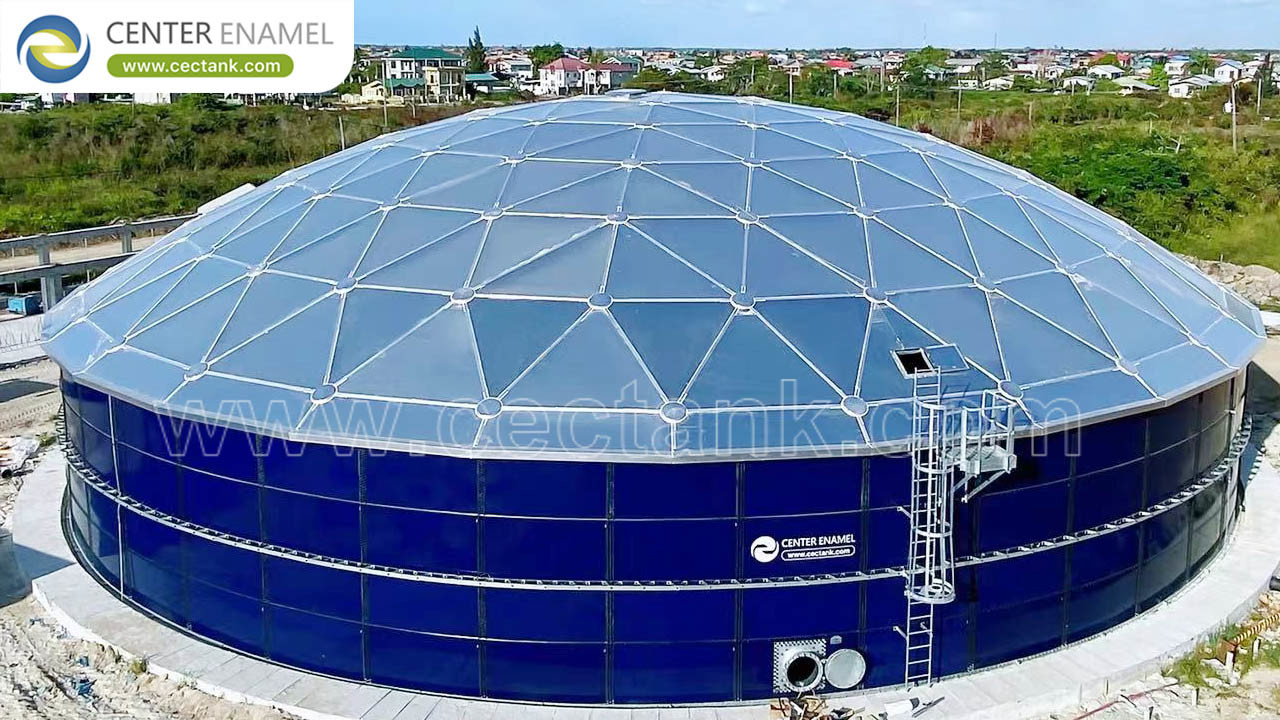
GFS Tanks: A Durable, Reliable, and Sustainable Storage Solution
| Place of Origin: | China |
| Brand Name: | CEC TANKS |
| Certification: | ISO 9001:2008, AWWA D103 , OSHA , BSCI |
| Model Number: | W20171107004 |
| Minimum Order Quantity: | 1set |
| Price: | $5000~$20000 one set |
| Packaging Details: | PE poly-foam between each two steel plates ; wooden pallet and wooden box |
| Delivery Time: | 10-30 days after deposit received |
| Supply Ability: | 60 sets per month |
|
Detail Information |
|||
| Place of Origin | China | Brand Name | CEC TANKS |
|---|---|---|---|
| Certification | ISO 9001:2008, AWWA D103 , OSHA , BSCI | Model Number | W20171107004 |
| Holiday Test: | >1500v | Tank Material: | Glass Fused To Steel |
| Steel Grade: | ART 310 | Corrosion Integrity: | Excellent |
| Size Of Panel: | 2.4M * 1.2M | Acid And Alkalinity Proof: | Standard Coating Suits For PH3 - PH11, Special Coating Suits For PH1 - PH14 |
| Highlight: | PH11 GFS Tanks,Industrial Park GFS Tanks,Wastewater Treatment GFS Tanks |
||
Product Description
Glass-Fused-to-Steel (GFS) tanks are high-performance containment systems engineered by thermally fusing glass enamel to high-strength steel panels at temperatures exceeding 800°C. This fusion creates a unique composite material that unites the structural tensile strength of steel with the chemical inertness and corrosion resistance of glass. For municipal, industrial, and agricultural sectors, GFS technology represents the gold standard for reliable, long-term liquid storage, offering a 30+ year design life with minimal maintenance requirements.
In modern infrastructure, the cost of a storage tank is not just the initial purchase price, but the Total Cost of Ownership (TCO) over decades. GFS tanks are designed to minimize this TCO through three primary pillars:
The glass-enamel coating acts as a permanent, non-porous barrier against aggressive liquids. Unlike field-welded tanks that rely on manually applied paint coatings—which are prone to "holidays" (pinholes) and degradation—GFS panels are factory-finished under controlled conditions. This creates an inert surface that resists acids, alkalis, and oxidative damage, ensuring the steel substrate never touches the stored fluid.
Engineering teams prioritize GFS tanks for their stability and predictability. Whether storing potable water, aggressive wastewater, or industrial reagents, the GFS surface remains unchanged. It is highly resistant to biological growth (biofilm), making it the safest choice for municipal drinking water systems, where hygiene is non-negotiable.
GFS tanks are the definition of "modern construction." They arrive at the site as a flat-packed, modular kit, which:
Reduces Carbon Footprint: Lower logistics costs and efficient shipping compared to oversized, pre-fabricated steel structures.
Rapid Deployment: Bolt-together assembly allows for completion in a fraction of the time required for poured-in-place concrete or field-welded steel.
Circular Potential: GFS tanks can be dismantled, relocated, or expanded, providing an adaptable asset that evolves with your facility's needs.
| Feature | Glass-Fused-to-Steel (GFS) | Reinforced Concrete | Welded Carbon Steel |
| Corrosion Resistance | Excellent (Inert) | Moderate (Needs Lining) | Low (Requires Painting) |
| Construction Speed | Fast (Modular) | Very Slow (Curing) | Moderate (Field Welding) |
| Maintenance | Minimal | High (Crack Sealing) | High (Coating Repairs) |
| Lifespan | 30–50+ Years | 20–25 Years | 15–20 Years |
| Expandability | High | None | Low |
When specifying GFS tanks, professional engineers rely on rigorous international standards to ensure safety and structural integrity. At Center Enamel, our manufacturing and design processes strictly adhere to:
AWWA D103: The standard for bolted steel storage tanks.
ISO 28765: Dedicated to the design of bolted steel tanks for water and sludge storage.
NSF/ANSI 61: Critical certification ensuring materials are safe for direct contact with potable drinking water.
A: Sustainability in infrastructure is defined by longevity and material efficiency. GFS tanks eliminate the need for repeated recoating (which uses volatile organic compounds), are made from highly recyclable steel, and offer a service life that significantly outperforms concrete or plastic, reducing the frequency of total asset replacement.
A: Yes. The glass-fused surface is highly chemically inert and resistant to a pH range of 3–11. This makes GFS tanks the preferred choice for wastewater treatment, leachate storage, and anaerobic digesters where corrosive gases like hydrogen sulfide (H_2S) are present.
A: Because GFS is bolted and modular, repairs are localized and straightforward. Small areas of damage can be effectively sealed with NSF-compliant patch kits without the need to take the entire tank out of service or undergo major structural work.
A: No. While the surface is a vitrified glass-enamel, it is fused at a molecular level with the steel core. This composite material is engineered to handle the thermal expansion, seismic loads, and structural pressures of a large-volume storage tank without cracking or losing integrity.
At Center Enamel, we don't just supply tanks; we provide long-term engineering solutions. Whether for municipal water, industrial effluent, or renewable energy projects, our GFS technology ensures your infrastructure is safe, compliant, and built for the future.
Are you ready to optimize your storage infrastructure? Contact our engineering team today for a technical consultation, capacity analysis, or a customized project proposal.