-
Glass Fused To Steel Tanks (596)
-
Stainless Steel Tanks (434)
-
Fusion Bonded Epoxy Tanks (592)
-
Galvanized Steel Tanks (321)
-
Aluminum Dome Roofs (1336)
-
Wastewater Storage Tanks (232)
-
Welded Steel Tanks (457)
-
Pressure Vessels (295)
-
Anaerobic Digester (201)
-
Industrial Water Tanks (349)
-
Glass Lined Steel Tanks (180)
-
Bolted Steel Tanks (389)
-
Sludge Storage Tank (115)
-
Biogas Storage Tank (173)
-
Leachate Storage Tanks (133)
-
Agricultural Water Storage Tanks (179)
-
Fire Water Tank (166)
-
Grain Storage Silos (146)
-
Biogas Projects (425)
-
Wastewater Treatment Projects (948)
-
Double Membrane Roof (223)


|
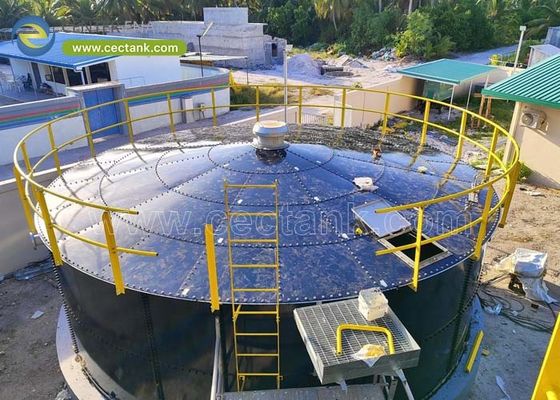
GFS Carbon Black Silos: Advanced Storage Solutions from Center Enamel for a Challenging Material
| Place of Origin: | China |
| Brand Name: | CEC TANKS |
| Certification: | ISO 9001:2008, AWWA D103 , OSHA , BSCI |
| Model Number: | W |
| Minimum Order Quantity: | 1set |
| Price: | $5000~$20000 one set |
| Packaging Details: | PE poly-foam between each two steel plates ; wooden pallet and wooden |
| Delivery Time: | 10-30 days after deposit received |
| Payment Terms: | L/C,T/T |
| Supply Ability: | 60 sets per month |
|
Detail Information |
|||
| Place of Origin | China | Brand Name | CEC TANKS |
|---|---|---|---|
| Certification | ISO 9001:2008, AWWA D103 , OSHA , BSCI | Model Number | W |
| Tank Material: | Glass Fused To Steel | Foundation: | Concrete Or Glass Fused Steel |
| Steel Plates Thickness: | 3mm To 12mm , Depends On The Tank Structure | Size Of Panel: | 2.4M * 1.2M |
| Easy To Clean: | Smooth, Glossy, Inert, Anti-adhesion | Permeability: | Gas / Liquid Impermeable |
| Highlight: | Glass Fused To Steel silos,Carbon Black storage tanks,GFS silos with warranty |
||
Product Description
GFS Carbon Black Silos: Advanced Storage Solutions from Center Enamel for a Challenging Material
Carbon black is one of the most essential raw materials in the global manufacturing economy, critical for everything from rubber tire production to high-performance plastics and printing inks. However, for plant engineers and facility managers, it is also one of the most notoriously difficult materials to store and handle.
With its low bulk density, tendency to form cohesive bridges, and significant dust explosion risks, carbon black demands a storage infrastructure that goes beyond standard industrial design. Center Enamel’s Glass-Fused-to-Steel (GFS) Silos have become the industry standard for this challenging material, offering the precise engineering required to ensure reliable flow, purity, and safety.
The Handling Challenge: Why Carbon Black Requires Specialized Storage
Carbon black is not just a powder; it is a complex commodity with specific physical properties that cause significant operational headaches in traditional silos:
-
Flowability Issues (Bridging & Rat-holing): Carbon black is cohesive and "fluffy." In traditional steel or concrete silos, the material often clings to the walls, creating arches (bridges) that stop flow and require manual intervention.
-
Contamination Sensitivity: Even trace amounts of rust or concrete dust can ruin a batch of high-grade carbon black.
-
Static & Explosion Risk: As a fine powder, carbon black is combustible. Storage systems must effectively manage potential dust accumulation and static discharge to maintain safety compliance (ATEX/NFPA).
Why GFS Silos are the Ideal Solution
Center Enamel’s GFS technology bridges the gap between raw steel strength and chemical-resistant glass technology. For carbon black, the advantages are transformative:
1. Superior Surface Smoothness (Friction Reduction)
The glass-fused surface provides an ultra-low coefficient of friction. Unlike carbon steel, which can become rough due to corrosion or oxidation over time, the glass surface remains permanently smooth. This reduces the risk of "wall friction," which is the primary cause of material bridging and flow interruptions.
2. Inert & Non-Contaminating
Because the material is encased in a glass-enamel barrier, there is zero risk of metal leaching or paint peeling. You are storing your carbon black in a container that remains chemically inert, ensuring that the physical and chemical properties of the material remain consistent from the day it enters the silo to the day it is processed.
3. Rapid Modular Assembly
Carbon black facilities often require rapid scaling. Our GFS panels are prefabricated in our factory and bolted on-site. This modular approach allows for quick erection times, significantly reducing the "time-to-production" compared to traditional welded steel or concrete silos.
Comparative Analysis: Storage Solutions for Carbon Black
| Feature | GFS (Bolted Steel) | Field-Welded Steel | Poured Concrete |
| Surface Smoothness | Excellent (Glass-Smooth) | Moderate (Porous) | Low (Very Porous) |
| Flow Reliability | High | Moderate | Low (High Wall Friction) |
| Maintenance | Minimal | High (Repainting) | High (Crack Repair) |
| Material Purity | High | Moderate (Rust Risk) | Low (Dust Risk) |
| Installation Time | Fast | Slow | Very Slow |
Essential Safety & Engineering Integration
At Center Enamel, we understand that a silo for carbon black is part of a larger, safety-critical system. Our engineering team integrates the silo with necessary safety components to ensure total facility compliance:
-
Explosion Venting: Strategic placement of explosion relief panels designed to mitigate overpressure incidents.
-
Static Management: Engineered grounding systems that account for the non-conductive nature of carbon black dust.
-
Level & Flow Monitoring: Integration of sensors to monitor material levels and detect flow disruptions before they become blockages.
Frequently Asked Questions (FAQ)
Q: Does the glass lining in the silo crack when storing fine carbon black?
A: No. The GFS coating is thermally fused to the steel, creating a composite material that is both hard and durable. It is specifically tested for abrasion resistance to handle the movement of granular and powdery materials without losing integrity.
Q: Can you retrofit GFS silos for existing carbon black processing lines?
A: Yes. Because GFS silos are modular and bolted, they can be customized to fit into existing footprints and integrated with current conveying and feeding systems, including pneumatic and mechanical discharge mechanisms.
Q: How does the GFS surface help with "clean-out" between batches?
A: The non-porous nature of glass means that carbon black does not "stick" to the walls. Cleaning cycles are much shorter and more effective, which is vital when switching between different grades of carbon black.
Q: Are GFS silos grounded properly?
A: Absolutely. Every bolt and panel is engineered to ensure electrical continuity throughout the structure. We provide comprehensive grounding points to ensure the silo is properly bonded, mitigating static accumulation risks.
Partner with Center Enamel
Storage infrastructure for carbon black should not be a bottleneck in your supply chain. With over 30 years of experience, Center Enamel delivers engineered storage solutions that prioritize flow, safety, and purity.
Ready to streamline your carbon black storage? Contact our engineering team today for a technical design review and material handling assessment.