-
Glass Fused To Steel Tanks (596)
-
Stainless Steel Tanks (434)
-
Fusion Bonded Epoxy Tanks (592)
-
Galvanized Steel Tanks (321)
-
Aluminum Dome Roofs (1336)
-
Wastewater Storage Tanks (232)
-
Welded Steel Tanks (457)
-
Pressure Vessels (295)
-
Anaerobic Digester (201)
-
Industrial Water Tanks (349)
-
Glass Lined Steel Tanks (180)
-
Bolted Steel Tanks (389)
-
Sludge Storage Tank (115)
-
Biogas Storage Tank (173)
-
Leachate Storage Tanks (133)
-
Agricultural Water Storage Tanks (179)
-
Fire Water Tank (166)
-
Grain Storage Silos (146)
-
Biogas Projects (425)
-
Wastewater Treatment Projects (938)
-
Double Membrane Roof (223)

|
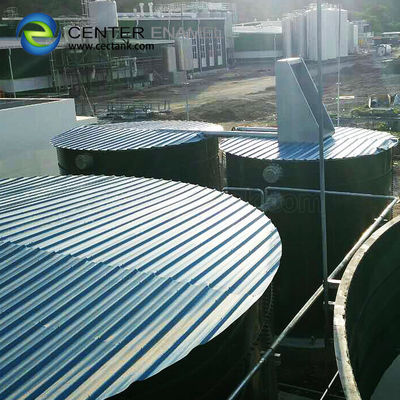
5000 m³ Agricultural Water Storage Tanks for Irrigation: Ensuring Water Security with Center Enamel
| Place of Origin: | China |
| Brand Name: | CEC TANKS |
| Certification: | ISO 9001:2008, AWWA D103 , OSHA , BSCI |
| Model Number: | J2016012613 |
| Minimum Order Quantity: | 1set |
| Price: | $5000~$20000 one set |
| Packaging Details: | PE poly-foam between each two steel plates ; wooden pallet and wooden box |
| Delivery Time: | 0-60 days after deposit received |
| Payment Terms: | L/C,T/T |
| Supply Ability: | 60 sets per month |
|
Detail Information |
|||
Product Description
5000 m³ Agricultural Water Storage Tanks for Irrigation: Ensuring Water Security with Center Enamel
In an era of volatile climate patterns and increasing water scarcity, water security is the single most critical factor for profitable agricultural production. For large-scale farms, greenhouses, and industrial irrigation projects, the ability to store vast quantities of water—reliably and cleanly—is non-negotiable.
A 5000 m³ storage capacity is a significant investment in infrastructure, providing the necessary buffer to handle seasonal fluctuations and ensure consistent supply during peak irrigation cycles. For this scale, Glass-Fused-to-Steel (GFS) technology has become the industry benchmark, offering a sophisticated, modular, and virtually maintenance-free alternative to traditional concrete or welded steel reservoirs.
The Critical Role of High-Capacity Irrigation Storage
Agriculture accounts for the largest share of global freshwater withdrawals. As farms scale to meet market demand, relying on limited local sources or unreliable groundwater is a risk to crop viability. A 5000 m³ tank provides:
-
Drought Resilience: A substantial reserve to maintain operations during dry seasons or water restrictions.
-
Precision Irrigation: A stable reservoir that allows for effective mixing, treatment, or fertigation (nutrient injection) before water reaches the crops.
-
Operational Continuity: Protection against supply-chain disruptions in water delivery.
Why GFS Technology is the Standard for 5000 m³ Tanks
At the 5000 m³ scale, the structural and material requirements of a tank are extreme. The hydrostatic pressure exerted by 5 million liters of water is immense, and the storage surface must remain pristine to prevent the clogging of irrigation nozzles and drip systems.
Center Enamel’s Glass-Fused-to-Steel (GFS) tanks address these challenges through advanced materials science:
1. Superior Corrosion Resistance
Agricultural water can often be saline or high in minerals. Unlike standard steel, which rusts, or concrete, which can leach alkalinity, GFS creates an inorganic, glass-fused barrier. This surface is inert, ensuring the water quality remains high for sensitive crop irrigation.
2. The Modular "Top-Down" Advantage
Building a 5000 m³ tank on-site using traditional methods is a massive logistics challenge. Center Enamel utilizes the top-down hydraulic jacking method. We assemble the tank at ground level, lifting the structure ring by ring. This significantly reduces the need for heavy, dangerous scaffolding, increases worker safety, and drastically cuts installation time—often completing the project in a fraction of the time required for a concrete pour.
3. Structural Integrity (AWWA D103-19)
A 5000 m³ tank is a major asset. Our designs are engineered according to AWWA D103-19 and other international seismic codes. We perform site-specific structural analysis for every project to ensure the tank can withstand the specific wind, snow, and seismic loads of your farm’s location.
Comparison: Why GFS Outperforms Legacy Materials
When evaluating the Total Cost of Ownership (TCO) for a large-scale 5000 m³ irrigation reservoir, the material choice defines the ROI.
| Feature | Center Enamel GFS Tank | Poured Concrete | Welded Carbon Steel |
| Durability | 30+ Years (Inert) | 20–30 Years (Cracking) | 20–30 Years (Rusting) |
| Construction Speed | Fast (Modular) | Very Slow (Curing) | Moderate |
| Maintenance | Minimal | High (Crack Sealing) | High (Repainting) |
| Water Quality | Stable & Hygienic | Potential Leaching | Rust Contamination |
| Relocatability | High | None | None |
Frequently Asked Questions (FAQ)
Q: Why is 5000 m³ the right size for my farm?
A: This capacity is often ideal for commercial greenhouses, large-scale orchards, or multi-crop vegetable farms. It provides enough volume to mitigate multi-week water supply interruptions while remaining compact enough to be managed through standard pump and filtration systems.
Q: Can GFS tanks be used for fertigation?
A: Yes. Because the glass surface is chemically inert, it is highly resistant to corrosive fertilizer mixtures or acidic water treatments, unlike concrete or standard steel which can degrade when exposed to harsh chemicals.
Q: What site preparation is required for a 5000 m³ tank?
A: A stable, reinforced concrete ring foundation or slab is required. Center Enamel provides the precise foundation engineering drawings and specifications tailored to your site's soil-bearing capacity.
Secure Your Irrigation Future
Your water supply is the foundation of your yield. Infrastructure that is prone to leaks, corrosion, or structural failure is a liability. By choosing a 5000 m³ GFS tank from Center Enamel, you are investing in a secure, high-performance, and scalable asset that protects your crops for decades.
Ready to calculate your water security needs? Our engineering team can assist with site-specific volume sizing, foundation requirements, and seismic assessments.