-
Glass Fused To Steel Tanks (596)
-
Stainless Steel Tanks (434)
-
Fusion Bonded Epoxy Tanks (592)
-
Galvanized Steel Tanks (321)
-
Aluminum Dome Roofs (1336)
-
Wastewater Storage Tanks (232)
-
Welded Steel Tanks (457)
-
Pressure Vessels (295)
-
Anaerobic Digester (201)
-
Industrial Water Tanks (349)
-
Glass Lined Steel Tanks (180)
-
Bolted Steel Tanks (389)
-
Sludge Storage Tank (115)
-
Biogas Storage Tank (173)
-
Leachate Storage Tanks (133)
-
Agricultural Water Storage Tanks (179)
-
Fire Water Tank (166)
-
Grain Storage Silos (146)
-
Biogas Projects (425)
-
Wastewater Treatment Projects (908)
-
Double Membrane Roof (223)

|
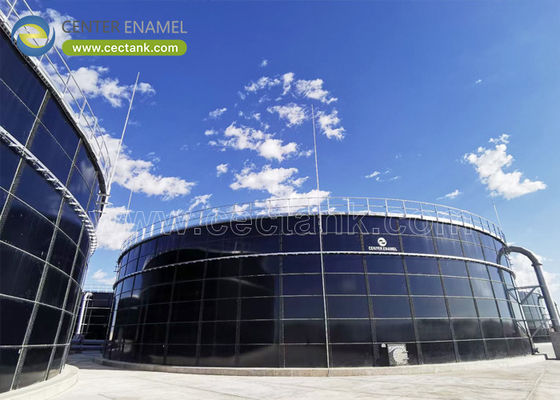
More than 50,000 Cubic Meters GLS/GFS Storage Tanks to Carry Your Agricultural Water Needs
| Place of Origin: | China |
| Brand Name: | CEC TANKS |
| Certification: | ISO 9001:2008, AWWA D103 , OSHA , BSCI |
| Model Number: | W |
| Minimum Order Quantity: | 1set |
| Price: | $5000~$20000 one set |
| Packaging Details: | PE poly-foam between each two steel plates ; wooden pallet and wooden box |
| Delivery Time: | 10-30 days after deposit received |
| Payment Terms: | L/C,T/T |
| Supply Ability: | 60 sets per month |
|
Detail Information |
|||
Product Description
Secure, large-scale water containment is the backbone of modern agricultural resilience. For mega-scale farming operations, commercial irrigation networks, and regional water conservation initiatives, scaling storage capacity beyond 50,000 cubic meters demands an engineering solution that balances structural integrity with rapid deployment and zero chemical leaching.
In summary, Glass-Fused-to-Steel (GFS)—also known globally as Glass-Lined Steel (GLS)—tanks represent the premier choice for large-capacity agricultural water storage, offering an inert, rust-proof surface that outperforms traditional concrete and welded options in both installation speed and lifetime value.
The technical advantage of GFS tanks comes from a high-temperature factory firing process between 820°C and 930°C. This intense heat causes silica glass to molecularly fuse with a steel core plate.
The resulting material delivers a dual benefit: you get the structural strength and flexibility of steel combined with the superior corrosion and wear resistance of glass.
For agricultural operations storing raw well water, surface runoff, or treated liquid fertilizer, this inorganic glass layer ensures absolute chemical stability. It eliminates the risk of water contamination from concrete scaling or epoxy breakdown, providing a clean environment for crops and livestock alike.
When managing a total site volume exceeding 50,000 cubic meters, engineers typically evaluate three core infrastructure types. The comparative breakdown below demonstrates why modular bolted steel leads the market in efficiency:
| Engineering Metric | Glass-Fused-to-Steel (GFS) | Reinforced Concrete | Welded Carbon Steel |
|---|---|---|---|
| Installation Velocity | Fast (Modular panels assemble with sync jacks) | Slow (Requires 28+ days of concrete curing) | Moderate (Extensive on-site welding required) |
| Corrosion Resistance | Superior (pH 1–14 coverage, inert surface) | Low (Porous structure prone to cracking) | Moderate (Relies on temporary coatings/linings) |
| Maintenance Profile | Minimal (30+ year design life) | High (Requires ongoing crack and seal repairs) | High (Demands periodic blasting and repainting) |
| Quality Control | 100% Factory Tested (1500V Holiday test) | Field Sampled (Prone to local environmental variables) | Field Inspected (Welding quality varies by technician) |
Achieving a collective storage volume greater than 50,000 cubic meters requires a carefully sequenced design and execution strategy. Because modular bolted tanks do not rely on traditional field welding, their deployment follows a highly predictable, risk-mitigated timeline.
- Geotechnical Assessment & Foundation Engineering:Phase 1. Analyze local soil bearing capacity and seismic activity. A precise concrete ring beam foundation is poured to support the massive hydrostatic pressures exerted by thousands of cubic meters of water.
- Factory Fabrication & 1500V Defect Testing:Phase 2. Steel sheets are precision-cut, shot-blasted, coated with liquid enamel, and fired. Every single panel undergoes a 1500V High-Voltage Holiday Test to guarantee absolute coating continuity before being packed for global transport.
- Synchronized Ground-Level Assembly:Phase 3. Using specialized mechanical jacking systems, the top ring of the tank and the roof (such as an Aluminum Geodesic Dome or GFS roof) are assembled first at ground level. This drastically minimizes high-altitude labor risks.
- Progressive Lifting & Bolting:Phase 4. The jacks elevate the completed ring, allowing crews to bolt the next row of panels beneath it using high-tenacity Grade 10.9 galvanized bolts and specialized, long-lasting sealants. This process repeats until full height is reached.
- Hydrostatic Commissioning & Integration:Phase 5. The tank array is filled progressively to verify seal integrity. Inlet, outlet, and overflow piping networks are integrated alongside automated agricultural telemetry systems.
To ensure maximum asset protection, large-scale containment infrastructure must adhere strictly to established international design codes. Premium GFS tanks are engineered and fabricated in compliance with global standards, including:
- AWWA D103-09: The benchmark standard for factory-coated bolted carbon steel water storage.
- ISO 28765: The governing standard for design and engineering testing of glass-lined steel tanks.
- NSF/ANSI 61: Validates that the containment system will not leach harmful materials into potable or agricultural water supplies.
The Takeaway: When engineering a water storage system over 50,000 cubic meters, moving away from porous concrete or high-maintenance welded steel to modular GFS tanks dramatically lowers long-term operational expenditures (OpEx) while protecting your most valuable agricultural resource.
As a leading global provider of modular containment systems, Shijiazhuang Zhengzhong Technology Co., Ltd. (Center Enamel) delivers customized EPC technical support from initial product design to final on-site commissioning. For tailored engineering calculations, site layouts, or formal budget quotes for your next agricultural infrastructure project, connect with our technical sales division through our direct corporate channels: