-
Glass Fused To Steel Tanks (596)
-
Stainless Steel Tanks (434)
-
Fusion Bonded Epoxy Tanks (592)
-
Galvanized Steel Tanks (321)
-
Aluminum Dome Roofs (1336)
-
Wastewater Storage Tanks (232)
-
Welded Steel Tanks (457)
-
Pressure Vessels (295)
-
Anaerobic Digester (201)
-
Industrial Water Tanks (349)
-
Glass Lined Steel Tanks (180)
-
Bolted Steel Tanks (389)
-
Sludge Storage Tank (115)
-
Biogas Storage Tank (173)
-
Leachate Storage Tanks (133)
-
Agricultural Water Storage Tanks (179)
-
Fire Water Tank (166)
-
Grain Storage Silos (146)
-
Biogas Projects (425)
-
Wastewater Treatment Projects (978)
-
Double Membrane Roof (223)
|
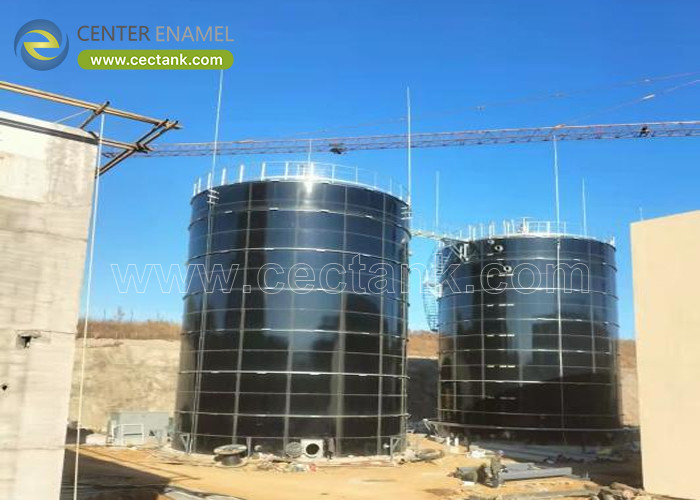
GLS Fire Water Tanks: The Ultimate Fire Protection Solution
| Place of Origin: | CHINA |
| Brand Name: | CEC TANKS |
| Certification: | ISO 9001:2008, AWWA D103 , OSHA , BSCI |
| Model Number: | W20180508016 |
| Minimum Order Quantity: | 1 set |
| Price: | $5000~$20000 one set |
| Packaging Details: | PE poly-foam between each two plates;wooden pallet and wooden box |
| Delivery Time: | 10-30 days after deposit received |
| Payment Terms: | L/C,T/T |
| Supply Ability: | 60 sets per month |
|
Detail Information |
|||
Product Description
In fire suppression, the reliability of your water supply is non-negotiable. If a fire breaks out, your sprinkler system must be ready to deliver water instantly. The "single point of failure" in most fire protection systems is not the pumps or the piping—it is the storage tank. If the tank leaks, corrodes, or suffers structural failure, the entire system is compromised.
Glass-Lined Steel (GLS) tanks—also known as Glass-Fused-to-Steel (GFS)—have become the industry’s preferred choice for fire protection storage. By fusing silicate glass to high-strength steel, this technology creates an impermeable barrier that combines the structural resilience of steel with the chemical inertness of glass.
For facility managers, EPC contractors, and fire safety engineers, the choice of storage tank impacts both initial project costs and long-term insurance premiums. GLS tanks offer three distinct advantages for fire water storage:
Unlike traditional welded carbon steel tanks, which require constant, expensive repainting and recoating to prevent rust, GLS tanks are inherently corrosion-resistant. The glass-fused surface is inert; it does not degrade, peel, or blister when in contact with standing water. This ensures your tank remains structurally sound for 30+ years with minimal intervention.
Fire protection projects often operate under strict, time-sensitive deadlines set by local Authorities Having Jurisdiction (AHJ) or insurance carriers. Because GLS tanks are prefabricated in a controlled factory environment and assembled on-site using bolted panels, they can be erected in a fraction of the time required for poured concrete or field-welded steel tanks.
A fire water tank must be more than just a vessel; it must be a compliant system. High-quality GLS tanks are engineered to strictly adhere to NFPA 22 (Standard for Water Tanks for Private Fire Protection) and AWWA D103 (Standard for Bolted Steel Tanks). These standards ensure that your tank is designed to handle local seismic, wind, and hydrostatic loads with a massive factor of safety.
When evaluating storage options for fire safety, the differences between material types are significant:
| Feature | Glass-Lined Steel (GLS) | Poured Concrete | Welded Carbon Steel |
|---|---|---|---|
| Corrosion Protection | Excellent (Inert) | Moderate (Requires Lining) | Low (Needs Painting) |
| Maintenance | Minimal | High (Crack Sealing) | High (Recoating) |
| Installation Time | Fast (Modular) | Slow (Weeks/Months) | Moderate |
| Compliance | Built to NFPA 22 | Varies | Built to AWWA D100 |
| Lifecycle Cost | Lowest | Moderate/High | High |
To ensure your fire water tank meets safety and insurance requirements, your procurement specification should mandate the following:
-
Coating Quality: Specify ISO 28765 compliance, ensuring the glass-fused interface is free of discontinuities. Insist on 1500V "Holiday Testing" to guarantee zero pinholes in the coating.
-
Structural Modeling: Demand a project-specific Finite Element Analysis (FEA) that accounts for your local site’s seismic, wind, and snow loads.
-
Safety Appurtenances: Ensure the tank includes OSHA-compliant ladders, safety cages, and properly sized, screened vents and overflows as required by NFPA 22.
-
Suction Integrity: The anti-vortex fitting must be correctly engineered and installed to prevent air from entering the fire pump, ensuring consistent flow during operation.
A: Traditional steel tanks (epoxy or painted) are subject to "coating breakdown" over time. As the coating fails, the steel rusts, which can clog fire sprinkler heads and piping with sediment. GLS tanks eliminate this risk, ensuring clean, debris-free water.
A: NFPA 22 requires annual exterior inspections and five-year interior inspections. Because the GLS surface is non-stick and inert, these inspections are typically faster and less complex than those required for concrete or deteriorating painted tanks.
A: Yes. Because the glass-fused surface is highly chemical-resistant (often pH 3–11), these tanks are incredibly versatile and can be repurposed for process water, industrial wastewater, or other storage needs, protecting your long-term capital investment.
At Center Enamel, we specialize in high-integrity storage for critical fire protection infrastructure. We bridge the gap between complex engineering standards (NFPA 22, AWWA D103) and real-world deployment, ensuring your facility remains compliant and protected.
Ready to secure your site? Contact our engineering team today to discuss your site-specific requirements, volume capacity, and timeline.