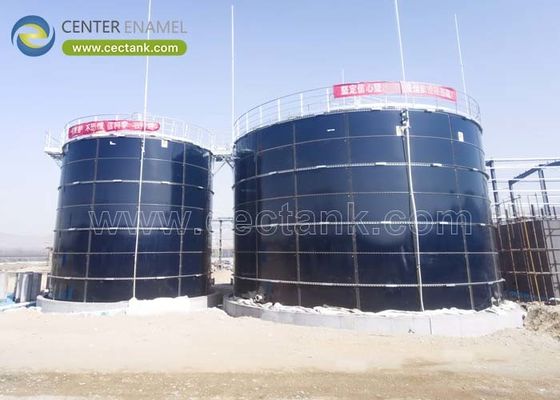
Understanding Wastewater Tanks: Purpose, Types, and Engineering Essentials
2026-07-09

A wastewater tank is a specialized containment and processing vessel designed to store, manage, or treat water contaminated by domestic, industrial, or agricultural waste. Unlike simple storage reservoirs, these tanks often function as highly engineered "reactors" where physical, chemical, and biological processes occur before the effluent can be safely discharged or reused.
For industrial facilities and municipalities, wastewater tanks are the primary infrastructure for environmental compliance. They prevent the release of untreated pollutants into the environment, protecting public health and local ecosystems.
Wastewater tanks are not merely "holding ponds." They are the backbone of the treatment process, each designed to perform a specific function:
-
Equalization Tanks: These act as buffers, receiving incoming waste with varying flow rates and concentrations. By mixing and leveling the "load," they prevent process shock to downstream equipment.
-
Aeration Tanks: In biological treatment plants, these tanks introduce oxygen into the water to stimulate microorganisms (activated sludge). These bacteria consume organic matter, breaking down pollutants effectively.
-
Anaerobic Digesters: These sealed vessels facilitate the breakdown of sludge by bacteria in an oxygen-free environment. A key advantage of this process is the production of biogas—a renewable energy source—which is often captured and reused.
-
Clarifiers & Sedimentation Tanks: These are designed for the physical separation of solids. Through gravity, heavy particulate matter (sludge) settles at the bottom, allowing cleaner water to be discharged from the top.
-
Sludge Holding Tanks: These provide temporary storage for concentrated solid waste before it is dewatered or transported off-site for disposal.
The material used for a wastewater tank is the most important decision in its design life. Because wastewater often contains corrosive elements (like Hydrogen Sulfide), acids, and abrasive solids, the interior lining or substrate must be chosen carefully to avoid costly leaks and structural failure.
| Material | Durability | Maintenance | Best Use Case |
|---|---|---|---|
| Glass-Fused-to-Steel (GFS) | Excellent | Very Low | Industrial effluent, high-corrosion, biogas |
| Concrete | Moderate | High (Crack repair) | Large municipal, underground, gravity-based |
| Carbon/Stainless Steel | Moderate | Moderate/High | Specialized, temperature-controlled processes |
| Plastic/FRP | Low to Moderate | Low | Small, localized, or chemical-specific storage |
Wastewater management is strictly regulated. Professional-grade tanks must meet rigorous engineering standards (such as AWWA D103 or ISO 9001) to ensure:
-
Chemical Resistance: The tank must remain inert to the specific waste stream it contains to prevent degradation.
-
Seismic & Load Analysis: Tanks are engineered to withstand environmental stresses, including high wind, heavy snow, and seismic activity.
-
Leak Prevention: For industrial applications, secondary containment or robust panel sealing is required to prevent environmental release.
-
Operational Life: A well-engineered tank aims to minimize the "Total Cost of Ownership" (TCO) by eliminating the need for frequent, labor-intensive recoating or repairs.
A: Municipal tanks focus on high-volume, long-term storage of domestic sewage and are usually sized for decades of city growth. Industrial tanks are highly specialized and engineered to handle specific chemical profiles, high temperatures, or toxic contaminants.
A: Untreated wastewater often contains hydrogen sulfide (H_2S) and other corrosive byproducts that can rapidly degrade standard steel or concrete. High-quality coatings (like Glass-Fused-to-Steel) create an impermeable barrier, preventing corrosion and extending the tank's lifespan to 30+ years.
A: Yes, if you choose modular bolted tank designs (like GFS or steel panels). These can often be expanded vertically or structurally modified more easily than monolithic concrete structures.
At Center Enamel, we specialize in high-performance storage solutions for industrial and municipal wastewater management. Our team combines precision engineering with a deep understanding of water chemistry to deliver tanks that are built for safety, compliance, and longevity.
Are you ready to design a robust wastewater infrastructure? Contact our engineering department today for a technical consultation, capacity analysis, and a customized proposal.
-
2026-08-31
-
2026-08-19
-
2026-07-10
-
2026-07-10