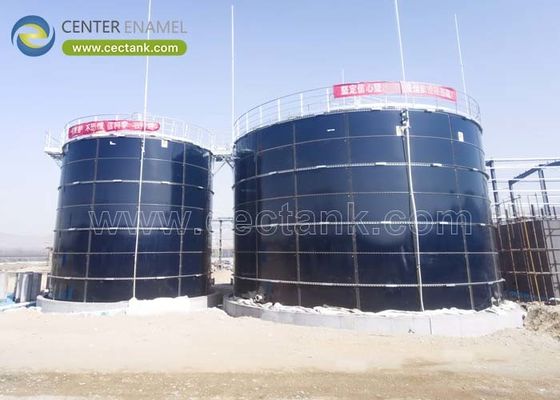
FBE Anaerobic Digesters: The 2026 Engineering Standard for Biogas Infrastructure
2026-05-08

FBE Anaerobic Digesters: The 2026 Engineering Standard for Biogas Infrastructure
In the global shift toward circular economies and renewable energy, the efficiency of a biogas plant depends entirely on the integrity of its core: the anaerobic digester. As of 2026, Fusion Bonded Epoxy (FBE) bolted tanks have emerged as the superior alternative to traditional concrete and welded steel, offering a strategic balance of chemical resilience and rapid deployment.
What is an FBE Anaerobic Digester?
An FBE Anaerobic Digester is a high-performance modular storage system where steel panels are factory-coated with a thermoset epoxy resin. The coating is electrostatically applied and thermally fused to the steel substrate at temperatures exceeding 200°C.
Unlike field-applied paint, this fusion process creates a molecularly cross-linked barrier that is impermeable to the corrosive byproducts of organic decomposition, such as hydrogen sulfide (H2S) and organic acids.
Why FBE is the Optimal Choice for Biogas Production
1. Superior Corrosion Resistance (pH 3–11)
Anaerobic fermentation is a chemically aggressive process. FBE coatings are engineered to withstand the volatile fatty acids produced during the hydrolysis phase. The coating is inert, ensuring that the structural steel remains protected from H2S gas—the leading cause of structural failure in concrete digesters.
2. Zero-Discontinuity Quality Assurance
Every FBE panel is subjected to a high-voltage Holiday Test (≥1100V) at the factory. This electronic testing ensures the coating is 100% free of pinholes or microscopic defects, a standard of quality that is impossible to achieve with on-site concrete lining or liquid painting.
3. Thermal Stability for Fermentation
Biological processes in digesters are temperature-sensitive. FBE tanks are easily integrated with high-efficiency insulation systems, supporting both Mesophilic (approx. 35°C) and Thermophilic (approx. 55°C) environments. The smooth internal surface also reduces "sludge hanging," improving the hydraulic efficiency of the reactor.
Technical Comparison: FBE vs. Concrete
| Feature | FBE Bolted Steel | Reinforced Concrete |
| Construction Speed | High (Modular) | Low (Requires Curing) |
| Impact Resilience | Excellent (Flexible) | Low (Prone to Cracking) |
| H2S Gas Resistance | High | Low (Needs Liners) |
| Maintenance | Minimal | High |
| Field Repairability | Easy (Liquid Touch-up) | Expensive |
Strategic Applications in 2026
FBE anaerobic digesters are the backbone of several critical waste-to-energy workflows:
- CSTR (Completely Stirred Tank Reactor): Ideal for high-solid organic waste like manure and kitchen waste.
- UASB (Upflow Anaerobic Sludge Blanket): High-efficiency treatment for industrial wastewater (e.g., alcohol and food processing).
- Municipal Sludge Digestion: Modern wastewater plants use FBE tanks to stabilize biosolids and capture methane for on-site power generation.
Proven Global Performance: Center Enamel Case Studies
The reliability of FBE technology is evidenced by its implementation in massive international projects:
- Inner Mongolia Bio-Natural Gas Project: A massive 16,760 m³ installation utilizing CSTR technology for agricultural waste.
- Swaziland Alcohol Wastewater Project: A total volume of 42,188 m³, demonstrating FBE's ability to handle high-load industrial effluent.
- Xuzhou Biogas Project: A 30,532 m³ system dedicated to municipal kitchen waste stabilization.
Maximizing Infrastructure Lifecycle
For project managers in 2026, the FBE anaerobic digester represents the lowest Total Cost of Ownership (TCO). By eliminating the risks of structural cracking found in concrete and the brittleness of glass coatings, FBE technology ensures that biogas assets remain operational, safe, and efficient for over 30 years.
Are you currently comparing FBE with traditional concrete for a specific project, and would it be helpful to see a cost-benefit analysis for the installation phase?
-
2026-08-31
-
2026-08-19
-
2026-07-10
-
2026-07-10