-
Glass Fused To Steel Tanks (596)
-
Stainless Steel Tanks (434)
-
Fusion Bonded Epoxy Tanks (592)
-
Galvanized Steel Tanks (321)
-
Aluminum Dome Roofs (1336)
-
Wastewater Storage Tanks (232)
-
Welded Steel Tanks (457)
-
Pressure Vessels (295)
-
Anaerobic Digester (201)
-
Industrial Water Tanks (349)
-
Glass Lined Steel Tanks (180)
-
Bolted Steel Tanks (389)
-
Sludge Storage Tank (115)
-
Biogas Storage Tank (173)
-
Leachate Storage Tanks (133)
-
Agricultural Water Storage Tanks (179)
-
Fire Water Tank (166)
-
Grain Storage Silos (146)
-
Biogas Projects (425)
-
Wastewater Treatment Projects (928)
-
Double Membrane Roof (223)

|
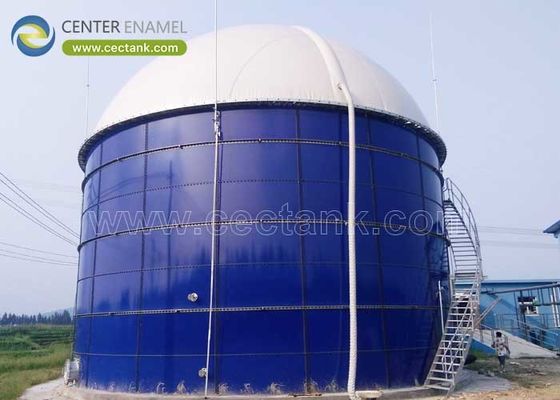
Bio-Sludge Anaerobic Digester Tanks: High-Performance Solutions for Industrial Wastewater Treatment
| Place of Origin: | China |
| Brand Name: | CEC TANKS |
| Certification: | ISO 9001:2008, AWWA D103 , OSHA , BSCI |
| Model Number: | W20161124014 |
| Minimum Order Quantity: | 1set |
| Price: | $5000~$20000 one set |
| Packaging Details: | PE poly-foam between each two steel plates ; wooden pallet and wooden box |
| Delivery Time: | 0-60 days after deposit received |
| Payment Terms: | L/C,T/T |
| Supply Ability: | 60 sets per month |
|
Detail Information |
|||
Product Description
In the modern industrial landscape, wastewater is increasingly viewed as a resource rather than a liability. For industries ranging from food processing and dairy to pulp and paper, the conversion of bio-sludge into renewable energy is no longer just a sustainability goal—it is an operational imperative.
At the heart of this process lies the Anaerobic Digester Tank. While traditional concrete and field-welded steel tanks have been the historical norm, Glass-Fused-to-Steel (GFS) bolted tanks have emerged as the superior infrastructure choice for modern industrial wastewater treatment plants.
Industrial bio-sludge presents a unique set of challenges: high organic loading, fluctuating pH levels, and the presence of corrosive gases like hydrogen sulfide ($H_2S$). Traditional materials often struggle under these conditions, leading to long-term structural degradation.
The internal environment of a bio-sludge digester is inherently aggressive. The anaerobic breakdown of organic matter releases volatile fatty acids and sulfides that rapidly eat through standard carbon steel and degrade the porous surface of concrete.
-
Inert Barrier: GFS tanks feature a molecular bond between glass and steel, creating a surface that is chemically inert. It does not react with the acidic byproducts of digestion, ensuring the tank structure remains pristine for 30+ years.
Efficiency in an anaerobic digester is often tied to the "cleanliness" of the internal surface.
-
Non-Stick Surface: The smooth, glass-fused surface prevents the accumulation of sludge, fat, oil, and grease (FOG). This prevents "dead zones" within the reactor, ensuring consistent mixing and higher microbial activity, which directly translates to 15–20% higher biogas yields compared to rough-surfaced tanks.
Industrial projects often face strict commissioning deadlines.
-
Top-Down Jacking Method: GFS tanks are modular. They are assembled from the top down using hydraulic jacks, allowing the entire structure to be built at ground level. This eliminates the need for expensive scaffolding, reduces site safety risks, and cuts construction time by up to 60% compared to cast-in-place concrete.
| Feature | Glass-Fused-to-Steel (GFS) | Poured Concrete | Field-Welded Steel |
| Corrosion Resistance | Excellent (Inert Glass) | Low (Requires Sealing) | Moderate (Requires Anodes) |
| Construction Time | Fast (Weeks) | Slow (Months) | Moderate (Months) |
| Surface Porosity | Zero | High | Low |
| Maintenance | Minimal | High (Crack Repair) | High (Repainting) |
| Expansion Potential | High (Modular) | None | None |
To ensure the long-term success of your wastewater project, the digester tank must be engineered to handle the specific chemistry of your bio-sludge.
-
Sealing Systems: High-grade, chemically resistant elastomeric sealants are critical at the bolted panel joints to maintain gas-tight integrity.
-
Thermal Insulation: Anaerobic bacteria are sensitive to temperature (mesophilic vs. thermophilic). GFS tanks are easily fitted with high-density external insulation blankets, which provide the thermal stability required to maintain optimal digestion temperatures.
-
Gas Handling: Industrial digesters must be equipped with secure, integrated gas-handling systems—often utilizing double-membrane covers—to safely capture and store the produced methane for on-site power generation (CHP).
A: Yes. $H_2S$ is the primary cause of acid-induced corrosion in digesters. Because GFS technology uses a glass surface that is essentially a non-reactive mineral, it is completely immune to the sulfuric acid generated by $H_2S$.
A: Center Enamel’s GFS tanks are engineered to meet global benchmarks, including AWWA D103-19, ISO 28765, and NSF/ANSI 61. We perform site-specific seismic and wind-load calculations to ensure your facility meets all local safety codes.
A: Yes. Many facilities choose to replace failing concrete or welded steel covers with GFS components. Because of their modularity, GFS panels can be adapted to integrate with existing foundation or heating systems.
With over 30 years of experience in environmental protection engineering, Center Enamel provides more than just a tank—we provide a complete anaerobic digestion solution tailored to your industrial wastewater profile.
Ready to optimize your wastewater treatment plant? Contact our engineering team today to discuss your bio-sludge feedstock, capacity requirements, and energy recovery goals.