-
Glass Fused To Steel Tanks (596)
-
Stainless Steel Tanks (434)
-
Fusion Bonded Epoxy Tanks (592)
-
Galvanized Steel Tanks (321)
-
Aluminum Dome Roofs (1336)
-
Wastewater Storage Tanks (232)
-
Welded Steel Tanks (457)
-
Pressure Vessels (295)
-
Anaerobic Digester (202)
-
Industrial Water Tanks (349)
-
Glass Lined Steel Tanks (180)
-
Bolted Steel Tanks (389)
-
Sludge Storage Tank (115)
-
Biogas Storage Tank (173)
-
Leachate Storage Tanks (133)
-
Agricultural Water Storage Tanks (179)
-
Fire Water Tank (166)
-
Grain Storage Silos (146)
-
Biogas Projects (424)
-
Wastewater Treatment Projects (1158)
-
Double Membrane Roof (223)

|
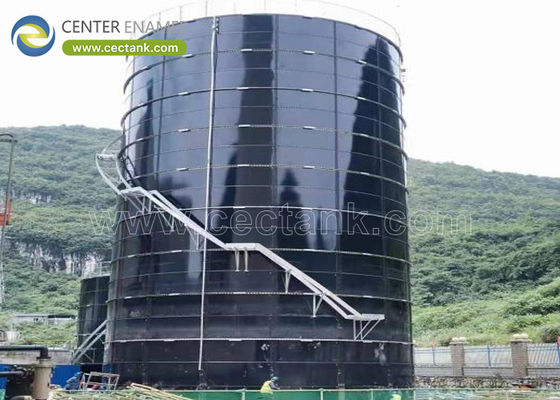
Bolted Steel Tanks as UASB Reactors for Wastewater Treatment: Advanced Engineering and Industrial Solutions
| Place of Origin: | China |
| Brand Name: | CEC TANKS |
| Certification: | ISO 9001:2008, AWWA D103 , OSHA , BSCI |
| Model Number: | W20160126001 |
| Minimum Order Quantity: | 1set |
| Price: | $5000~$20000 one set |
| Packaging Details: | PE poly-foam between each two steel plates ; wooden pallet and wooden box |
| Delivery Time: | 0-60 days after deposit received |
| Payment Terms: | L/C,T/T |
| Supply Ability: | 60 sets per month |
|
Detail Information |
|||
Product Description
Treating high-concentration organic wastewater from industries such as food processing, brewing, pulp and paper, and chemical manufacturing requires highly efficient biological systems. Among anaerobic biological treatments, the Upflow Anaerobic Sludge Blanket (UASB) reactor stands out as one of the most successful and cost-effective technologies in industrial history. By using a dense, granular sludge bed to metabolize organic pollutants without mechanical aeration, UASB reactors achieve exceptional Chemical Oxygen Demand (COD) reduction while recovering valuable methane-rich biogas.
However, the success of a UASB reactor depends heavily on the structural integrity, gas-tightness, and chemical corrosion resistance of its containment vessel. Traditional materials like cast-in-place concrete or bare carbon steel frequently degrade under the harsh, acidic environments typical of anaerobic digestion. To overcome these challenges, Shijiazhuang Zhengzhong Technology Co., Ltd. (Center Enamel) engineers state-of-the-art bolted steel tanks utilizing advanced Glass-Fused-to-Steel (GFS) technology specifically optimized for UASB reactor applications.
Operating an industrial-scale UASB system introduces severe physical and chemical stresses on containment structures:
-
Aggressive Biogenic Corrosion: The biological decomposition of complex organics produces volatile fatty acids, moisture, and hydrogen sulfide (H_2S) gas. In the reactor headspace, H_2S oxidizes into biogenic sulfuric acid, which rapidly corrodes standard concrete and unlined steel walls.
-
Absolute Gas-Tight Integrity: UASB reactors capture valuable biogas for renewable energy generation. The tank structure must maintain a 100% gas-tight seal under varying internal pressures to prevent fugitive methane emissions.
-
Hydrostatic and Dynamic Loading: The upward hydraulic flow and dense sludge blanket exert constant mechanical and pressure loads on the tank walls, requiring high tensile strength and structural elasticity.
Center Enamel addresses these severe operating conditions by combining modular bolted architecture with premier Glass-Fused-to-Steel engineering:
-
High-Temperature Thermal Fusion: Inorganic glass frit is fused to high-strength structural steel plates at extreme temperatures between 820°C and 930°C. This creates an inseparable molecular bond combining the tensile strength of steel with the absolute chemical inertness of glass.
-
Total Immunity to H_2S and Acids: The hard, glossy glass surface (Mohs hardness 6.0) completely resists sulfur attack, organic acids, and moisture permeation, eliminating internal wall thinning and costly repainting.
-
Rapid Modular Assembly: Prefabricated in a climate-controlled factory, the modular panels are bolted rapidly on-site using high-strength hardware and specialized sealing systems, reducing construction timelines by up to 50% compared to concrete construction.
| Performance Benchmark | Center Enamel GFS Bolted UASB Tank | Cast-in-Place Concrete UASB Tank | Traditional Welded Carbon Steel Tank |
|---|---|---|---|
| Corrosion & H_2S Defense | Superior (Inert glass coating blocks sulfur attack and organic acids) | Moderate (Vulnerable to biogenic sulfuric acid spalling and structural cracking) | Low (Prone to rapid wall thinning without intensive interior coating) |
| Gas-Tight Reliability | High (Engineered elastic EPDM gaskets ensure zero gas leakage) | Low (Prone to hairline micro-cracks over dynamic pressure cycles) | High (Dependent on meticulous field weld NDT inspection) |
| Construction Velocity | Fast (Prefabricated modular panels bolted rapidly on-site) | Very Slow (Months of formwork, pouring, and weather-dependent curing) | Moderate (Requires extensive field welding and inspection phases) |
| Lifecycle Maintenance Cost | Minimal (Zero interior repainting required over a 30+ year lifespan) | High (Requires frequent structural crack sealing, patching, and injection) | High (Continuous maintenance overhead to prevent rust-through) |
Engineering Assurance: All GFS bolted tanks manufactured by Center Enamel comply strictly with global standards, including AWWA D103-09, ISO 28765, and NSF/ANSI 61, and undergo 100% high-voltage holiday spark testing prior to dispatch to guarantee absolute pinhole-free coating continuity.
A: Bolted steel tanks—specifically Glass-Fused-to-Steel (GFS) models—offer superior resistance to the aggressive organic acids and hydrogen sulfide (H_2S) generated during anaerobic digestion. Furthermore, their modular design allows for rapid on-site assembly, bypassing the long curing delays and cracking risks associated with concrete basins.
A: The GFS coating is created by fusing inorganic glass to high-strength steel at temperatures between 820°C and 930°C. This forms an inert, non-porous molecular barrier that is completely immune to sulfur attack and volatile fatty acids, eliminating the need for periodic interior repainting.
A: Yes. Center Enamel's engineering team customizes tank dimensions and structural attachments to seamlessly integrate with three-phase separators, internal piping, agitation equipment, and diverse roofing systems such as double membrane gas holders or aluminum geodesic domes.
A: Yes. The modular bolted architecture provides exceptional scalability, allowing facility operators to easily increase tank height or volume by bolting additional panel rings onto the existing structure as wastewater processing demands grow.