-
Glass Fused To Steel Tanks (896)
-
Stainless Steel Tanks (434)
-
Fusion Bonded Epoxy Tanks (660)
-
Galvanized Steel Tanks (321)
-
Aluminum Dome Roofs (1346)
-
Wastewater Storage Tanks (280)
-
Welded Steel Tanks (457)
-
Pressure Vessels (534)
-
Anaerobic Digester (217)
-
Industrial Water Tanks (424)
-
Glass Lined Steel Tanks (180)
-
Bolted Steel Tanks (389)
-
Sludge Storage Tank (115)
-
Biogas Storage Tank (173)
-
Leachate Storage Tanks (133)
-
Agricultural Water Storage Tanks (179)
-
Fire Water Tank (166)
-
Grain Storage Silos (146)
-
Biogas Projects (424)
-
Wastewater Treatment Projects (1882)
-
Double Membrane Roof (223)

|
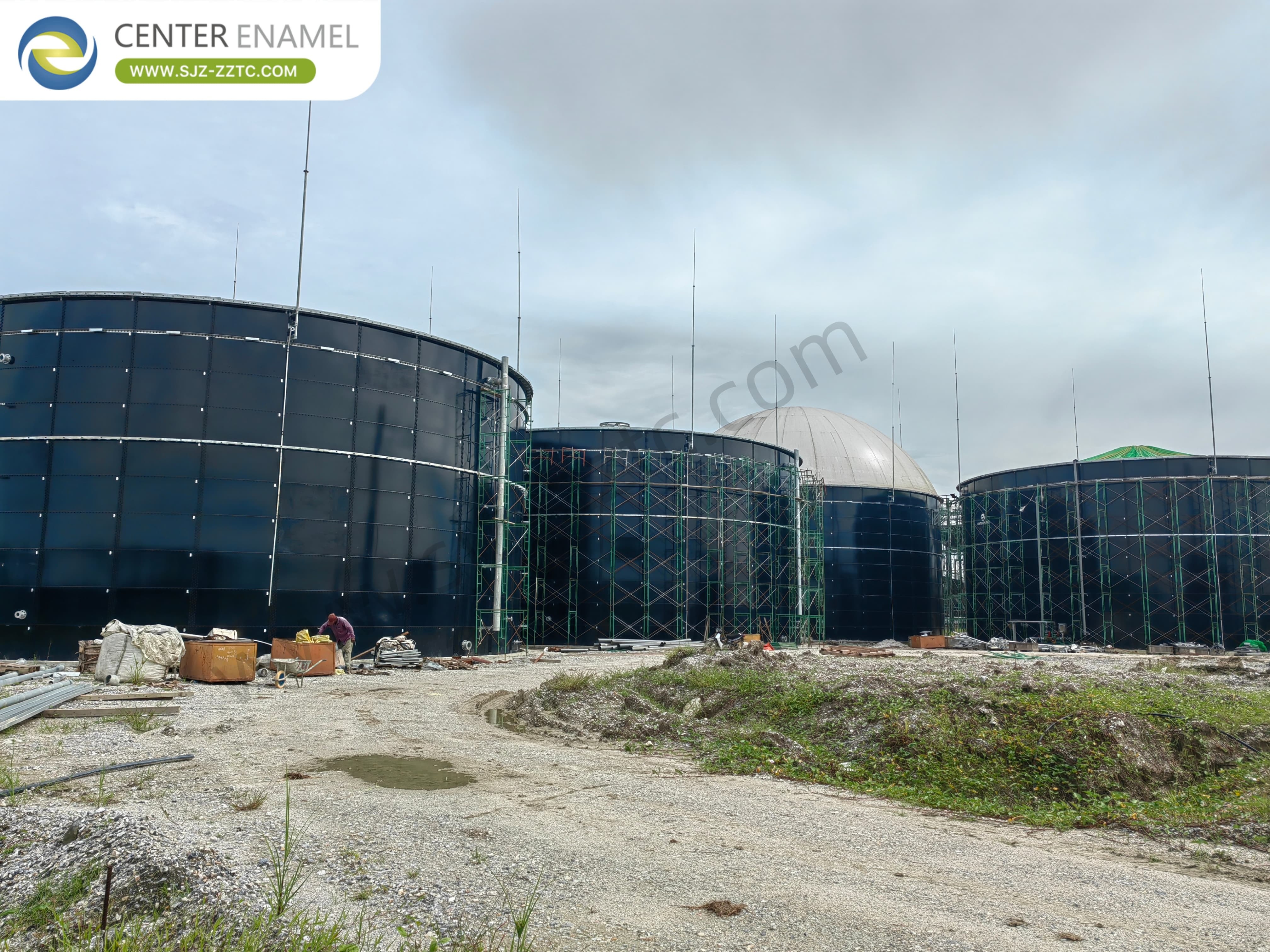
Innovative Anaerobic Technologies for Brazil Dairy Farm Manure Treatment
| Place of Origin: | China |
| Brand Name: | CEC TANKS |
| Certification: | ISO 9001:2008, AWWA D103 , OSHA , BSCI |
| Model Number: | W |
| Minimum Order Quantity: | 1set |
| Price: | $5000~$20000 one set |
| Packaging Details: | PE poly-foam between each two steel plates ; wooden pallet and wooden |
| Delivery Time: | 10-30 days after deposit received |
| Payment Terms: | L/C,T/T |
| Supply Ability: | 60 sets per month |
|
Detail Information |
|||
| Place of Origin | China | Brand Name | CEC TANKS |
|---|---|---|---|
| Certification | ISO 9001:2008, AWWA D103 , OSHA , BSCI | Model Number | W |
| Tank Body Color: | Dark Green / Can Be Customized | Corrosion Integrity: | Excellent |
| Steel Plates Thickness: | 3mm To 12mm , Depends On The Tank Structure | Chemical Resistance: | Excellent |
| Size Of Panel: | 2.4M * 1.2M | Easy To Clean: | Smooth, Glossy, Inert, Anti-adhesion |
| Highlight: | anaerobic manure treatment Brazil dairy,dairy farm wastewater treatment projects,anaerobic technologies manure treatment |
||
Product Description
Brazil has a major dairy farming industry that generates considerable quantities of livestock manure and agricultural wastewater. Managing these materials effectively is essential for reducing environmental impacts and improving farm resource efficiency. Anaerobic Technologies offer a practical way to convert dairy manure into renewable biogas while producing digestate for further utilization. CSTR reactors, GFS Tanks, Double Membrane Roof systems, and supporting equipment can form an integrated manure treatment solution. Center Enamel provides diversified tank products and project-related services for agricultural and environmental applications.
Brazil is one of the world's major milk-producing countries. According to the Brazilian Institute of Geography and Statistics (IBGE), national cow milk production reached approximately 35.4 billion liters in 2023. The country also recorded around 15.7 million milked cows during that year.
The scale of dairy farming creates considerable manure management requirements. Dairy manure is often collected together with wash water, bedding materials, and other farm residues, depending on the housing and cleaning system.
Without appropriate treatment, manure can contribute to methane emissions, unpleasant odors, nutrient runoff, and contamination of surface water and groundwater. Seasonal rainfall and differences in farm infrastructure can also complicate manure storage and handling.
Dairy Farm Manure Treatment using anaerobic digestion provides an opportunity to manage organic waste while recovering biogas for farm energy requirements.
The conversion of dairy manure into biogas starts with collection from livestock housing, milking areas, and manure handling facilities.
Collected manure is transferred to a pretreatment system, where unsuitable materials and large solids are removed. Depending on its moisture content, the manure is mixed with water or recycled liquid to produce a pumpable slurry.
The prepared feedstock enters an anaerobic digestion reactor. In the oxygen-free environment, microorganisms break down biodegradable organic compounds and generate methane-rich biogas.
The gas is collected through a pipeline and transferred to dehydration and desulfurization equipment. Meanwhile, digestate leaves the reactor and undergoes solid-liquid separation.
The resulting solid and liquid fractions can be further treated and evaluated for appropriate agricultural reuse.
The Continuous Stirred-Tank Reactor (CSTR) is a suitable reactor configuration for processing pumpable dairy manure slurry.
It features continuous or semi-continuous feeding and a mechanical stirring system. The agitator shaft and paddles help distribute manure and microorganisms throughout the digestion tank.
This mixing improves contact between organic matter and microorganisms, supporting relatively uniform fermentation conditions.
Temperature, organic loading rate, hydraulic retention time, and mixing intensity must be properly controlled to maintain stable digestion.
During the anaerobic process, microorganisms convert biodegradable organic materials into biogas. The generated gas accumulates in the upper section of the reactor before being transferred to the gas treatment system. Digestate is discharged for subsequent processing.
Raw biogas needs conditioning before it can be used efficiently. Dehydration removes moisture, while desulfurization reduces hydrogen sulfide.
After treatment, biogas can be used for different purposes:
Biogas Generation: Supplies fuel for electricity generators on dairy farms.
Boiler: Provides thermal energy for agricultural and industrial operations.
Flare System: Safely handles surplus gas when production exceeds utilization capacity.
Biomethane Production: Further upgrading removes carbon dioxide and other impurities to increase methane concentration.
The remaining digestate can also be processed for nutrient recovery and appropriate agricultural applications.
GFS Tanks provide modular storage structures for anaerobic digestion and agricultural wastewater treatment.
Their glass coating is fused onto steel panels at approximately 820–930°C, forming an integrated inorganic protective surface with corrosion resistance. The modular design supports different project capacities.
The Double Membrane Roof is designed for biogas collection and temporary storage. Its flexible structure accommodates variations in gas volume while providing an enclosed storage environment.
These two products provide important infrastructure for dairy manure digestion and biogas storage projects.
Center Enamel provides diversified storage configurations for environmental applications:
GFS Tanks: Modular storage for anaerobic digestion, agricultural wastewater, and industrial applications.
Double Membrane Roof: Flexible gas collection and storage structures.
Gas Holders: Dedicated facilities for temporary biogas storage.
Black Membrane Systems: Alternative membrane-based storage solutions.
A complete dairy manure biogas facility requires different auxiliary equipment:
Solid-Liquid Separator: Separates digestate into solid and liquid fractions.
Dehydration and Desulfurization Tank: Removes moisture and hydrogen sulfide from raw biogas.
Boiler: Converts biogas into thermal energy.
Flare System: Provides controlled combustion of excess gas.
Gas Holder: Stores biogas before utilization.
Lifting Pump: Transfers manure slurry and liquid materials.
Torch System: Supports controlled gas combustion.
Screw Sludge Dewatering Machine: Reduces sludge moisture content and volume.
Center Enamel combines tank manufacturing capabilities with project-related services for environmental infrastructure.
Manufacturing Experience: More than 36 years of experience in the tank industry.
Production Base: 150,000 m² of R&D and production facilities.
Production Capacity: Annual capacity of 250,000 sheets.
International Coverage: Products supplied to more than 100 countries.
Professional Workforce: More than 500 employees.
Quality Certifications: Company materials list CE/EN1090, ISO 9001, NSF 61, and WRAS.
Project Services: EPC services, process packages, and equipment supply.
Product Diversity: GFS Tanks, Double Membrane Roof systems, and other storage solutions.
These capabilities support customers seeking diversified tank products and project-related services for dairy farm wastewater and biogas infrastructure.
Brazil's extensive dairy farming industry creates opportunities for more effective manure management and renewable energy recovery. Anaerobic Technologies, particularly CSTR digestion, can convert dairy manure into useful biogas while producing digestate for further treatment. Combined with GFS Tanks, Double Membrane Roof systems, and auxiliary equipment, integrated facilities can support more sustainable Dairy Farm Manure Treatment. Center Enamel provides diversified tank solutions for agricultural and environmental projects.
Q1: Does dairy manure need pretreatment before anaerobic digestion?
Yes. Screening, dilution, and removal of unsuitable materials may be necessary to achieve suitable feed consistency and protect pumps and reactor equipment.
Q2: What causes foaming inside an anaerobic digester?
Foaming can result from excessive organic loading, changes in feedstock composition, surfactants, and microbial imbalances. Proper feeding control and monitoring help reduce operational risks.
Q3: How can dairy farms reduce methane emissions from manure storage?
Covered storage, controlled anaerobic digestion, and effective gas collection can capture methane that might otherwise escape during uncontrolled manure decomposition. Proper operation and gas leak monitoring are also important.