-
Glass Fused To Steel Tanks (896)
-
Stainless Steel Tanks (434)
-
Fusion Bonded Epoxy Tanks (660)
-
Galvanized Steel Tanks (321)
-
Aluminum Dome Roofs (1336)
-
Wastewater Storage Tanks (280)
-
Welded Steel Tanks (457)
-
Pressure Vessels (461)
-
Anaerobic Digester (202)
-
Industrial Water Tanks (364)
-
Glass Lined Steel Tanks (180)
-
Bolted Steel Tanks (389)
-
Sludge Storage Tank (115)
-
Biogas Storage Tank (173)
-
Leachate Storage Tanks (133)
-
Agricultural Water Storage Tanks (179)
-
Fire Water Tank (166)
-
Grain Storage Silos (146)
-
Biogas Projects (424)
-
Wastewater Treatment Projects (1792)
-
Double Membrane Roof (223)

|
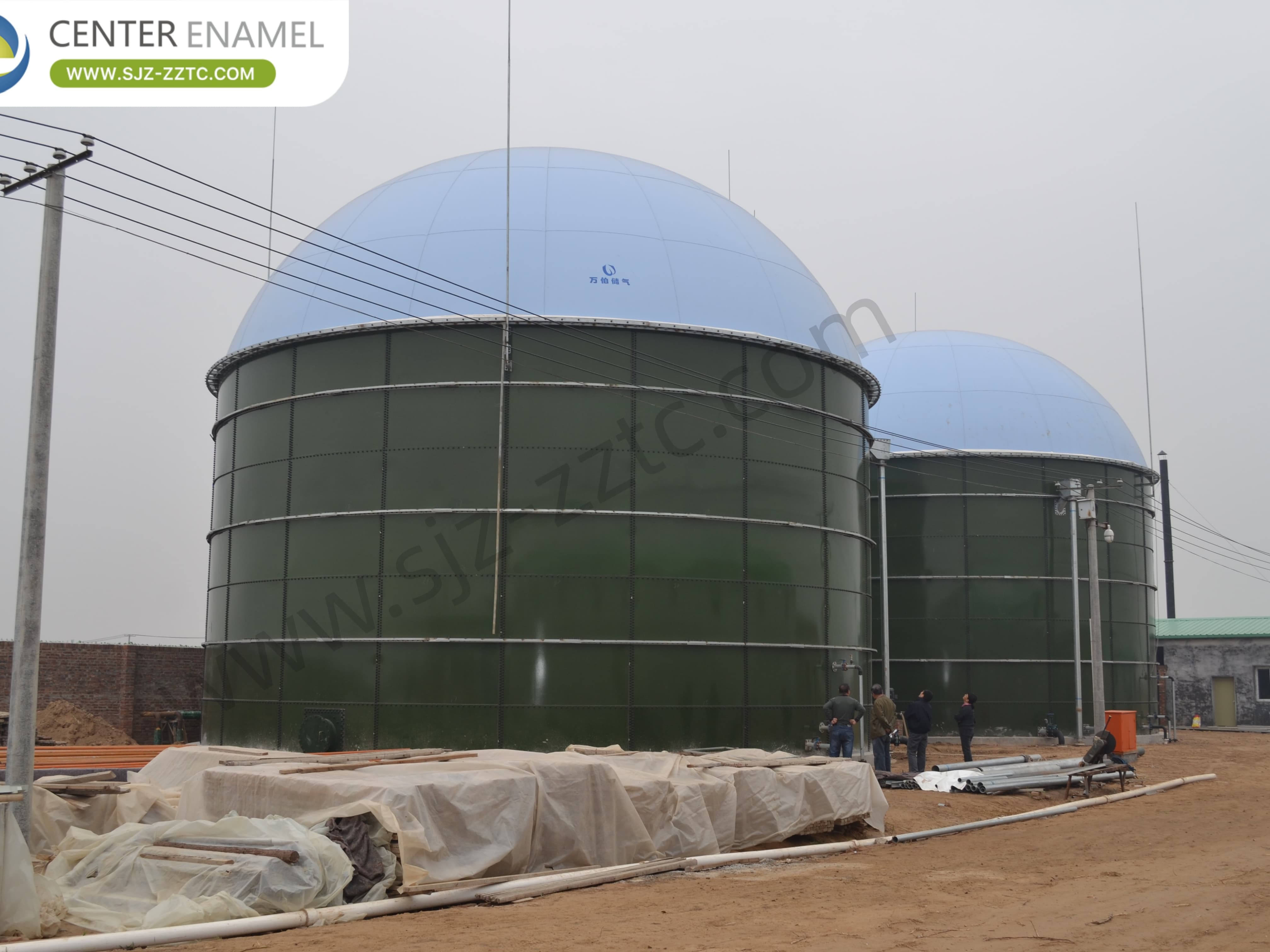
Advanced CSTR and GFS Tanks for Pennisetum Purpureum Biogas in India
| Place of Origin: | China |
| Brand Name: | CEC TANKS |
| Certification: | ISO 9001:2008, AWWA D103 , OSHA , BSCI |
| Model Number: | W |
| Minimum Order Quantity: | 1set |
| Price: | $5000~$20000 one set |
| Packaging Details: | PE poly-foam between each two steel plates ; wooden pallet and wooden |
| Delivery Time: | 10-30 days after deposit received |
| Payment Terms: | L/C,T/T |
| Supply Ability: | 60 sets per month |
|
Detail Information |
|||
| Place of Origin | China | Brand Name | CEC TANKS |
|---|---|---|---|
| Certification | ISO 9001:2008, AWWA D103 , OSHA , BSCI | Model Number | W |
| Tank Body Color: | Dark Green / Can Be Customized | Corrosion Integrity: | Excellent |
| Steel Plates Thickness: | 3mm To 12mm , Depends On The Tank Structure | Chemical Resistance: | Excellent |
| Size Of Panel: | 2.4M * 1.2M | Easy To Clean: | Smooth, Glossy, Inert, Anti-adhesion |
| Highlight: | CSTR tanks for biogas,GFS tanks for wastewater,Pennisetum purpureum biogas project |
||
Product Description
India's expanding renewable energy sector offers significant opportunities for converting agricultural biomass into biogas. Pennisetum purpureum, also known as Napier grass or elephant grass, is increasingly attracting attention as a potential energy crop because of its rapid growth and high biomass productivity. Its application in anaerobic digestion creates opportunities for agricultural enterprises, dairy farms, and commercial bioenergy developers. By integrating mechanical pretreatment, CSTR Process technology, gas purification, and efficient storage systems, Napier grass can become a useful feedstock for biogas power generation. Center Enamel provides GFS Tanks, Double Membrane Roof systems, and supporting equipment for integrated Biogas Plant Design.
India has a large agricultural and dairy industry, creating substantial demand for productive green fodder. Napier grass is cultivated in several states, including Maharashtra, Tamil Nadu, Karnataka, Kerala, and Andhra Pradesh, where farmers use it as a high-yielding forage crop. Hybrid varieties such as CO-3, CO-4, and other improved Napier cultivars are cultivated for livestock feeding under suitable agricultural conditions.
The grass is valued for its rapid regrowth, repeated harvesting potential, and ability to produce substantial biomass throughout suitable growing seasons. Farmers commonly use fresh Napier grass in cut-and-carry feeding systems, while surplus production can be preserved as silage.
Beyond animal nutrition, Napier grass has considerable potential as an anaerobic digestion feedstock. Indian research has investigated its co-digestion with cattle manure and its application in continuous-feed reactors. This provides a technical foundation for exploring agricultural biomass-based biogas projects. Surplus grass can therefore support renewable electricity generation, thermal energy production, and nutrient recycling through digestate management.
The process of converting Napier grass into biogas starts with harvesting suitable biomass from agricultural fields. The collected grass is transported to the preparation facility, where soil, stones, and other contaminants are removed.
Mechanical chopping and shredding equipment then reduces the grass into smaller particles. This increases the exposed surface area of the biomass and facilitates microbial access to cellulose and hemicellulose. Depending on the maturity and fiber characteristics of the grass, additional pretreatment such as ensiling, thermal treatment, or controlled alkaline treatment may improve biodegradability.
The prepared biomass is mixed with water to form a suitable slurry. Cattle manure or other organic residues can be introduced as co-substrates to improve nutrient balance and provide active microorganisms.
The resulting mixture is transferred into an anaerobic digestion tank. In the oxygen-free environment, microorganisms break down organic materials and produce methane-containing biogas. The remaining digestate is discharged for further treatment, solid-liquid separation, and potential agricultural reuse.
The Continuous Stirred-Tank Reactor (CSTR) is an important technology for processing organic biomass in commercial biogas facilities. For Pennisetum purpureum projects, the reactor receives prepared grass slurry through a controlled feeding system and maintains a suitable environment for anaerobic microorganisms.
A typical CSTR includes a feed inlet, mechanical stirring device, agitator shaft, paddles, gas collection system, and sludge discharge outlet. The mixing mechanism distributes organic materials throughout the reactor, improves contact between microorganisms and the substrate, and helps minimize sediment accumulation.
The biological digestion process includes hydrolysis, acidogenesis, acetogenesis, and methanogenesis. Complex plant materials are first broken down into simpler compounds, which are subsequently converted into organic acids and intermediate products. Methanogenic microorganisms then produce methane and carbon dioxide.
Temperature, pH, organic loading rate, and hydraulic retention time are essential operating parameters. Napier grass has a relatively fibrous structure, so pretreatment and appropriate particle-size reduction are important. Co-digestion with cattle manure can also improve the substrate balance and help maintain stable reactor performance.
After anaerobic digestion, the generated biogas passes through treatment equipment to remove moisture and hydrogen sulfide. Gas metering, pressure regulation, and storage systems help maintain stable delivery to downstream equipment.
Biogas Generation: Methane-rich gas fuels generators to produce electricity.
Boiler Systems: Biogas combustion supplies thermal energy for industrial and agricultural processing.
Flare Systems: Excess gas is safely combusted when utilization demand is insufficient.
Compressed Natural Gas: Further purification and compression produce biomethane for compatible fuel applications.
The selected configuration depends on gas composition, production capacity, and the energy requirements of the project.
GFS Tanks provide durable storage infrastructure for biogas and wastewater treatment projects. They are manufactured through high-temperature firing, which fuses a protective glass coating onto prepared steel sheets. The resulting surface provides corrosion resistance for suitable storage environments. Their modular bolted construction allows transportation and installation at different project locations.
Double Membrane Roof systems provide an enclosed structure for collecting and temporarily storing biogas. The inner membrane retains the gas, while the outer membrane maintains the roof shape through controlled supporting air pressure. The system accommodates changes in gas volume during plant operation and can be designed according to the required storage capacity and operating conditions.
Center Enamel offers different storage tank technologies to accommodate varying industrial and environmental requirements:
Galvanized Steel Tanks: Feature protective zinc coatings for suitable water and process-storage applications.
Fusion Bonded Epoxy Tanks: Provide specialized epoxy coating protection for designated storage environments.
Stainless Steel Tanks: AISI 304/316 configurations are available for applications requiring specific hygiene and corrosion-resistance properties.
The appropriate storage solution depends on the stored medium, operating conditions, and project specifications.
In addition to digestion tanks and gas storage systems, supporting equipment is essential for reliable plant operation.
Gas Holder: Temporarily stores biogas before it enters utilization equipment.
Black Membrane: Provides a flexible covering option for suitable storage and treatment structures.
Solid-Liquid Separator: Separates digestate into solid and liquid fractions.
Torch System: Provides controlled combustion of surplus biogas.
Lifting Pump: Transfers slurry and process liquids between treatment units.
Dehydration and Desulfurization Tank: Removes water vapor and hydrogen sulfide from raw biogas.
Screw Sludge Dewatering Machine: Reduces the moisture content of separated sludge for easier handling and transportation.
The final equipment arrangement should be determined by the plant's capacity, feedstock characteristics, and gas utilization requirements.
Center Enamel provides integrated engineering services and equipment solutions for biogas and wastewater treatment projects, helping customers coordinate storage infrastructure and supporting process systems.
EPC Services: Engineering, procurement, and construction support for project implementation.
Process Package: Coordinated equipment and technical configurations for different treatment requirements.
Complete Equipment Supply: Storage tanks, gas holders, pumps, separators, and gas-treatment equipment.
Flexible Storage Technologies: GFS, galvanized, fusion bonded epoxy, and stainless steel tank options.
Manufacturing Capability: The company profile indicates annual production capacity of 250,000 pieces of steel sheets and a workforce of more than 500 employees.
International Supply Experience: Products are supplied to over 100 countries.
Quality Management: Manufacturing and project requirements can be aligned with relevant standards, including ISO 9001, ISO 14001, and EN 28765 where applicable.
Through integrated engineering coordination, tank manufacturing, and equipment supply, Center Enamel provides a one-stop solution approach for biogas projects. Its product portfolio supports the development of infrastructure covering storage, gas treatment, and associated process equipment.
India's Napier grass resources provide opportunities for agricultural biomass to contribute to renewable energy production. Through suitable feedstock preparation, CSTR Process technology, gas purification, and digestate management, Pennisetum purpureum can become a valuable feedstock for commercial biogas projects. Center Enamel combines GFS Tanks, Double Membrane Roof systems, and supporting equipment to provide integrated infrastructure solutions for Biogas Plant Design in India.
1. What is the difference between Napier grass and hybrid Napier grass?
Napier grass is the common name for Pennisetum purpureum. Hybrid Napier varieties are developed through breeding to improve characteristics such as biomass yield, growth rate, and forage quality. Their suitability for biogas production depends on their fiber composition and biodegradability.
2. Can Napier grass be used in a continuous-feed biogas plant?
Yes. After suitable chopping, pretreatment, and slurry preparation, Napier grass can be supplied continuously to a properly designed anaerobic digestion system. Feeding rates and organic loading must be controlled to maintain reactor stability.
3. How can the methane yield of Napier grass be improved?
Methane yield can be improved through appropriate harvesting time, particle-size reduction, ensiling or other suitable pretreatment, and balanced co-digestion. Laboratory biochemical methane potential tests can help determine the most effective feedstock preparation and mixing conditions.