-
Glass Fused To Steel Tanks (896)
-
Stainless Steel Tanks (434)
-
Fusion Bonded Epoxy Tanks (652)
-
Galvanized Steel Tanks (321)
-
Aluminum Dome Roofs (1336)
-
Wastewater Storage Tanks (280)
-
Welded Steel Tanks (457)
-
Pressure Vessels (426)
-
Anaerobic Digester (202)
-
Industrial Water Tanks (349)
-
Glass Lined Steel Tanks (180)
-
Bolted Steel Tanks (389)
-
Sludge Storage Tank (115)
-
Biogas Storage Tank (173)
-
Leachate Storage Tanks (133)
-
Agricultural Water Storage Tanks (179)
-
Fire Water Tank (166)
-
Grain Storage Silos (146)
-
Biogas Projects (424)
-
Wastewater Treatment Projects (1722)
-
Double Membrane Roof (223)

|
Leading GFS Tanks for Kitchen Waste Treatment in South Africa
| Place of Origin: | China |
| Brand Name: | CEC TANKS |
| Certification: | ISO 9001:2008, AWWA D103 , OSHA , BSCI |
| Model Number: | W |
| Minimum Order Quantity: | 1set |
| Price: | $5000~$20000 one set |
| Packaging Details: | PE poly-foam between each two steel plates ; wooden pallet and wooden |
| Delivery Time: | 10-30 days after deposit received |
| Payment Terms: | L/C,T/T |
| Supply Ability: | 60 sets per month |
|
Detail Information |
|||
| Place of Origin | China | Brand Name | CEC TANKS |
|---|---|---|---|
| Certification | ISO 9001:2008, AWWA D103 , OSHA , BSCI | Model Number | W |
| Tank Body Color: | Dark Green / Can Be Customized | Corrosion Integrity: | Excellent |
| Steel Plates Thickness: | 3mm To 12mm , Depends On The Tank Structure | Chemical Resistance: | Excellent |
| Size Of Panel: | 2.4M * 1.2M | Easy To Clean: | Smooth, Glossy, Inert, Anti-adhesion |
| Highlight: | GFS tanks kitchen waste treatment,GFS tanks South Africa projects,GFS tanks wastewater treatment |
||
Product Description
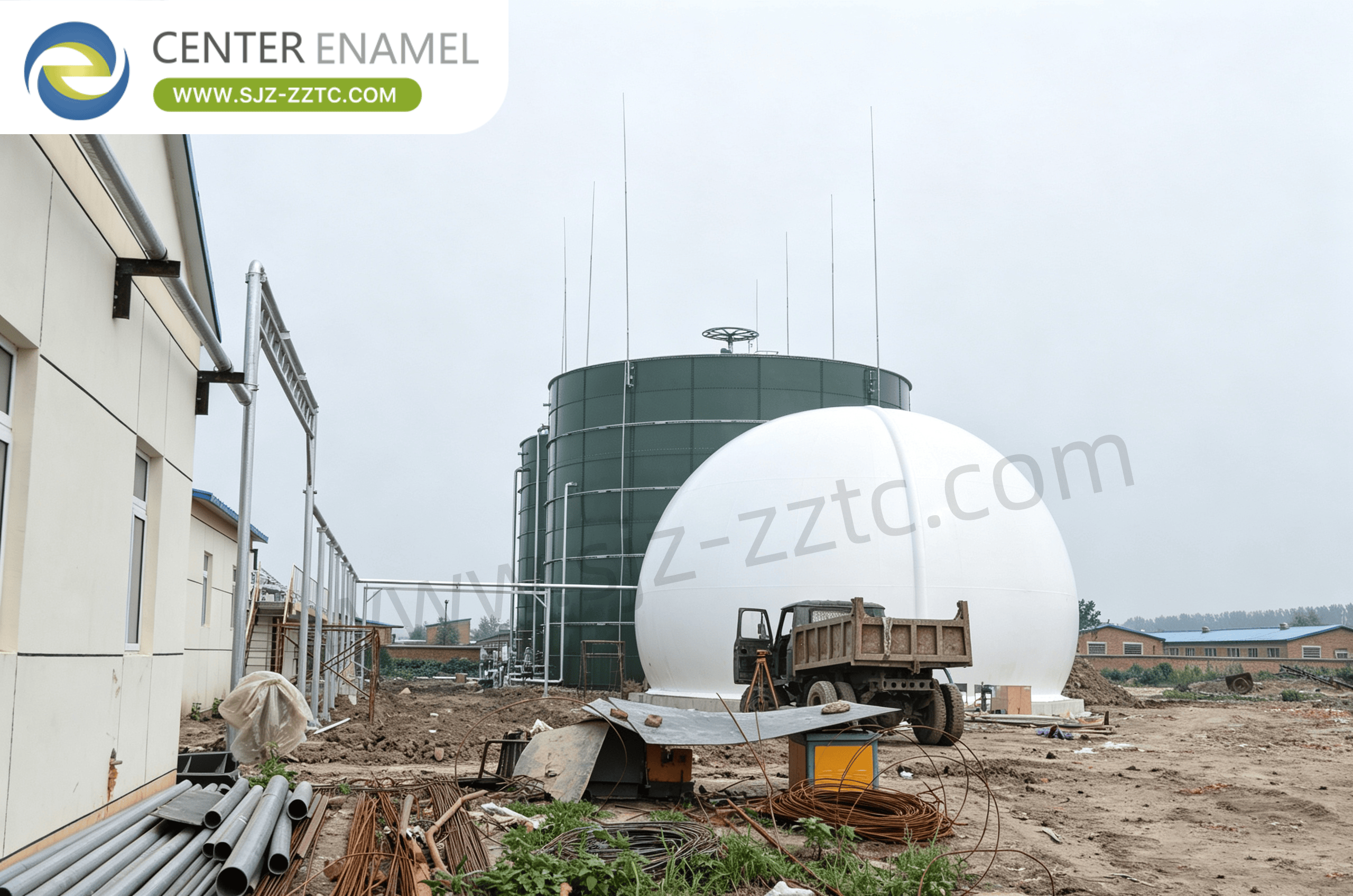
Leading GFS Tanks for Kitchen Waste Treatment in South Africa
In rapidly developing South Africa, maximizing resource recovery from municipal waste streams is a national imperative. This article examines the intricate process of Kitchen Waste Treatment, highlighting how cutting-edge biological technologies are transforming food scraps into clean energy. We provide a detailed look at the CSTR process, the indispensable role of GFS Tanks, and the vital importance of designing a robust Biogas Power Plant to ensure long-term sustainability and energy security.
Defining Kitchen Waste and its Treatment Challenges
Kitchen waste, originating from daily life, food processing, catering services, and unit catering, is a major component of solid waste. It includes discarded vegetable leaves, nut shells, pericarps, leftovers, tea leaves, eggshells, flowers, and bones. The characteristics of this waste make it highly problematic for traditional disposal methods. With a moisture content of up to 95% and a high concentration of organic matter, proteins, and starches, it is prone to rapid decomposition. Furthermore, the presence of high salt content, pathogenic bacteria, and microorganisms means it easily rots, spoils, and emits foul odors, while breeding mosquitoes and flies. In a rapidly urbanizing country like South Africa, managing these biological hazards requires a rapid, enclosed, and highly efficient treatment solution.
Navigating the Process Flow of Kitchen Waste Treatment
The treatment of kitchen waste involves a sophisticated, multi-part system designed to safely reduce volume and recycle resources. The initial step involves a pre-treatment system where sand and physical impurities are removed. The resulting slurry is then pumped into a hydrolysis and homogenization tank. Here, organic waste is converted into organic acid, and the temperature and pH values are balanced through continuous stirring. The crucial next step sends the slurry into the anaerobic fermentation tank. This tank operates at a constant 35°C for a residence time of 28 days. Constant stirring ensures a neutral environment to avoid acidification. The generated biogas is then directed to a purification and power generation system, while the liquor digestate is processed through a dehydration system, with the fibrous byproduct sent for incineration and the sewage entering a dedicated treatment system.
The Crucial Role of the CSTR Process
The core of this anaerobic digestion facility is the Continuous Stirred Tank Reactor (CSTR) process. This technology is specifically designed to maintain fermentation raw materials and microorganisms in a completely mixed state within a closed tank. The CSTR reactor is equipped with a robust mechanical stirring device. By continuously or semi-continuously feeding the organic wastewater—which has high suspended solids and high concentrations—the system keeps the anaerobic microorganisms in a relatively complete mixed fermentation state. This highly effective design ensures continuous contact between the microbes and the organic matter, drastically accelerating the degradation process and ensuring a stable, high-yield production of biogas.
Maximizing Efficiency with Advanced CSTR Technology
For the operators of a Biogas Power Plant, the CSTR process represents the gold standard for treating high-solids organic waste streams. The continuous mixing achieved by the agitator shaft and paddles is vital for preventing stratification and the formation of dead zones within the reactor. It ensures uniform temperature distribution and nutrient availability, creating the optimal environment for anaerobic bacteria. This technology effectively handles the high concentration of organic matter in kitchen waste, breaking it down efficiently without the operational bottlenecks often seen in less robust digestion methods. The design allows for a consistent, reliable output of renewable energy, perfectly aligning with South Africa's green energy goals.
Harnessing the Power of GFS Tanks for Anaerobic Digestion
To safely house these intense biological processes, the structural integrity of the fermentation tanks is paramount. GFS Tanks are the premier choice for these bio-energy applications. Formed by firing at extreme temperatures (820°C-930°C), the molten glass creates an inert, inorganic bond with the steel plate. This double-coating layer structure (2C2F) harnesses the structural strength of steel alongside the exceptional corrosion resistance of glass. GFS Tanks offer superior protection against the aggressive chemical environment of the digester, ensuring a long operational lifespan and preventing leaks that could be catastrophic for the environment.
A Tailored Suite of Storage Tank Solutions
Depending on the specific project requirements, various tank technologies can be deployed for optimal performance.
Galvanized Steel Tanks: These tanks undergo a galvanizing process to receive a tough, wear-resistant protective coating, offering an excellent, durable option for specific wastewater storage needs.
Fusion Bonded Epoxy Tanks: Utilizing innovative FBE technology, these tanks provide a highly resilient barrier against chemical attacks, ideal for certain stages of the waste processing line.
Stainless Steel Tanks: Manufactured from high-quality AISI 304/316 stainless steel, these tanks are essential when handling high-purity liquids or when facing the most stringent, harsh environmental storage requirements.
Supporting Systems and Equipment for Complete Facilities
A functioning plant relies heavily on specialized auxiliary equipment working in perfect synergy.
Size Reduction: Dual-shaft crushers and mixed crushing pulping tanks are vital for preprocessing bulky organic matter, ensuring it flows smoothly through the system.
Agitation and Flow: Submersible mixers and robust lifting pumps guarantee that the slurry is thoroughly agitated and efficiently transported between tanks.
Separation and Storage: Solid-liquid separators efficiently extract moisture from the digestate, while biogas holders and dehydration/desulfurization tanks safely manage and purify the generated gas. Heating systems and cathodic protection are also integrated to ensure optimal operational conditions.
Why Center Enamel is the Preferred One-Stop Biogas Partner
Executing a successful kitchen waste project requires the expertise of an integrated partner. As a premier provider for a Biogas Power Plant, we stand out by offering comprehensive, turnkey solutions.
Vertical Integration: We combine advanced process engineering with precision equipment manufacturing, ensuring every component works perfectly together.
End-to-End Services: From initial feasibility studies to operational optimization, we guide you through every step, including biogas purification and power generation.
Uncompromising Quality: Our GFS Tanks and diverse storage solutions are certified to international standards, guaranteeing safety and longevity.
Proven Success: We help municipalities achieve environmental compliance, drastically reduce disposal costs, and generate new revenue streams through closed-loop systems.
Comprehensive Equipment Supply: We provide everything from the CSTR reactor to the smallest pump, ensuring a single point of accountability for the entire project.
Conclusion
Transforming food waste into valuable resources is a win-win for both the environment and the economy. Through the implementation of the CSTR process and the use of highly durable GFS Tanks, South Africa can efficiently tackle its organic waste challenges. By collaborating with a premier partner, the nation can deploy robust, end-to-end systems that power a sustainable Biogas Power Plant and turn everyday waste into renewable power.
Frequently Asked Questions (FAQ)
How long does the anaerobic fermentation process take?
The kitchen slurry typically stays in the anaerobic fermentation tank at a constant 35°C for approximately 28 days to ensure complete degradation.
Why is GFS tank technology ideal for biogas plants?
The high-temperature fusion of glass to steel creates an inert, corrosion-resistant barrier that is highly durable in harsh bio-energy environments.
What is the purpose of the hydrolysis tank?
It acts as a pre-treatment step to convert organic waste into organic acid and balance the pH levels before anaerobic digestion begins.