-
Glass Fused To Steel Tanks (882)
-
Stainless Steel Tanks (434)
-
Fusion Bonded Epoxy Tanks (622)
-
Galvanized Steel Tanks (321)
-
Aluminum Dome Roofs (1336)
-
Wastewater Storage Tanks (280)
-
Welded Steel Tanks (457)
-
Pressure Vessels (295)
-
Anaerobic Digester (202)
-
Industrial Water Tanks (349)
-
Glass Lined Steel Tanks (180)
-
Bolted Steel Tanks (389)
-
Sludge Storage Tank (115)
-
Biogas Storage Tank (173)
-
Leachate Storage Tanks (133)
-
Agricultural Water Storage Tanks (179)
-
Fire Water Tank (166)
-
Grain Storage Silos (146)
-
Biogas Projects (424)
-
Wastewater Treatment Projects (1650)
-
Double Membrane Roof (223)


|
Makeup Water Storage Tank: A Complete Technical Guide To Types, Sizing And Standards
| Place of Origin: | China |
| Brand Name: | CEC TANKS |
| Certification: | ISO 9001:2008, AWWA D103 , OSHA , BSCI |
| Model Number: | J2016012316 |
| Minimum Order Quantity: | 1set |
| Price: | $5000~$20000 one set |
| Packaging Details: | PE poly-foam between each two steel plates ; wooden pallet and wooden box |
| Delivery Time: | 0-60 days after deposit received |
| Payment Terms: | L/C,T/T |
| Supply Ability: | 60 sets per month |
|
Detail Information |
|||
| Place of Origin | China | Brand Name | CEC TANKS |
|---|---|---|---|
| Certification | ISO 9001:2008, AWWA D103 , OSHA , BSCI | Model Number | J2016012316 |
| Acid And Alkalinity Proof: | Standard Coating Suits For PH3 - PH11, Special Coating Suits For PH1 - PH14 | Elastic: | Same As Steel Sheet , Around 500KN/mm |
| Serive Life: | More Than 30 Years | PH Range: | PH 1 - PH 14 |
| Coating Color: | Dark Blue, Dark Green , White, And Customized | Steel Plates Thickness: | 3mm - 12mm , Depends On The Diameter & Height |
| Easy Yo Clean: | Smooth, Glossy, Inert, Anti-adhesion | Coating Thickness: | 4.0.25mm - 0.4mm, Two Coating Internal And External |
| Highlight: | glass fused steel water tanks,makeup water storage tank sizing,glass fused tank standards |
||
Product Description
A makeup water storage tank is the buffer that keeps a cooling tower, boiler, or process loop stable when normal losses - evaporation, drift, and blowdown - would otherwise force constant, erratic refill. It sounds simple, but the right tank depends on the medium, the climate, the standards, and the volume you actually lose, not a catalogue number. This guide walks through types, sizing, materials, and the standards a specifier should require, with no supplier bias.
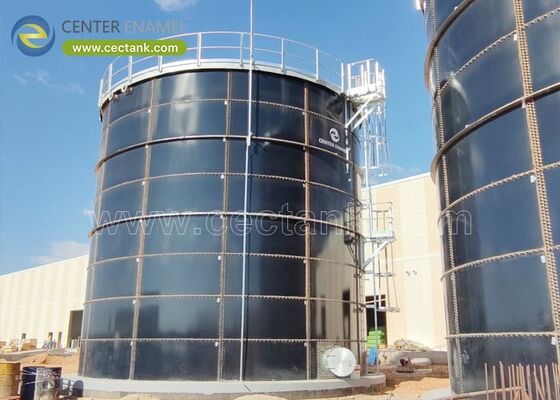
A makeup water storage tank should be chosen by medium and duty first: a clean inert lining (GFS fired at 820-930 C or FBE) for potable-adjacent or biofilm-sensitive water, 304 or 316 stainless for compact high-purity loops, and bolted panels for large, transportable, expandable volumes. Size it from measured daily loss - typically 1.5-2 percent of circulating flow at 3-5 concentration cycles plus margin for the worst week - not a rule of thumb, and require AWWA D103-19 or ISO 28765 for bolted steel, EN 1090 for EU entry, and NSF-61 or local equivalence for potable contact. Center Enamel has no makeup or data-center project in this library; we cite real clean-water deliveries such as the Indonesia Cilincing drinking-water tank (21,088 m3, 2024) only as analogous evidence of building large coated tanks, not as a makeup or data-center delivery.
Cooling towers and many process loops lose water continuously to evaporation from the airstream, drift of fine droplets, and blowdown to control dissolved solids. Without a buffer, the make-up pump cycles constantly and the loop is vulnerable to a supply interruption. The makeup tank stores treated feed water so the loop stays stable and the supply can be intermittent without crashing the process.
It is a stability asset first and a volume asset second.
- Evap + drift + blowdown.
- Stabilizes the loop.
- Absorbs supply gaps.
- Stability first.
Bolted GFS or FBE coated steel tanks dominate large volumes because they ship flat, erect fast, and expand by adding panels; stainless (304/316/316L) suits compact, high-purity, or corrosive loops; welded steel is an option where coating flexibility is less important. The lining - not the shell - decides water quality and life, so specify it by medium: inert and holiday-tested for potable-adjacent water, upgraded alloy for chloride-rich or coastal water.
Choose the lining by what the water does to steel.
- Bolted GFS/FBE large.
- SS304/316 compact.
- Welded alternative.
- Lining by medium.
Size the buffer from measured evaporation, drift, and blowdown, typically 1.5-2 percent of circulating flow per day at 3-5 concentration cycles, plus margin for the hottest or driest week. Two to three days of buffered make-up is a common planning target for a stable loop, but the number must come from your data, not a generic chart. Under-sizing forces pump cycling; over-sizing wastes footprint and capital.
Your loss data beats any industry average.
- 1.5-2% flow/day.
- 3-5 concentration cycles.
- 2-3 days buffer.
- Use your data.
For bolted steel, AWWA D103-19 and ISO 28765 are the structural and coating anchors; EN 1090 applies for EU entry; NSF-61 (or local equivalence) governs potable contact; EN 1717 governs backflow protection at the connection. Name the edition in the order so inspection is unambiguous. A tank that cites 'all standards' without editions is not ready for a regulated project.
Put the standard edition in the purchase order.
- AWWA D103-19 / ISO 28765.
- EN 1090 EU.
- NSF-61 potable.
- Edition in PO.
We have no makeup-water or data-center project in this library. The Indonesia Cilincing drinking-water tank (21,088 m3, 2024) is a real GFS water-tank delivery cited as analogous evidence of building large coated tanks, not a makeup or data-center delivery. Every technical point above reflects documented tank parameters and standards, not a specific makeup contract.
- No makeup / DC project.
- Real coated tank 2024.
- Analogous, not claimed.
- Params documented.
|
Decision |
Bolted GFS/FBE |
Stainless |
Welded |
|
Best volume |
Large, expandable |
Compact |
Flexible |
|
Potable-grade |
Yes (inert) |
Yes |
Coating-dependent |
|
Transport |
Flat panels |
Skid |
Bulk |
|
Life driver |
Lining QA |
Alloy |
Coating |
It buffers the water lost to evaporation, drift, and blowdown in cooling towers and process loops so the loop stays stable and tolerates intermittent supply.
Bolted GFS or FBE coated steel dominates large volumes because it ships flat, erects quickly, and expands by adding panels; stainless suits compact high-purity loops.
From measured daily loss (about 1.5-2 percent of circulating flow at 3-5 concentration cycles) plus margin for the worst week - not a generic rule of thumb.
AWWA D103-19 or ISO 28765 for bolted steel, EN 1090 for EU entry, and NSF-61 or local equivalence for potable contact; name the edition in the order.
Both give an inert, holiday-tested surface; the choice follows project QA preference and coating-system availability rather than a universal winner.
Yes - an air gap or reduced-pressure zone per EN 1717 at the connection where the buffer could cross-connect with potable supply.
Not in our project library. We cite real clean-water tank deliveries as analogous capability, not makeup or data-center projects.
316 or 316L stainless, or a GFS/FBE system rated for the specific chemistry and chloride level; confirm with a corrosion review.
Two to three days of buffered make-up is a common stable-loop target, but the real number comes from your loss data and risk tolerance.
A makeup water storage tank is a stability asset first: choose it by medium and duty, size it from measured evaporation, drift, and blowdown rather than a chart, and require the standards that actually govern - AWWA D103-19 or ISO 28765 for bolted steel, EN 1090 for EU entry, and NSF-61 for potable contact. The lining, not the shell, decides water quality and life, so specify it by what the water does to steel. Center Enamel's real Indonesia Cilincing drinking-water tank (21,088 m3, 2024) shows we build large coated tanks; the makeup or data-center application is analogous and not claimed. Specify the medium, the loss data, and the standard edition, and the buffer will stabilise the loop instead of surprising you at commissioning.