-
Glass Fused To Steel Tanks (807)
-
Stainless Steel Tanks (434)
-
Fusion Bonded Epoxy Tanks (592)
-
Galvanized Steel Tanks (321)
-
Aluminum Dome Roofs (1336)
-
Wastewater Storage Tanks (237)
-
Welded Steel Tanks (457)
-
Pressure Vessels (295)
-
Anaerobic Digester (202)
-
Industrial Water Tanks (349)
-
Glass Lined Steel Tanks (180)
-
Bolted Steel Tanks (389)
-
Sludge Storage Tank (115)
-
Biogas Storage Tank (173)
-
Leachate Storage Tanks (133)
-
Agricultural Water Storage Tanks (179)
-
Fire Water Tank (166)
-
Grain Storage Silos (146)
-
Biogas Projects (424)
-
Wastewater Treatment Projects (1530)
-
Double Membrane Roof (223)

|
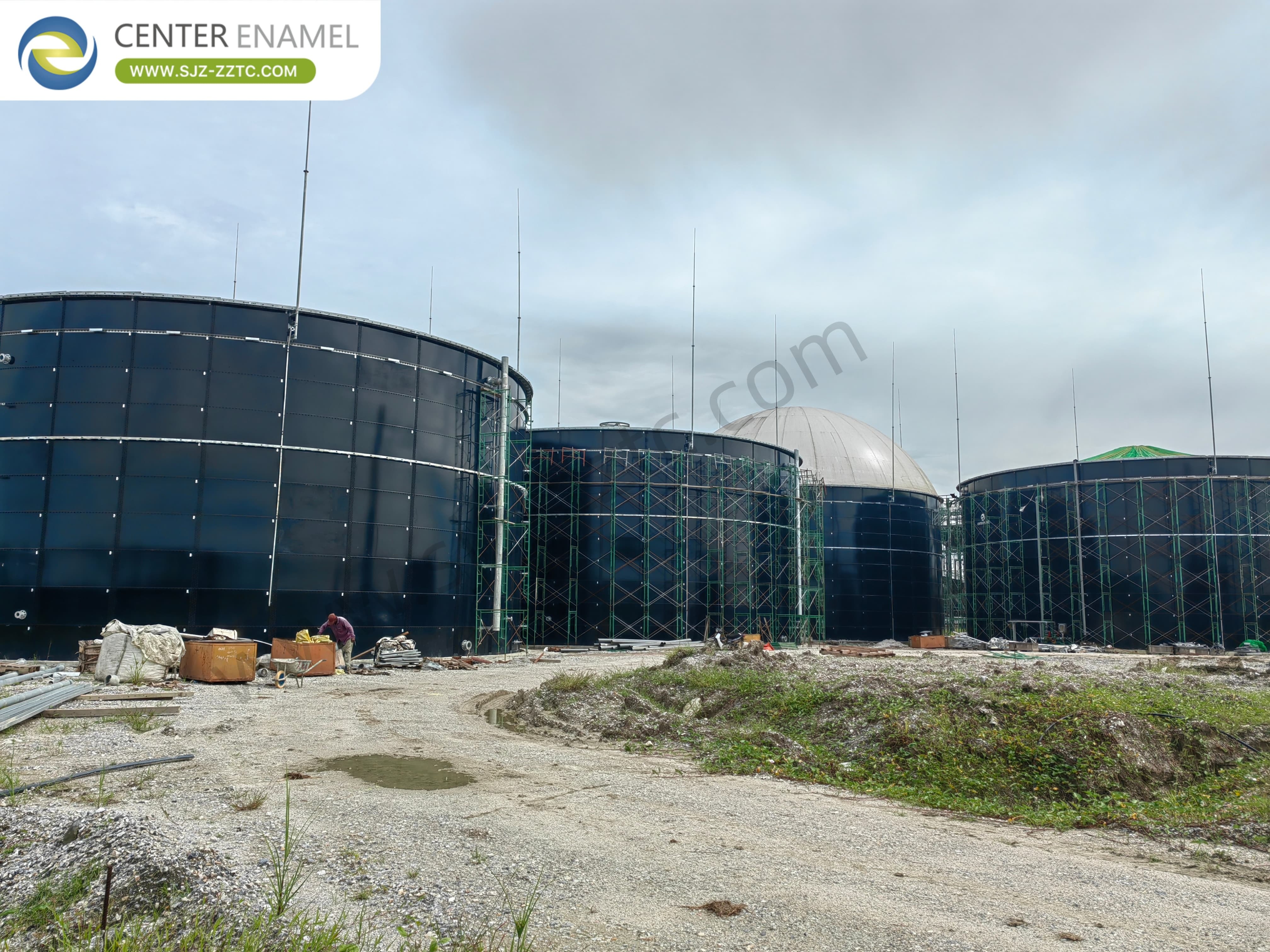
How a Biogas Power Plant Converts Sugarcane Bagasse to Biogas in Thailand
| Place of Origin: | China |
| Brand Name: | CEC TANKS |
| Certification: | ISO 9001:2008, AWWA D103 , OSHA , BSCI |
| Model Number: | W |
| Minimum Order Quantity: | 1set |
| Price: | $5000~$20000 one set |
| Packaging Details: | PE poly-foam between each two steel plates ; wooden pallet and wooden |
| Delivery Time: | 10-30 days after deposit received |
| Payment Terms: | L/C,T/T |
| Supply Ability: | 60 sets per month |
|
Detail Information |
|||
| Place of Origin | China | Brand Name | CEC TANKS |
|---|---|---|---|
| Certification | ISO 9001:2008, AWWA D103 , OSHA , BSCI | Model Number | W |
| Tank Body Color: | Dark Green / Can Be Customized | Corrosion Integrity: | Excellent |
| Steel Plates Thickness: | 3mm To 12mm , Depends On The Tank Structure | Chemical Resistance: | Excellent |
| Size Of Panel: | 2.4M * 1.2M | Easy To Clean: | Smooth, Glossy, Inert, Anti-adhesion |
| Highlight: | biogas power plant sugarcane bagasse,biogas conversion wastewater treatment,sugarcane bagasse biogas Thailand |
||
Product Description
Thailand is one of the world's leading producers of sugarcane, with a thriving sugar industry that generates vast quantities of bagasse as a by-product. This fibrous residue, if not managed properly, can pose environmental and logistical challenges. As Thailand seeks sustainable solutions for its agricultural waste and renewable energy targets, converting sugarcane bagasse to biogas presents a promising opportunity. This article examines how a well-designed Biogas Power Plant leverages advanced technologies, including GFS Tanks and the CSTR Process, to transform sugarcane bagasse into a valuable energy resource.
In Thailand, sugarcane bagasse originates from the sugar milling process. After sugarcane stalks are harvested and transported to sugar mills, they are crushed to extract the sucrose-rich juice. The remaining fibrous material, known as bagasse, is a lignocellulosic residue that accounts for approximately 25-30% of the sugarcane processed. This material is characterized by high moisture content, significant organic load, and a complex structure of cellulose, hemicellulose, and lignin. In Thailand, the concentration of sugar mills in regions such as the central and northeastern provinces creates localized hotspots of bagasse generation, making it an ideal feedstock for anaerobic digestion. The high volatile solids content and energy potential of bagasse make it an excellent substrate for biogas production.
The conversion of sugarcane bagasse into biogas is achieved through anaerobic digestion, a natural process where microorganisms decompose organic matter in the absence of oxygen. The process begins with the collection and pre-treatment of the bagasse, including mechanical grinding and hydrolysis to break down the complex lignocellulosic structure and increase its bioavailability. The feedstock is then fed into a sealed anaerobic reactor. Inside the reactor, a series of biochemical reactions take place—hydrolysis, acidogenesis, acetogenesis, and methanogenesis—which convert the organic polymers into simpler molecules, ultimately producing biogas. The biogas is then collected, purified, and stored for use in generating electricity, heat, or cooking fuel. The residual digestate is a valuable bio-fertilizer, rich in nutrients, which can be used to enhance agricultural productivity.
The CSTR Process (Continuous Stirred-Tank Reactor) is a cornerstone technology for treating sugarcane bagasse. The CSTR Process is an anaerobic treatment technology that makes fermentation raw materials and microorganisms fully mixed and fermented in a closed tank to produce biogas. The CSTR reactor is equipped with a mechanical stirring device. By feeding continuously or semi-continuously at a constant rate, the organic wastewater with high suspended solids and high concentration and anaerobic microorganisms are in a relatively complete mixed fermentation state. This effectively degrades the organic matter in the wastewater. The continuous mixing ensures uniform temperature, pH, and nutrient distribution, which optimizes the environment for the anaerobic bacteria, leading to high biogas production rates and efficient waste stabilization.
For a biogas project to be successful and durable, the choice of storage tanks and roofs is paramount. GFS Tanks, or Glass-Fused-to-Steel Tanks, are the ideal solution. After firing at 820°C-930°C, the molten glass reacts with the steel plate surface to form an inert and inorganic bond. This combines the strength and flexibility of steel with the outstanding corrosion resistance of glass, making GFS Tanks highly resistant to the corrosive elements found in sugarcane bagasse. The Double Membrane Roof is the preferred solution for biogas storage under normal working conditions. Its main advantages include cost optimization, as it directly reduces the cost of the roof, and space efficiency, as it significantly reduces the floor area and saves the foundation construction cost required for the ground-mounted gas holder.
To meet the varied demands of biogas and water storage projects, a range of customizable roof and tank solutions are available.
Roof Solutions: Aluminum Geodesic Dome Roofs offer advanced corrosion resistance and expansive clear spans; Glass-Fused-to-Steel Roofs are air-tight and utilized for odor control; Single and Double Membrane Roofs are superior for biogas collection; Aluminum Alloy Trough Deck Roofs are an economical option for water storage; Stainless Steel Roofs provide super anti-corrosion performance for harsh environments; and FRP Roofs are suitable for situations where air-tightness is not required.
Tank Solutions: Galvanized Steel Tanks provide a tough, durable protective coating; Fusion Bonded Epoxy Tanks utilize innovative coating technology from partners like AkzoNobel for superior corrosion protection; and Stainless Steel Tanks (AISI 304/316) are designed to meet the most stringent requirements for high-purity water and liquids.
A fully functional biogas plant requires a range of auxiliary equipment to ensure operational efficiency and safety. Key equipment includes:
- Gas Holder: For storing biogas and balancing supply and demand.
- Black Membrane: Used for covering anaerobic lagoons and controlling odors.
- Solid-liquid Separator: To separate the digestate into solid and liquid fractions for easier handling.
- Torch System: For the safe combustion of excess or flare gas.
- Lifting Pump: For transferring high-solids slurry and wastewater.
- Dehydration and Desulfurization Tank: To remove water vapor and corrosive hydrogen sulfide (H2S) from the biogas.
- Screw Sludge Dewatering Machine: For efficient dewatering of the sludge produced during the process.
Center Enamel is a leading provider offering comprehensive solutions for sugarcane bagasse-to-biogas projects. Their advantages as a one-stop solution provider include:
- EPC Service: Offering full Engineering, Procurement, and Construction services to ensure a seamless project lifecycle.
- Process Package: Providing optimized process design tailored to the specific characteristics of sugarcane bagasse.
- Equipment Supply: Manufacturing and supplying high-quality GFS Tanks, roofs, and all necessary auxiliary equipment.
- Certifications: Adhering to the highest international standards with certifications including CE/EN1090, ISO9001, NSF61, WARS, EN28765, and design standards like AWWA D103, OSHA, and EuroCode.
Converting sugarcane bagasse to biogas in Thailand is a sustainable pathway to address both agricultural waste management and energy security. By utilizing the CSTR Process and high-quality infrastructure like GFS Tanks and Double Membrane Roofs, a dedicated provider can deliver a robust and efficient Biogas Power Plant. This approach not only manages industrial waste effectively but also creates a reliable source of renewable energy and organic fertilizer, contributing to a circular economy.