-
Glass Fused To Steel Tanks (792)
-
Stainless Steel Tanks (434)
-
Fusion Bonded Epoxy Tanks (592)
-
Galvanized Steel Tanks (321)
-
Aluminum Dome Roofs (1336)
-
Wastewater Storage Tanks (237)
-
Welded Steel Tanks (457)
-
Pressure Vessels (295)
-
Anaerobic Digester (202)
-
Industrial Water Tanks (349)
-
Glass Lined Steel Tanks (180)
-
Bolted Steel Tanks (389)
-
Sludge Storage Tank (115)
-
Biogas Storage Tank (173)
-
Leachate Storage Tanks (133)
-
Agricultural Water Storage Tanks (179)
-
Fire Water Tank (166)
-
Grain Storage Silos (146)
-
Biogas Projects (424)
-
Wastewater Treatment Projects (1500)
-
Double Membrane Roof (223)


|
Optimizing Municipal Sewage Treatment in Vietnam with GFS Tanks and Biogas Power Plant Solutions
| Place of Origin: | China |
| Brand Name: | CEC TANKS |
| Certification: | ISO 9001:2008, AWWA D103 , OSHA , BSCI |
| Model Number: | W |
| Minimum Order Quantity: | 1set |
| Price: | $5000~$20000 one set |
| Packaging Details: | PE poly-foam between each two steel plates ; wooden pallet and wooden |
| Delivery Time: | 10-30 days after deposit received |
| Payment Terms: | L/C,T/T |
| Supply Ability: | 60 sets per month |
|
Detail Information |
|||
| Place of Origin | China | Brand Name | CEC TANKS |
|---|---|---|---|
| Certification | ISO 9001:2008, AWWA D103 , OSHA , BSCI | Model Number | W |
| Tank Body Color: | Dark Green / Can Be Customized | Corrosion Integrity: | Excellent |
| Steel Plates Thickness: | 3mm To 12mm , Depends On The Tank Structure | Chemical Resistance: | Excellent |
| Size Of Panel: | 2.4M * 1.2M | Easy To Clean: | Smooth, Glossy, Inert, Anti-adhesion |
| Highlight: | GFS tanks for sewage treatment,biogas power plant solutions Vietnam,municipal wastewater treatment projects |
||
Product Description
Vietnam’s rapid urbanization and industrial growth have placed immense pressure on its water infrastructure, making efficient municipal sewage treatment a top environmental priority. This article explores the comprehensive treatment process, highlighting the critical role of A2O technology and the durability of GFS Tanks. It further examines how Center Enamel, a leading Biogas Power Plant solution provider, delivers end-to-end engineering, manufacturing, and construction services to help Vietnam address its critical water and wastewater challenges sustainably.
Municipal sewage in Vietnam originates from a complex blend of residential, commercial, and industrial sources. It primarily consists of human waste, food scraps, soaps, and detergents, alongside significant contributions from industrial discharge. This wastewater poses substantial health and environmental hazards due to its potential to contain harmful pathogens, chemicals, and other pollutants. These hazards include the risk of infectious diseases, contamination of vital water sources, and long-term ecosystem damage. Understanding this composition—ranging from organic matter and nutrients like nitrogen and phosphorus to suspended solids and heavy metals—is essential for designing effective treatment strategies that protect public health and the environment.
The treatment process begins with the collection and equalization of wastewater in a Wastewater Collecting Tank to balance water quality and quantity. The sewage then flows into an Anaerobic Tank, where anaerobic microorganisms decompose large-molecule organic matter into smaller ones under oxygen-free conditions. Following this, the flow enters an Anoxic Tank, where denitrifying bacteria use organic matter as a carbon source to reduce nitrate nitrogen into nitrogen gas, achieving denitrification. The sewage then moves to an Aerobic Tank, where aerobic microorganisms further decompose organic matter and carry out nitrification, converting ammonia nitrogen into nitrate nitrogen. This multi-stage biological process ensures the effective removal of organic pollutants and nutrients.
The A2O (Anaerobic-Anoxic-Oxic) process is a cornerstone of modern municipal sewage treatment, particularly effective in Vietnam's expanding urban facilities. This biological nutrient removal process is designed to eliminate organic matter, nitrogen, and phosphorus simultaneously. In the anaerobic phase, phosphorus-accumulating organisms release phosphorus. In the anoxic phase, denitrification occurs, converting nitrates to nitrogen gas. Finally, in the aerobic phase, nitrification takes place, and phosphorus is taken up by bacteria. This integrated approach ensures high-quality effluent, making it a preferred method for meeting stringent environmental regulations and protecting water bodies from eutrophication.
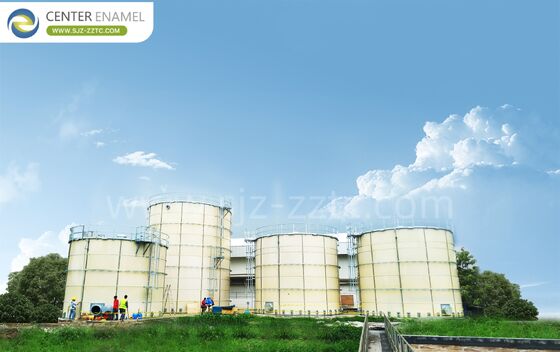
GFS Tanks (Glass-Fused-to-Steel Tanks) are a superior choice for municipal sewage storage and treatment. By firing at temperatures between 820°C and 930°C, molten glass chemically bonds with steel plates to create an inert, inorganic coating. This fusion combines the strength and flexibility of steel with the outstanding corrosion resistance of glass. This technology provides significant advantages over standard epoxy or welded painted tanks, offering a durable, long-lasting solution for storing wastewater, potable water, and landfill leachate. Their modular design also allows for rapid installation and expansion, making them ideal for the dynamic needs of municipal facilities.
A complete treatment facility relies on a suite of specialized equipment to ensure operational efficiency. The MBR Tank combines membrane separation with activated sludge processes, replacing traditional secondary sedimentation tanks to improve treatment capacity and efficiency. For disinfection, UV Sterilizers effectively kill bacteria, viruses, and other microorganisms, ensuring compliance with discharge standards. Sludge management is handled by Screw Stack Sludge Dewatering Machines and Sludge Transfer Pumps, which concentrate and move residual sludge. Additionally, Submersible Mixers maintain homogeneity in tanks, while Lifting Pumps and Sludge Return Pumps ensure the continuous flow of liquids and solids through the system.
Center Enamel provides a variety of storage tank and roof solutions to meet specific project requirements. For Aluminum Geodesic Dome Roofs, the advantages include advanced corrosion resistance, expansive clear span capability, and minimal maintenance. Glass-Fused-to-Steel Roofs offer air-tightness for pressurized structures and suitable odor control. Single and Double Membrane Roofs are superior for anaerobic digestion and biogas applications, providing excellent air tightness. For more economical needs, Aluminum Alloy Trough Deck Roofs offer rain and wind protection without air-tightness requirements. Finally, Stainless Steel Roofs and FRP Roofs provide corrosion resistance and flexibility for harsh environments or non-airtight storage, respectively.
Center Enamel is a comprehensive high-tech enterprise specializing in wastewater treatment engineering and equipment manufacturing. As a dedicated Biogas Power Plant solution provider, the company offers a one-stop solution covering engineering design, equipment manufacturing, and project construction. Their advantages include:
- Proven Expertise: With over 35 years of history and 500+ employees, they bring extensive engineering experience to every project.
- Advanced Manufacturing: A 150,000m² R&D and manufacturing center with an annual production capacity of 300,000 sheets ensures high-quality output.
- Global Reach: They have successfully implemented projects across multiple countries, providing innovative and sustainable water, wastewater, and biogas solutions.
- Comprehensive Support: From design to commissioning, their professional team ensures seamless project execution.
Effective municipal sewage treatment is vital for Vietnam's sustainable development. By integrating advanced biological processes like A2O with durable infrastructure such as GFS Tanks, facilities can achieve high treatment standards. Center Enamel, a leading Biogas Power Plant solution provider, delivers comprehensive solutions that encompass design, manufacturing, and construction, ensuring that Vietnam can effectively manage its wastewater challenges while recovering valuable resources like biogas.
- What is the primary purpose of the Anoxic Tank in municipal sewage treatment?The Anoxic Tank is crucial for denitrification. Here, denitrifying bacteria convert nitrate nitrogen into nitrogen gas using organic matter as a carbon source, which is then released into the atmosphere.
- How does UV disinfection ensure safe water discharge?UV disinfection uses ultraviolet radiation to penetrate the cell walls of bacteria, viruses, and other microorganisms, disrupting their DNA and rendering them unable to reproduce, thus ensuring the effluent meets safety standards.
- Why are GFS Tanks preferred for municipal wastewater storage?GFS Tanks are preferred because the fusion of glass and steel creates a highly corrosion-resistant and durable surface. This makes them ideal for storing aggressive wastewater and biogas, offering a long service life with minimal maintenance.