-
Glass Fused To Steel Tanks (762)
-
Stainless Steel Tanks (434)
-
Fusion Bonded Epoxy Tanks (592)
-
Galvanized Steel Tanks (321)
-
Aluminum Dome Roofs (1336)
-
Wastewater Storage Tanks (237)
-
Welded Steel Tanks (457)
-
Pressure Vessels (295)
-
Anaerobic Digester (202)
-
Industrial Water Tanks (349)
-
Glass Lined Steel Tanks (180)
-
Bolted Steel Tanks (389)
-
Sludge Storage Tank (115)
-
Biogas Storage Tank (173)
-
Leachate Storage Tanks (133)
-
Agricultural Water Storage Tanks (179)
-
Fire Water Tank (166)
-
Grain Storage Silos (146)
-
Biogas Projects (424)
-
Wastewater Treatment Projects (1450)
-
Double Membrane Roof (223)

|
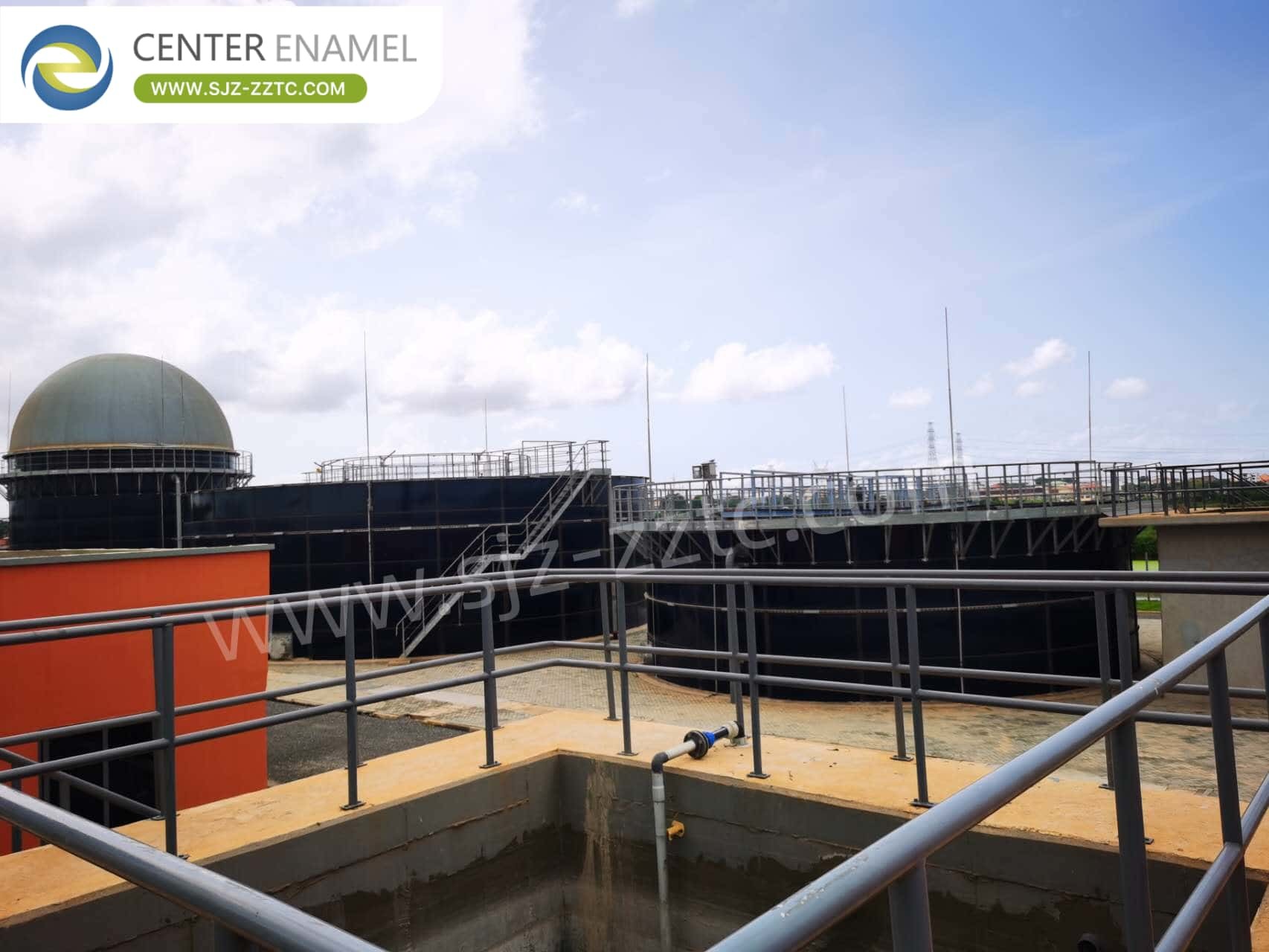
India Cow Dung Treatment with GFS Tanks and Advanced CSTR Process
| Place of Origin: | China |
| Brand Name: | CEC TANKS |
| Certification: | ISO 9001:2008, AWWA D103 , OSHA , BSCI |
| Model Number: | W |
| Minimum Order Quantity: | 1set |
| Price: | $5000~$20000 one set |
| Packaging Details: | PE poly-foam between each two steel plates ; wooden pallet and wooden |
| Delivery Time: | 10-30 days after deposit received |
| Payment Terms: | L/C,T/T |
| Supply Ability: | 60 sets per month |
|
Detail Information |
|||
| Place of Origin | China | Brand Name | CEC TANKS |
|---|---|---|---|
| Certification | ISO 9001:2008, AWWA D103 , OSHA , BSCI | Model Number | W |
| Tank Body Color: | Dark Green / Can Be Customized | Corrosion Integrity: | Excellent |
| Steel Plates Thickness: | 3mm To 12mm , Depends On The Tank Structure | Chemical Resistance: | Excellent |
| Size Of Panel: | 2.4M * 1.2M | Easy To Clean: | Smooth, Glossy, Inert, Anti-adhesion |
| Highlight: | Cow dung treatment GFS tanks,Wastewater treatment CSTR process,India cow dung wastewater project |
||
Product Description
India is home to the world's largest cattle population, with over 300 million bovines generating vast quantities of cow dung daily. Converting this abundant resource into biogas through anaerobic digestion offers transformative potential for rural energy access and environmental sustainability. This article explores India's cow dung treatment landscape, focusing on the CSTR Process, GFS Tanks, and how these technologies enable efficient biogas production.
Cow dung in India originates from the country's massive cattle population, which includes dairy cattle, draught animals, and free-ranging bovines. India's cattle are distributed across the entire subcontinent, with significant populations in states such as Uttar Pradesh, Madhya Pradesh, Rajasthan, Gujarat, and Maharashtra. The manure stream consists of faeces, urine, and wash water from cattle sheds and milking facilities, creating a high-strength organic wastewater with substantial pollution potential.
Cow dung is characterised by high concentrations of organic matter, nitrogen, phosphorus, and potentially pathogenic organisms. The high chemical oxygen demand and biological oxygen demand of cow dung make it unsuitable for direct discharge into water bodies, as it can cause severe eutrophication and environmental degradation. This composition, however, makes cow dung an excellent feedstock for anaerobic digestion, capable of producing significant quantities of methane-rich biogas while simultaneously reducing environmental pollution. India's traditional use of cow dung as fuel and fertilizer demonstrates its recognised value, and modern biogas technology offers an enhanced pathway for energy recovery.
The conversion of cow dung to biogas follows the established anaerobic digestion pathway involving four biochemical stages: hydrolysis, acidogenesis, acetogenesis, and methanogenesis. This biological process breaks down organic matter in an oxygen-free environment to produce biogas primarily composed of methane and carbon dioxide.
During hydrolysis, complex molecules such as carbohydrates, proteins, and fats are broken down into simpler soluble compounds. In the acidogenesis stage, these simpler compounds are converted into volatile fatty acids, alcohols, and gases. Acetogenesis further converts these products into acetic acid, hydrogen, and carbon dioxide. The final methanogenesis stage sees methanogenic archaea produce biogas. The liquid fraction of digestate can be used as organic fertilizer, while the solid fraction can be composted or further processed. The biogas can be used for electricity generation, cooking, or upgraded to biomethane for injection into natural gas networks.
The Continuous Stirred-Tank Reactor serves as the core processing unit for converting cow dung into biogas. The CSTR reactor is a closed tank equipped with a mechanical stirring device that ensures fermentation raw materials and microorganisms are fully mixed in a closed environment to produce biogas. This complete mixing prevents solids from settling, avoids crust formation, and maintains a stable biological environment.
For cow dung treatment, the CSTR Process offers particular advantages. Cow dung often contains high levels of suspended solids and fibrous material that require thorough mixing to ensure complete digestion. The mechanical mixer, agitator shaft, and paddles create a completely mixed state essential for efficient degradation of organic matter. The CSTR system can handle the high ammonia concentrations typical of cow dung while maintaining stable methanogenic activity. Studies have demonstrated that CSTR systems achieve considerable biogas yields from cow dung, making them suitable for large- and medium-scale biogas projects across India's diverse climatic zones.
Glass-Fused-to-Steel tanks provide premium containment infrastructure for India's cow dung biogas projects. The manufacturing process involves fusing glass enamel onto steel plates at temperatures between 820°C and 930°C, creating an inert, inorganic bond that combines steel's structural strength with glass's exceptional corrosion resistance. This double coating layer structure forms an impenetrable barrier against the aggressive organic acids, ammonia, and corrosive hydrogen sulfide generated during anaerobic degradation of cow dung.
The Double Membrane Roof system represents the preferred covering solution for these tanks, offering cost optimization through direct roof cost reduction and space efficiency that significantly reduces floor area while saving foundation construction costs. The integrated tank-and-roof solution ensures effective biogas collection and odour control, critical for cattle farms where odour management is essential for maintaining community relations and regulatory compliance.
Center Enamel offers a diverse range of storage tank cover solutions:
- Aluminum Geodesic Dome Roof: Advanced corrosion resistance and expansive clear span capability for efficient construction with minimal maintenance.
- Glass-Fused-to-Steel Roof: Air-tightness for pressurized structures and odour control in demanding applications.
- Single and Double Membrane Roof: Superior options for anaerobic digestion processes with integrated biogas collection.
- Aluminum Alloy Trough Deck Roof: An economical option for wastewater storage where air-tightness is not required.
- Stainless Steel Roof: Super anti-corrosion performance and long service life for harsh environments.
- FRP Roof: Suitable for applications where no air-tightness is required.
A complete biogas system requires a range of auxiliary equipment:
- Gas Holder: Stores biogas to balance supply with fluctuating demand from generators or boilers.
- Black Membrane: Used for covering storage ponds or as gas collection systems for larger facilities.
- Solid-liquid Separator: Separates digestate into solid organic fertilizer and liquid fractions, both of which have agricultural value for cattle farms.
- Torch System: A safety flare that automatically combusts excess biogas when production exceeds usage or during maintenance periods.
- Lifting Pump: Transfers liquids and slurries throughout the facility.
- Dehydration and Desulfurization Tank: Removes corrosive hydrogen sulfide and moisture from raw biogas before it enters generators or other equipment.
- Screw Sludge Dewatering Machine: Further processes solid digestate for agricultural application.
Center Enamel is a professional biogas solution provider delivering comprehensive waste-to-energy solutions for India's cow dung biogas projects. Their expertise includes:
- Full EPC Services: Managing the entire project lifecycle from feasibility studies and engineering design through procurement, construction, and commissioning.
- Integrated Project Management: Bundling engineering design, material procurement, and construction operations under a single framework to eliminate delays and cost overruns.
- Adaptation to Local Conditions: Designing plants optimised for India's unique feedstock composition and diverse climatic conditions, with particular attention to the high-strength organic wastewater characteristics of cow dung.
- Operations and Maintenance Support: Providing after-sales support and technical guidance to ensure reliable post-commissioning plant performance.
- Global Quality Standards: Manufacturing certified to international standards including ISO 9001 and AWWA D103, with projects completed across more than 100 countries.
India has significant potential to convert its cow dung into renewable energy through the CSTR Process. Supported by robust GFS Tanks and auxiliary equipment, and delivered by an experienced biogas solution provider, the country can build a sustainable circular economy that reduces agricultural pollution and generates clean fuel. The proven success of similar anaerobic digestion systems demonstrates the viability of this approach for India's cattle industry.
1. Why is cow dung particularly suitable for anaerobic digestion?
Cow dung contains high concentrations of organic matter and moisture, making it an excellent feedstock for anaerobic digestion. The high methane potential of cow dung results from its balanced carbon-to-nitrogen ratio, which supports robust methanogenic activity during the digestion process.
2. What environmental problems does untreated cow dung cause?
Untreated cow dung can cause severe water pollution through nutrient runoff, leading to eutrophication of rivers and lakes. It also emits greenhouse gases such as methane and nitrous oxide, and generates odour nuisance affecting nearby communities.
3. How does anaerobic digestion reduce greenhouse gas emissions from cow dung?
Anaerobic digestion captures methane that would otherwise be released into the atmosphere during manure storage. Since methane has a global warming potential many times higher than carbon dioxide, capturing and utilising it for energy production significantly reduces the overall greenhouse gas footprint of cattle farming operations.