-
Glass Fused To Steel Tanks (596)
-
Stainless Steel Tanks (434)
-
Fusion Bonded Epoxy Tanks (592)
-
Galvanized Steel Tanks (321)
-
Aluminum Dome Roofs (1336)
-
Wastewater Storage Tanks (232)
-
Welded Steel Tanks (457)
-
Pressure Vessels (295)
-
Anaerobic Digester (202)
-
Industrial Water Tanks (349)
-
Glass Lined Steel Tanks (180)
-
Bolted Steel Tanks (389)
-
Sludge Storage Tank (115)
-
Biogas Storage Tank (173)
-
Leachate Storage Tanks (133)
-
Agricultural Water Storage Tanks (179)
-
Fire Water Tank (166)
-
Grain Storage Silos (146)
-
Biogas Projects (424)
-
Wastewater Treatment Projects (1118)
-
Double Membrane Roof (223)

|
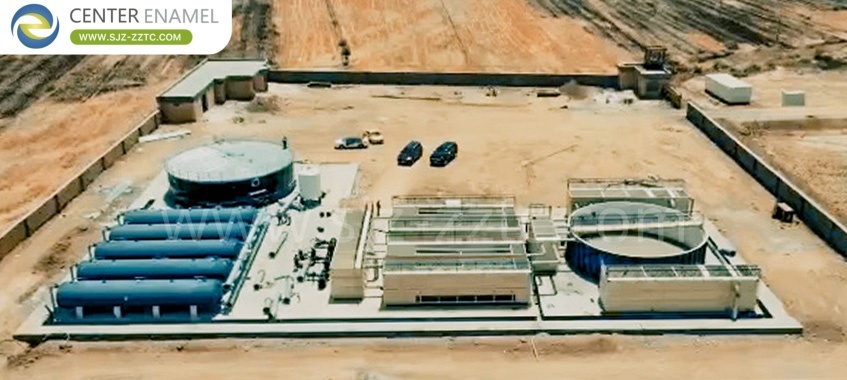
Leading Biogas Project Provider with GFS Tanks for Nigeria Garden Waste Treatment
| Place of Origin: | China |
| Brand Name: | CEC TANKS |
| Certification: | ISO 9001:2008, AWWA D103 , OSHA , BSCI |
| Model Number: | W |
| Minimum Order Quantity: | 1set |
| Price: | $5000~$20000 one set |
| Packaging Details: | PE poly-foam between each two steel plates ; wooden pallet and wooden |
| Delivery Time: | 10-30 days after deposit received |
| Payment Terms: | L/C,T/T |
| Supply Ability: | 60 sets per month |
|
Detail Information |
|||
| Place of Origin | China | Brand Name | CEC TANKS |
|---|---|---|---|
| Certification | ISO 9001:2008, AWWA D103 , OSHA , BSCI | Model Number | W |
| Tank Body Color: | Dark Green / Can Be Customized | Corrosion Integrity: | Excellent |
| Steel Plates Thickness: | 3mm To 12mm , Depends On The Tank Structure | Chemical Resistance: | Excellent |
| Size Of Panel: | 2.4M * 1.2M | Easy To Clean: | Smooth, Glossy, Inert, Anti-adhesion |
| Highlight: | biogas project GFS tanks Nigeria,garden waste treatment biogas project,wastewater treatment project GFS tanks |
||
Product Description
Transform urban green waste into a lucrative renewable power source with our expert overview of biomass valorization in Nigeria. Urban landscaping operations and park maintenance generate substantial quantities of woody yard waste requiring advanced processing. Modern anaerobic digestion engineering transforms organic refuse into high-yield clean renewable energy and valuable soil amendments. Explore how integrated technological solutions and professional biogas project providers drive ecological compliance and long-term economic profitability.
Garden waste is generated continuously from municipal parks highway landscaping estate maintenance and residential yard cleaning activities. This green biomass comprises a complex mixture of tree branches grass cuttings fallen leaves and woody shrub residues. In Nigeria tropical climate dynamics and rapid urbanization accelerate vegetation growth creating immense volumes of organic refuse for municipal authorities. Conventional open dumping and incineration methods create severe environmental pollution greenhouse gas emissions and public health hazards. Operators encounter immense challenges in stabilizing fibrous lignocellulosic materials while meeting strict environmental discharge regulations. Overcoming these complex treatment hurdles requires advanced mechanical preprocessing and robust anaerobic digestion technologies.
The conversion of garden waste into clean biogas involves rigorous mechanical size reduction followed by high-solid anaerobic digestion. Specialized shredders and pulpers break down fibrous plant structures to increase surface area for microbial attack. The prepared organic slurry is subsequently pumped into enclosed bioreactors where anaerobic bacteria convert complex carbohydrates into biogas. This biochemical process achieves dual benefits by eliminating weed seeds and pathogen loads while capturing valuable methane-rich gas. The generated biogas serves as a versatile renewable fuel source for decentralized power generation or thermal industrial applications. Furthermore capturing methane emissions actively contributes to national carbon reduction targets and sustainable waste management.
Center Enamel provides professional engineering design solutions customized for garden waste to biogas upgrading projects. Our engineering specialists analyze specific influent characteristics and regional climatic conditions to develop optimized process flow diagrams. We utilize advanced hydraulic modeling and structural calculation software to ensure precise equipment sizing and maximum structural safety. Every design phase adheres strictly to international engineering standards guaranteeing seamless integration between civil works and mechanical equipment. Our custom solutions minimize energy consumption maximize biogas yields and simplify routine plant maintenance procedures. Partnering with Center Enamel ensures your biomass project is engineered for maximum reliability and financial success.
The Continuous Stirred-Tank Reactor process serves as the biological heart of advanced high-efficiency anaerobic digestion plants. This technology utilizes a closed cylindrical tank equipped with robust mechanical agitation devices to maintain homogeneous mixture conditions. Continuous or semi-continuous feeding at controlled mesophilic temperatures ensures optimal microbial activity for breaking down complex slurries. The active stirring mechanism prevents scum crusting and thermal stratification while maximizing contact between bacteria and organic pollutants. Consequently the CSTR system achieves rapid volatile fatty acid conversion and exceptional biogas production stability. This proven process configuration is indispensable for treating high-solid agricultural waste with maximum efficiency.
Glass-Fused-to-Steel tanks integrated with double membrane roofs provide an unbeatable structural solution for anaerobic digestion and gas storage. GFS plates feature porcelain enamel fused to high-strength steel at ultra-high temperatures delivering unmatched corrosion and abrasion resistance. This advanced coating eliminates the need for repainting and ensures decades of maintenance-free service in corrosive environments. The double membrane roof installed directly on top of the GFS tank acts as an efficient gasholder for storing renewable biogas safely. This compact modular combination saves valuable land area eliminates external piping losses and ensures complete vapor-tight odor control. Together they represent the pinnacle of modern biogas containment engineering.
Center Enamel offers an extensive range of high-performance storage tanks and cover solutions to suit diverse industrial applications.
Glass-Fused-to-Steel Tanks: Engineered for rapid bolt-together installation and superior operational durability.
Galvanized Steel Tanks: Treated with specialized zinc coatings for excellent weather and wear resistance.
Fusion Bonded Epoxy Tanks: Offered with smooth protective linings ideal for demanding wastewater conditions.
Stainless Steel Tanks: Constructed to meet strict hygienic and chemical resistance requirements for specialized liquid storage.
Aluminum Geodesic Domes: Provide durable and maintenance-free overhead protection across varied industrial tank setups.
Our extensive equipment inventory encompasses all necessary machinery for complete biogas plant operation and digestate utilization.
Mechanical Bar Screens: Effectively filter out coarse fibrous impurities and suspended debris from raw influent streams.
Solid-Liquid Separators: Efficiently divide fermented slurry into valuable organic solid fertilizer and liquid effluent.
Biogas Upgrading Units: Purify raw gas by eliminating trace impurities to meet high-grade fuel specifications.
Submersible Pumps and Blowers: Ensure reliable fluid transfer and consistent gas pressure throughout the facility.
Automated Flare Systems: Guarantee safe emergency combustion and absolute operational compliance.
Center Enamel operates as an established solution provider delivering comprehensive equipment manufacturing engineering design and project execution packages for biomass plants. We streamline project implementation by combining consulting engineering manufacturing supply and site construction management under one roof. Our integrated project management approach guarantees strict adherence to quality timelines and budget constraints. We provide complete lifecycle support including operator training technical consultation and prompt spare parts availability. Choosing Center Enamel as your solution provider guarantees seamless project coordination and superior facility performance. Let our engineering expertise turn your garden waste challenges into a profitable renewable energy enterprise.
Transitioning to advanced garden waste treatment and biogas recovery is crucial for sustainable agricultural and municipal growth. Integrating GFS tanks CSTR technology and biogas project provider services ensures optimal environmental and financial returns. Center Enamel stands ready to deliver world-class engineering solutions tailored to your specific project needs. Invest in professional biomass treatment today for a cleaner and more prosperous tomorrow.
What distinguishes mesophilic anaerobic digestion from thermophilic processing in municipal organic waste facilities?
Mesophilic systems operate at moderate temperatures around thirty-seven degrees Celsius offering high operational stability and lower energy inputs.
How does solid-liquid separation enhance the final utilization of organic digestate derived from garden waste?
Separation yields a nutrient-rich solid cake ideal for composting alongside a liquid fraction suitable for controlled fertigation use.
What safety considerations govern the design of low-pressure gas storage membranes on anaerobic digestion tanks?
Engineers incorporate redundant pressure relief valves flame arresters and automatic over-pressure venting to protect structural integrity.