-
Glass Fused To Steel Tanks (596)
-
Stainless Steel Tanks (434)
-
Fusion Bonded Epoxy Tanks (592)
-
Galvanized Steel Tanks (321)
-
Aluminum Dome Roofs (1336)
-
Wastewater Storage Tanks (232)
-
Welded Steel Tanks (457)
-
Pressure Vessels (295)
-
Anaerobic Digester (201)
-
Industrial Water Tanks (349)
-
Glass Lined Steel Tanks (180)
-
Bolted Steel Tanks (389)
-
Sludge Storage Tank (115)
-
Biogas Storage Tank (173)
-
Leachate Storage Tanks (133)
-
Agricultural Water Storage Tanks (179)
-
Fire Water Tank (166)
-
Grain Storage Silos (146)
-
Biogas Projects (425)
-
Wastewater Treatment Projects (998)
-
Double Membrane Roof (223)


|
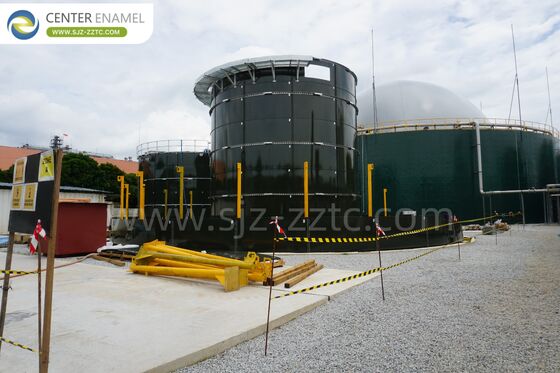
Transforming Cow Dung into Energy for Tanzania: Biogas Technology with GFS Tanks and CSTR Process
| Place of Origin: | China |
| Brand Name: | CEC TANKS |
| Certification: | ISO 9001:2008, AWWA D103 , OSHA , BSCI |
| Model Number: | W |
| Minimum Order Quantity: | 1set |
| Price: | $5000~$20000 one set |
| Packaging Details: | PE poly-foam between each two steel plates ; wooden pallet and wooden |
| Delivery Time: | 10-30 days after deposit received |
| Payment Terms: | L/C,T/T |
| Supply Ability: | 60 sets per month |
|
Detail Information |
|||
| Place of Origin | China | Brand Name | CEC TANKS |
|---|---|---|---|
| Certification | ISO 9001:2008, AWWA D103 , OSHA , BSCI | Model Number | W |
| Tank Body Color: | Dark Green / Can Be Customized | Corrosion Integrity: | Excellent |
| Steel Plates Thickness: | 3mm To 12mm , Depends On The Tank Structure | Chemical Resistance: | Excellent |
| Size Of Panel: | 2.4M * 1.2M | Easy To Clean: | Smooth, Glossy, Inert, Anti-adhesion |
| Highlight: | biogas technology for Tanzania,cow dung energy transformation,GFS tanks wastewater treatment |
||
Product Description
This article explores how modern biogas technology is empowering Tanzanian farmers by converting abundant livestock waste into clean energy, utilizing advanced infrastructure like GFS tanks and the CSTR process.
Tanzania’s agricultural sector is heavily reliant on livestock, which provides livelihoods for millions. However, the management of massive quantities of cow dung remains a persistent challenge for rural communities. Traditional disposal methods, such as leaving waste in open fields or burning it, contribute to soil degradation, water contamination, and significant methane emissions. Furthermore, reliance on firewood and charcoal for cooking leads to widespread deforestation and indoor air pollution. There is a critical need for mechanized waste treatment infrastructure that can mitigate these environmental risks while transforming a disposal burden into a valuable resource for energy and soil enrichment.
Biogas is produced through anaerobic digestion, a process where microorganisms break down organic matter in a sealed environment. Cow dung is an excellent feedstock because it has a balanced carbon-to-nitrogen ratio and provides strong buffering capacity for stable gas production. The advantages of this technology are profound: it replaces polluting fuels like wood and charcoal, thereby reducing deforestation and improving household health. Additionally, the byproduct of this process, known as digestate, serves as a nutrient-rich organic fertilizer that enhances soil fertility and crop yields, fostering a sustainable "farm-energy-food" cycle.
Center Enamel provides expert, customized design solutions for biogas projects in Tanzania, ensuring that infrastructure is optimized for local agricultural requirements. Our professional design approach focuses on creating reliable systems that maximize biogas yield while minimizing operational complexity. We conduct thorough site assessments to tailor the hydraulic retention time and material handling flow to specific farm outputs. By delivering engineered plans that align with international quality standards, Center Enamel helps farmers move beyond informal waste management toward modern, scalable, and efficient bio-energy production.
The Continuous Stirred-Tank Reactor (CSTR) is the cornerstone of industrial-scale biogas production. Unlike batch-fed digesters, the CSTR process allows for continuous or semi-continuous feeding of organic waste, which is then kept in a completely mixed, homogeneous state by mechanical agitators. This constant motion ensures that microorganisms have optimal contact with the organic matter, facilitating all four stages of anaerobic digestion—hydrolysis, acidogenesis, acetogenesis, and methanogenesis—simultaneously. The result is a highly stable, efficient system that avoids the "shocks" of batch systems and maintains a consistent, high-output flow of biogas.
Center Enamel utilizes Glass-Fused-to-Steel (GFS) tanks as the industry standard for biogas digesters. The glass-to-steel fusion process creates an inert, impermeable barrier that resists the corrosive chemical attacks of acidic biogas and anaerobic sludge, ensuring a design life of 30–50 years. When integrated with a Double Membrane Roof, the system offers an air-tight, safe, and cost-effective storage solution. The flexible nature of the double membrane roof provides excellent odor control and enables dynamic gas storage, making it the preferred top cover for modern, high-pressure biogas facilities.
- Galvanized Steel Tanks: Feature a robust, wear-resistant coating for general agricultural storage and environmental protection.
- Fusion Bonded Epoxy Tanks: Developed through innovative coating technology for superior impact resistance and long-term chemical durability.
- Stainless Steel Tanks: High-purity options (AISI 304/316) suitable for extreme environments or specialized wastewater applications.
- Aluminum Geodesic Dome Roofs: Ideal for wide-span, low-maintenance, and corrosion-resistant coverage.
- FRP Roofs: Versatile dome or flat structures suitable for drinking water or non-air-tight storage requirements.
- Gas Handling: Including gas holders and blowers to manage pressure and storage.
- Purification: Dehydration and desulfurization tanks remove moisture and hydrogen sulfide, protecting downstream power generators.
- Solids Management: Solid-liquid separators and screw sludge dewatering machines process digestate, transforming it into usable fertilizer.
- Safety Systems: Torch systems and pressure relief valves ensure safe gas handling and venting.
- EPC Services: We manage everything from preliminary engineering design to construction, procurement, and final commissioning.
- Process Packages: We provide validated, high-efficiency anaerobic digestion designs tailored to your specific feedstock.
- Equipment Supply: As a global leader in bolted tanks, we manufacture world-class tanks and mechanical components under strict quality controls (CE, ISO, NSF). This integrated approach simplifies procurement, ensures perfect system compatibility, and significantly speeds up project delivery for Tanzanian clients.
Center Enamel provides the technical foundation for Tanzania to modernize its agricultural waste management. By integrating our durable GFS tanks, advanced CSTR process technology, and comprehensive project support, we enable the efficient conversion of cow dung into clean, renewable energy. Our commitment to high-quality, one-stop solutions ensures that biogas facilities are not only sustainable but also economically viable. With a focus on durability, safety, and professional engineering, we are dedicated to helping Tanzanian farmers achieve energy independence and environmental stewardship for years to come.