-
Glass Fused To Steel Tanks (596)
-
Stainless Steel Tanks (434)
-
Fusion Bonded Epoxy Tanks (592)
-
Galvanized Steel Tanks (321)
-
Aluminum Dome Roofs (1336)
-
Wastewater Storage Tanks (232)
-
Welded Steel Tanks (457)
-
Pressure Vessels (295)
-
Anaerobic Digester (201)
-
Industrial Water Tanks (349)
-
Glass Lined Steel Tanks (180)
-
Bolted Steel Tanks (389)
-
Sludge Storage Tank (115)
-
Biogas Storage Tank (173)
-
Leachate Storage Tanks (133)
-
Agricultural Water Storage Tanks (179)
-
Fire Water Tank (166)
-
Grain Storage Silos (146)
-
Biogas Projects (425)
-
Wastewater Treatment Projects (978)
-
Double Membrane Roof (223)

|
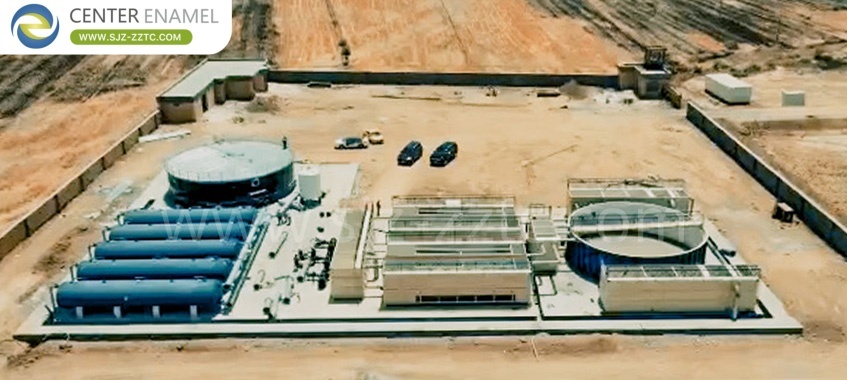
Municipal Sewage Treatment in Indonesia: Advanced GFS Tanks+A2O Process Solutions
| Place of Origin: | China |
| Brand Name: | CEC TANKS |
| Certification: | ISO 9001:2008, AWWA D103 , OSHA , BSCI |
| Model Number: | W |
| Minimum Order Quantity: | 1set |
| Price: | $5000~$20000 one set |
| Packaging Details: | PE poly-foam between each two steel plates ; wooden pallet and wooden |
| Delivery Time: | 10-30 days after deposit received |
| Payment Terms: | L/C,T/T |
| Supply Ability: | 60 sets per month |
|
Detail Information |
|||
| Place of Origin | China | Brand Name | CEC TANKS |
|---|---|---|---|
| Certification | ISO 9001:2008, AWWA D103 , OSHA , BSCI | Model Number | W |
| Tank Body Color: | Dark Green / Can Be Customized | Corrosion Integrity: | Excellent |
| Steel Plates Thickness: | 3mm To 12mm , Depends On The Tank Structure | Chemical Resistance: | Excellent |
| Size Of Panel: | 2.4M * 1.2M | Easy To Clean: | Smooth, Glossy, Inert, Anti-adhesion |
| Highlight: | GFS tanks sewage treatment Indonesia,A2O process wastewater treatment,municipal sewage treatment solutions |
||
Product Description
This article examines the implementation of modern municipal sewage treatment strategies in Indonesia. By deploying the A2O biological process alongside high-durability GFS storage and specialized anaerobic solutions, Indonesian municipalities can build resilient, sustainable infrastructure to manage the complexities of modern urban wastewater.
In Indonesia, municipal sewage consists of household, commercial, and public wastewater, containing significant levels of nutrients, organic matter, and various pathogens. As urban areas expand, the challenge is to implement scalable, efficient systems that can handle large volumes of waste while meeting national water quality standards. The primary difficulty lies in balancing infrastructure capacity with the need for low-maintenance, long-term durability in tropical climates. Without effective biological treatment, pollutants can severely damage Indonesia’s vital water bodies. Therefore, adopting advanced, reliable engineering solutions is crucial to ensure that urban development supports, rather than compromises, environmental protection and public health.
Effective sewage management follows a structured flow: wastewater is collected and equalized, then processed through anaerobic, anoxic, and aerobic biological stages to degrade pollutants. The effluent is then refined in an MBR tank for advanced solid-liquid separation, treated with UV light for disinfection, and the remaining residual sludge is dewatered using specialized mechanical equipment for safe handling.
Center Enamel delivers professional, end-to-end solutions for sewage treatment in Indonesia, focusing on durable, modern infrastructure. By providing specialized expertise in wastewater engineering, Center Enamel enables local authorities to implement high-performance plants that are built for long-term use. Their team optimizes the biological and mechanical aspects of sewage treatment, ensuring that Indonesian municipalities have the tools necessary to meet increasing infrastructure demands while maintaining a commitment to environmental safety, project reliability, and cost-effective operation throughout the entire plant lifecycle.
The A2O process is a key biological technique for treating municipal wastewater. It operates through three main zones: the anaerobic tank, where microorganisms break down complex organic matter; the anoxic tank, which utilizes denitrifying bacteria to reduce nitrates to nitrogen gas; and the aerobic tank, where microorganisms oxidize organic matter and convert ammonia into nitrates, ensuring comprehensive nutrient and organic pollutant removal.
Glass-Fused-to-Steel (GFS) tanks are the industry standard for containment, created by firing glass and steel at 820°C–930°C to achieve a strong, inorganic bond. This surface resists corrosion better than traditional materials. When integrated with FRP (Fiberglass Reinforced Plastic) roofs—which are available in flat or dome shapes—these tanks provide an efficient, weather-resistant system suitable for various site needs where specialized air-tightness might not be required.
Aluminum Geodesic Dome Roofs: Provide superior corrosion resistance and large-span coverage for massive storage.
Glass-Fused-to-Steel Roofs: Optimized for odor control and pressurized biological treatment applications.
Single and Double Membrane Roofs: The top-tier choice for biogas collection and odor management in anaerobic processes.
Aluminum Alloy Trough Deck Roofs: A cost-effective, practical solution that shields internal liquids from rain and wind.
Stainless Steel Tanks: Engineered for extreme longevity in harsh, corrosive environments.
Galvanized Steel Tanks: Utilize a specialized process to provide a tough, wear-resistant outer coating.
Fusion Bonded Epoxy (FBE) Tanks: Innovative, high-performance coating technology developed alongside AkzoNobel.
Sludge Thickeners: Vital equipment for concentrating residual sludge after the treatment cycle.
Screw-type Sludge Dewatering Machines: Facilitate high-efficiency dewatering, ensuring sludge can be managed easily.
Ultraviolet (UV) Disinfection Units: Use high-intensity radiation to neutralize harmful bacteria and viruses.
Membrane Modules: Core components of MBR tanks that improve solid-liquid separation and plant capacity.
Center Enamel is a premier one-stop provider for municipal sewage projects:
Full-Cycle EPC Services: Managing all phases including design, material procurement, and final onsite construction.
Proprietary Technologies: Leveraging world-class GFS coating methods for maximum tank lifespan.
Global Project Experience: Ensuring that international standards for sewage treatment are met in every region.
Strategic Optimization: Designing systems that reduce operational overhead while maximizing treatment efficiency.
Upgrading Indonesia’s municipal sewage treatment is crucial for environmental safety and sustainable growth. By adopting the A2O process, utilizing resilient GFS tanks, and accessing Center Enamel’s technical support, municipalities can build robust treatment plants that meet modern demands. These solutions represent a commitment to cleaner water, better public health, and long-term environmental integrity for Indonesia’s future.