-
Glass Fused To Steel Tanks (596)
-
Stainless Steel Tanks (434)
-
Fusion Bonded Epoxy Tanks (592)
-
Galvanized Steel Tanks (321)
-
Aluminum Dome Roofs (1336)
-
Wastewater Storage Tanks (232)
-
Welded Steel Tanks (457)
-
Pressure Vessels (295)
-
Anaerobic Digester (201)
-
Industrial Water Tanks (349)
-
Glass Lined Steel Tanks (180)
-
Bolted Steel Tanks (389)
-
Sludge Storage Tank (115)
-
Biogas Storage Tank (173)
-
Leachate Storage Tanks (133)
-
Agricultural Water Storage Tanks (179)
-
Fire Water Tank (166)
-
Grain Storage Silos (146)
-
Biogas Projects (425)
-
Wastewater Treatment Projects (908)
-
Double Membrane Roof (223)


|
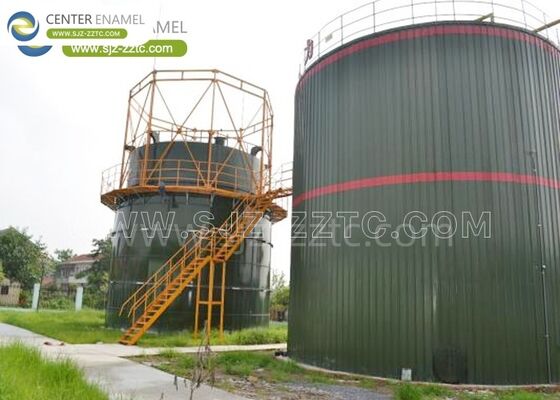
Advancing Biogas Projects in Indonesia: GFS Tanks and CSTR Process for Dry Straw
| Place of Origin: | China |
| Brand Name: | CEC TANKS |
| Certification: | ISO 9001:2008, AWWA D103 , OSHA , BSCI |
| Model Number: | W |
| Minimum Order Quantity: | 1set |
| Price: | $5000~$20000 one set |
| Packaging Details: | PE poly-foam between each two steel plates ; wooden pallet and wooden |
| Delivery Time: | 10-30 days after deposit received |
| Payment Terms: | L/C,T/T |
| Supply Ability: | 60 sets per month |
|
Detail Information |
|||
| Place of Origin | China | Brand Name | CEC TANKS |
|---|---|---|---|
| Certification | ISO 9001:2008, AWWA D103 , OSHA , BSCI | Model Number | W |
| Tank Body Color: | Dark Green / Can Be Customized | Corrosion Integrity: | Excellent |
| Steel Plates Thickness: | 3mm To 12mm , Depends On The Tank Structure | Chemical Resistance: | Excellent |
| Size Of Panel: | 2.4M * 1.2M | Easy To Clean: | Smooth, Glossy, Inert, Anti-adhesion |
| Highlight: | GFS tanks for biogas projects,CSTR process dry straw,wastewater treatment biogas Indonesia |
||
Product Description
Indonesia possesses a vast agricultural landscape, yet the accumulation of dry straw and crop residues presents a persistent environmental hurdle. Across various regions, the traditional practice of burning these materials to clear land contributes heavily to air pollution and soil nutrient depletion. This inefficient waste disposal method ignores the inherent energy value trapped within this organic biomass. For Indonesia to meet its growing renewable energy targets and foster sustainable agricultural practices, a shift toward advanced waste-to-energy conversion is required. By implementing modern technological solutions, the country can successfully pivot from viewing agricultural byproducts as a waste burden to recognizing them as a vital, local source of clean power.
The conversion of dry straw into biogas represents a significant leap toward agricultural sustainability. Instead of open-field burning, channeling these residues into anaerobic digestion systems allows for the generation of clean, renewable energy. This transition serves a dual purpose: it mitigates the environmental damage caused by uncontrolled burning and provides a steady supply of biogas for domestic or industrial use. Moreover, the byproduct of this process, known as digestate, serves as a nutrient-dense organic fertilizer that can replenish depleted soil. Adopting this circular approach empowers farmers in Indonesia to lower their operational costs, improve soil health, and achieve a degree of energy independence.
Center Enamel has been dedicated to engineering excellence for complex waste treatment and bio-energy challenges since 1989. We specialize in developing customized process designs that are precisely tuned to the unique feedstock characteristics found in Indonesia. Our team understands that efficient methane conversion depends on a deep analysis of local waste parameters, from straw composition to seasonal variations. By integrating our extensive manufacturing experience with tailored engineering solutions, we deliver comprehensive project plans. These designs ensure structural integrity, process reliability, and seamless site integration, providing Indonesian developers with the technical framework needed to scale biogas projects effectively.
The Continuous Stirred-Tank Reactor (CSTR) is our core technology for successfully processing high-solids organic waste, such as straw-based slurries. Our CSTR systems are designed to maintain a stable, high-performance environment where fermentation materials and active microorganisms remain in a state of continuous, thorough mixing. Equipped with robust mechanical agitators and operated under strictly regulated, constant temperatures, the CSTR process ensures the optimal breakdown of complex organic fibers. This advanced technology prevents material stratification and guarantees high, stable biogas yields, making it the most dependable choice for demanding agricultural and municipal waste applications.
The foundation of our biogas infrastructure is our industry-leading Glass-Fused-to-Steel (GFS) tanks. These tanks are manufactured through a high-temperature fusion process (820°C–930°C), where glass is bonded to steel plates to create a structure that is both exceptionally strong and highly resistant to corrosion. When combined with our advanced double membrane roofs, these storage systems form a completely airtight environment. This integrated configuration is essential for efficient biogas collection, offering significant space savings and reduced construction costs compared to traditional external gas holders, while maintaining the safety and environmental standards required for modern biogas plants.
- Aluminum Geodesic Dome Roof: Perfect for large-span projects, providing excellent corrosion resistance with low maintenance and cost-effective installation.
- Glass-Fused-to-Steel (GFS) Roof: A cone-shaped, air-tight solution featuring internal/external beams, ideal for pressurized structures and odor control.
- Single and Double Membrane Roof: Designed for superior biogas collection, these membranes integrate directly onto the AD tank, providing a cost-effective solution for anaerobic processes.
- Aluminum Alloy Trough Deck Roof: An economical, non-airtight option for storing non-pressurized liquids, offering protection against wind and rain.
- Stainless Steel Roof: A premium, long-service-life solution for harsh environments, providing the air-tightness necessary for pressurized odor-control applications.
- FRP Roof: A flexible material solution available in flat or dome shapes, suitable for storage applications where high gas-tightness is not a priority.
- Gas Holders and Membranes: High-durability black membranes for flexible biogas storage.
- Solid-liquid Separators: Crucial pre-treatment equipment for optimizing waste slurries.
- Dehydration and Desulfurization Tanks: Essential for purifying biogas to meet required utility standards.
- Screw Sludge Dewatering Machines and Lifting Pumps: Engineered for efficient sludge management and process circulation.
- Torch Systems: Important safety components for managing biogas through controlled flaring.
Center Enamel is committed to acting as a comprehensive, one-stop solutions provider for the entire lifecycle of your biogas project in Indonesia. Our integrated model offers:
- Full EPC Services: We manage everything from initial project consultation and site analysis to final equipment manufacturing and commissioning.
- Global Quality Standards: Our products are backed by over 36 years of experience, a 150,000m² R&D and production base, and certifications such as ISO9001 and NSF61.
- Technical Expertise: We provide custom process packages and structural designs tailored specifically to your site’s operational needs.
- Reliable Support: Our team ensures seamless integration of all mechanical, civil, and process components, helping Indonesian developers scale their renewable energy infrastructure with total confidence.
The transition toward a cleaner, energy-independent Indonesia begins with smarter agricultural waste management. By utilizing Center Enamel’s advanced CSTR processes and durable GFS tanks, the challenge of managing dry straw transforms into a highly profitable renewable energy opportunity. We provide the technical durability, manufacturing expertise, and project-specific engineering required to convert agricultural byproducts into consistent, clean power. We are dedicated to partnering with Indonesian developers to build a more sustainable and efficient energy future.
-
How does the GFS tank material respond to the tropical environment of Indonesia?GFS tanks feature a chemically inert surface that provides superior resistance to humidity and salt spray, ensuring long-term structural integrity without the frequent re-coating required by traditional steel tanks.
-
Can the CSTR system be adapted to handle seasonal feedstock variations?Yes, our CSTR systems are designed with adjustable agitation speeds and temperature controls, allowing operators to fine-tune the fermentation process as the type or consistency of agricultural feedstock shifts throughout the year.
-
Does Center Enamel assist with the integration of third-party electrical components in EPC projects?As a comprehensive solution provider, we coordinate the design and integration of all plant components, ensuring that our reactors and auxiliary equipment function perfectly with your selected power generation and gas processing machinery.