-
Glass Fused To Steel Tanks (596)
-
Stainless Steel Tanks (434)
-
Fusion Bonded Epoxy Tanks (592)
-
Galvanized Steel Tanks (321)
-
Aluminum Dome Roofs (1336)
-
Wastewater Storage Tanks (232)
-
Welded Steel Tanks (457)
-
Pressure Vessels (295)
-
Anaerobic Digester (201)
-
Industrial Water Tanks (349)
-
Glass Lined Steel Tanks (180)
-
Bolted Steel Tanks (389)
-
Sludge Storage Tank (115)
-
Biogas Storage Tank (173)
-
Leachate Storage Tanks (133)
-
Agricultural Water Storage Tanks (179)
-
Fire Water Tank (166)
-
Grain Storage Silos (146)
-
Biogas Projects (425)
-
Wastewater Treatment Projects (908)
-
Double Membrane Roof (223)

|
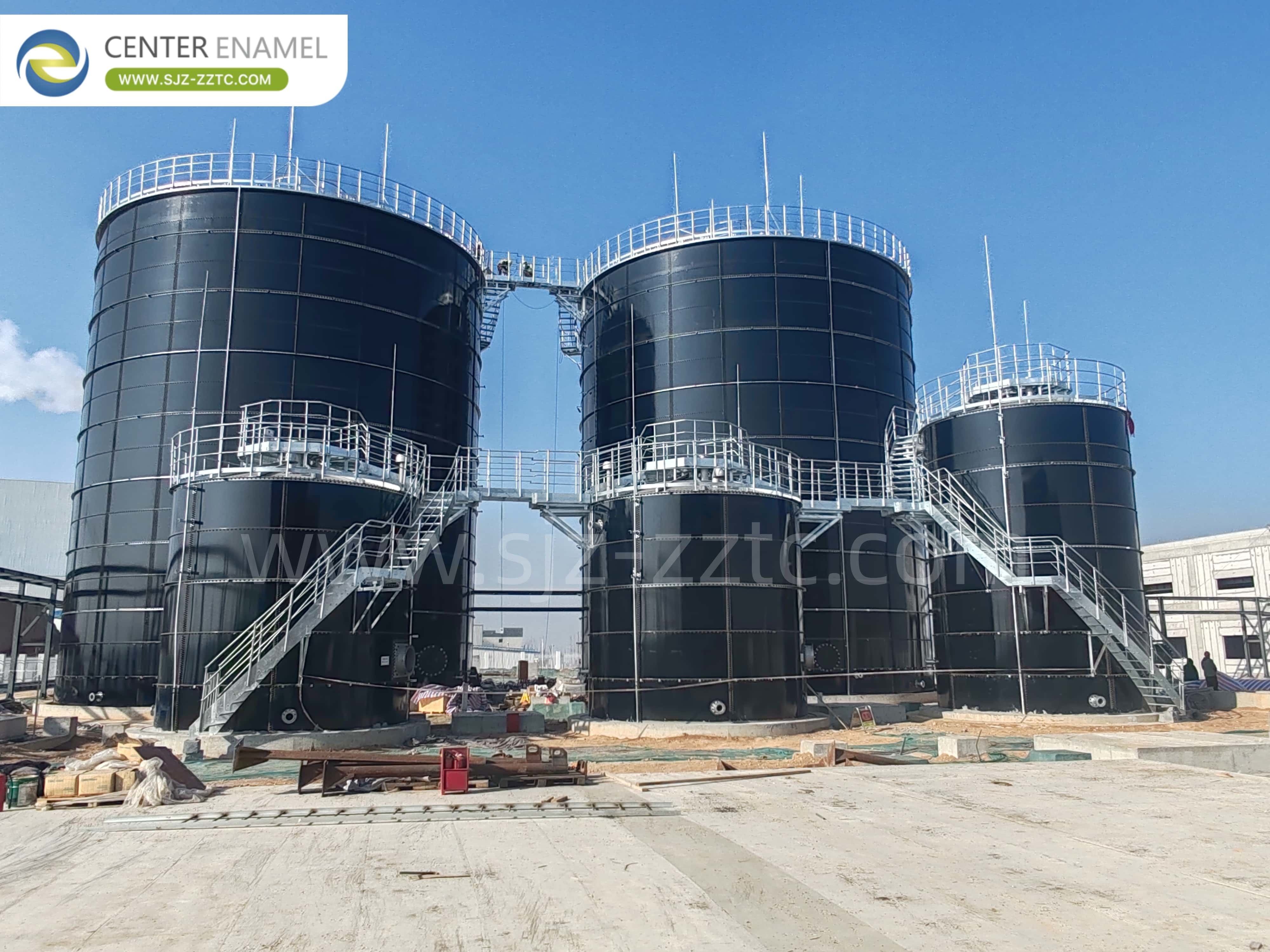
Efficient Biogas Solutions: GFS Tanks+CSTR Process for Silage Straw in Kenya
| Place of Origin: | China |
| Brand Name: | CEC TANKS |
| Certification: | ISO 9001:2008, AWWA D103 , OSHA , BSCI |
| Model Number: | W |
| Minimum Order Quantity: | 1set |
| Price: | $5000~$20000 one set |
| Packaging Details: | PE poly-foam between each two steel plates ; wooden pallet and wooden |
| Delivery Time: | 10-30 days after deposit received |
| Payment Terms: | L/C,T/T |
| Supply Ability: | 60 sets per month |
|
Detail Information |
|||
| Place of Origin | China | Brand Name | CEC TANKS |
|---|---|---|---|
| Certification | ISO 9001:2008, AWWA D103 , OSHA , BSCI | Model Number | W |
| Tank Body Color: | Dark Green / Can Be Customized | Corrosion Integrity: | Excellent |
| Steel Plates Thickness: | 3mm To 12mm , Depends On The Tank Structure | Chemical Resistance: | Excellent |
| Size Of Panel: | 2.4M * 1.2M | Easy To Clean: | Smooth, Glossy, Inert, Anti-adhesion |
| Highlight: | Efficient biogas GFS tanks,CSTR process silage straw,Biogas wastewater treatment Kenya |
||
Product Description
Kenya’s agricultural sector is a vital economic engine, yet it produces significant quantities of silage straw that pose persistent management challenges. Often, large volumes of this crop residue are left to decompose in fields or are discarded, leading to soil nutrient depletion and potential environmental pollution. Furthermore, the lack of structured disposal frameworks creates operational inefficiencies for local farms. By transitioning to advanced biomass-to-energy pathways, Kenyan agricultural enterprises can effectively resolve these disposal bottlenecks. Utilizing innovative anaerobic digestion, farmers can now turn these cumbersome residues into a high-value resource, thereby modernizing waste infrastructure and advancing Kenya’s transition toward a sustainable, circular agricultural economy.
Repurposing silage straw for biogas production delivers transformative benefits for Kenyan agricultural operations. First, it enables large-scale waste reduction, minimizing the logistical burden and environmental impacts associated with conventional disposal. Second, the anaerobic digestion process unlocks the latent renewable energy stored within the biomass, converting it into high-value methane. This captured biogas serves as a versatile energy source, providing reliable electricity for rural communities, process heat for agricultural drying, or refined fuel for machinery. By valorizing silage straw, stakeholders achieve both critical environmental stabilization and increased energy independence, directly boosting the operational resilience of the modern Kenyan farm.
Center Enamel provides comprehensive, expert-led design packages that are specifically calibrated to meet the diverse requirements of Kenyan biogas projects. We understand that each facility must navigate unique feedstock compositions, varying soil conditions, and specific climatic factors. Our engineering department leverages high-fidelity simulation and precision modeling to forecast potential gas yields and optimize the entire plant layout. From conducting initial technical feasibility studies to drafting long-term, scalable operational frameworks, our design services prioritize safety, maximize efficiency, and ensure that your investment in renewable energy infrastructure is optimized for long-term viability and profitability within the Kenyan market.
At the heart of our biogas facilities is the Continuous Stirred-Tank Reactor (CSTR), a technology engineered for the robust degradation of organic matter with high suspended solids. The CSTR process keeps feedstock and anaerobic microorganisms in a state of continuous, complete mixing, ensuring a highly active fermentation environment. Equipped with a heavy-duty mechanical stirring device, this reactor design eliminates dead zones and promotes uniformity, ensuring that even fibrous materials like silage straw are fermented thoroughly. This level of rigorous process control results in superior biogas production rates and significantly enhanced stabilization of the final digestate, establishing the CSTR as the gold standard for efficient, large-scale waste-to-energy conversion.
Our storage systems integrate GFS (Glass-Fused-to-Steel) tanks with double membrane roofs to create a highly durable and airtight containment environment. GFS technology involves firing molten glass onto steel plates at high temperatures, creating a chemically inert bond that resists corrosion, outperforming traditional painted or epoxy-coated steel. Topped with a double membrane roof, these tanks minimize space requirements while maximizing gas storage capacity through an expandable, pressure-regulated design. This combination provides a cost-effective, space-efficient, and highly resilient solution that excels in the demanding operating conditions typical of large-scale biomass energy projects.
As demonstrated in image_9f819b.jpg, Center Enamel provides a comprehensive portfolio of cover technologies to match specific project needs:
- Aluminum Geodesic Dome Roofs: Offers advanced corrosion resistance and expansive clear-span capability, making them highly efficient for large-diameter storage.
- Glass-Fused-to-Steel Roofs: Provides excellent air-tightness, frequently utilized for pressurized structures and effective odor control.
- Aluminum Alloy Trough Deck Roofs: An economical solution for applications where strict air-tightness is not required, offering reliable protection against rain and wind.
- Stainless Steel Roofs: Delivers super anti-corrosion performance and long service life, making them viable for harsh environments.
- FRP Roofs: Suitable for situations like water or agriculture storage where specific air-tightness is not required, available in both dome and flat shapes.
A successful biogas plant requires a complete ecosystem of ancillary machinery to maintain peak performance:
- Gas Holder: Provides reliable, expandable storage for the produced biogas.
- Black Membrane: Used for specialized storage or covering requirements in various site configurations.
- Solid-Liquid Separator: Vital for pre-treating feedstock to improve digestion efficiency.
- Torch System: Ensures safe pressure management and emission control.
- Lifting Pump: Engineered for the consistent transport of materials.
- Dehydration and Desulfurization Tank: Critical for purifying gas by removing moisture and impurities.
- Screw Sludge Dewatering Machine: Optimizes the final digestate output by efficiently separating liquids from solids.
Center Enamel serves as a single-source solution provider, offering integrated EPC (Engineering, Procurement, and Construction) services for the Kenyan market:
- Turn-Key Engineering: We manage the entire project lifecycle, from initial design and feasibility studies to final on-site commissioning.
- Specialized Equipment Supply: We provide a full suite of high-quality, international-standard components, including GFS tanks and advanced reactor technology.
- Professional Construction: Our experienced teams ensure that all installations are handled with precision, strictly adhering to global safety and performance standards to transform Kenyan waste into a thriving energy resource.
By integrating cutting-edge CSTR technology, durable GFS tank construction, and high-performance double membrane roofs, Center Enamel delivers a transformative solution for biomass energy in Kenya. Our integrated EPC approach minimizes technical risks while maximizing operational output. Partnering with a globally recognized manufacturer ensures that your biogas facility is built to international standards, providing sustainable and profitable waste-to-energy solutions for years to come.
- How does the CSTR technology differ from traditional batch digestion?Unlike batch processes, CSTR allows for continuous, steady feeding, which maintains a stable microbial population. This results in more consistent gas output and higher throughput, making it ideal for the continuous processing of agricultural silage straw.
- Can the GFS panels be repaired if they suffer impact damage on-site?Yes, the modular nature of GFS panels allows for localized repairs. Individual panels can be replaced or resealed without requiring the disassembly of the entire tank structure, significantly reducing maintenance downtime.
- What is the typical lifespan of a GFS tank in an equatorial climate like Kenya?GFS tanks are designed for extreme durability. With their chemically inert glass-to-steel bond, they are highly resistant to UV degradation and humidity, typically providing a service life of over 30 years with minimal intervention.