-
Glass Fused To Steel Tanks (596)
-
Stainless Steel Tanks (434)
-
Fusion Bonded Epoxy Tanks (592)
-
Galvanized Steel Tanks (321)
-
Aluminum Dome Roofs (1336)
-
Wastewater Storage Tanks (232)
-
Welded Steel Tanks (457)
-
Pressure Vessels (295)
-
Anaerobic Digester (201)
-
Industrial Water Tanks (349)
-
Glass Lined Steel Tanks (180)
-
Bolted Steel Tanks (389)
-
Sludge Storage Tank (115)
-
Biogas Storage Tank (173)
-
Leachate Storage Tanks (133)
-
Agricultural Water Storage Tanks (179)
-
Fire Water Tank (166)
-
Grain Storage Silos (146)
-
Biogas Projects (425)
-
Wastewater Treatment Projects (868)
-
Double Membrane Roof (223)


|
Sustainable Biogas Solutions: GFS Tanks and Double Membrane Roofs for Cow Dung Projects in Kenya
| Place of Origin: | China |
| Brand Name: | CEC TANKS |
| Certification: | ISO 9001:2008, AWWA D103 , OSHA , BSCI |
| Model Number: | W |
| Minimum Order Quantity: | 1set |
| Price: | $5000~$20000 one set |
| Packaging Details: | PE poly-foam between each two steel plates ; wooden pallet and wooden |
| Delivery Time: | 10-30 days after deposit received |
| Payment Terms: | L/C,T/T |
| Supply Ability: | 60 sets per month |
|
Detail Information |
|||
| Place of Origin | China | Brand Name | CEC TANKS |
|---|---|---|---|
| Certification | ISO 9001:2008, AWWA D103 , OSHA , BSCI | Model Number | W |
| Tank Body Color: | Dark Green / Can Be Customized | Corrosion Integrity: | Excellent |
| Steel Plates Thickness: | 3mm To 12mm , Depends On The Tank Structure | Chemical Resistance: | Excellent |
| Size Of Panel: | 2.4M * 1.2M | Easy To Clean: | Smooth, Glossy, Inert, Anti-adhesion |
| Highlight: | sustainable biogas GFS tanks,cow dung biogas double membrane roofs,Kenya wastewater treatment biogas solutions |
||
Product Description
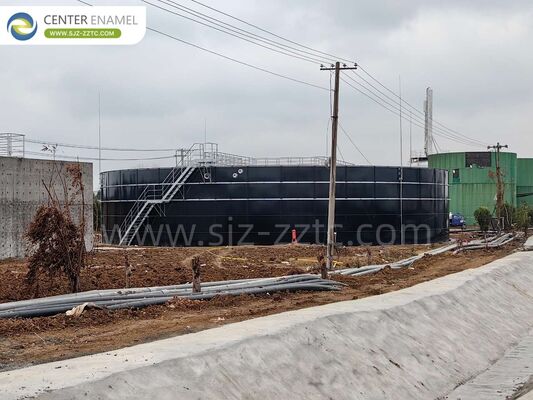
Sustainable Biogas Solutions: GFS Tanks and Double Membrane Roofs for Cow Dung Projects in Kenya
In Kenya, the livestock sector plays a pivotal role in the economy, but it simultaneously faces a major waste management crisis: the disposal of massive quantities of cow dung. Current practices, which often rely on uncontrolled heap storage, are leading to widespread soil nutrient depletion and the contamination of critical groundwater resources. Beyond these localized impacts, the decomposition of this untreated waste in the open releases significant volumes of methane, a potent greenhouse gas that negatively impacts the climate.
For Kenyan dairy farmers and agricultural cooperatives, there is an urgent demand for advanced waste-to-energy solutions. Implementing modern biogas systems is now vital, as it allows farmers to convert a difficult-to-manage waste stream into a sustainable energy source, ultimately improving farm profitability while ensuring environmental compliance and long-term land fertility.
Maximizing Value: The Benefits and Process of Biogas Conversion
Transforming cow manure into biogas offers an effective path toward agricultural sustainability and energy efficiency. The core mechanism is anaerobic digestion, a natural process where specialized bacteria break down organic solids within a sealed environment, completely free of oxygen. This biological reaction produces biogas, a renewable energy source that can be harnessed for household heating, farm-level power generation, or even as a clean fuel for specialized equipment. Simultaneously, the residual material—known as digestate—is an exceptionally potent, pathogen-reduced organic fertilizer that enhances soil quality. By adopting this circular approach, Kenyan farmers can significantly decrease their dependence on expensive, imported chemical fertilizers and fossil-based energy sources, creating a more self-reliant and environmentally conscious farming operation.
Professional Biogas Project Design by Center Enamel
Center Enamel offers world-class expertise in biogas infrastructure, utilizing over 36 years of experience to deliver projects tailored to the specific needs of the Kenyan market. Our comprehensive approach includes:
Customized Engineering Frameworks: We perform detailed analyses of local manure feedstock and climate conditions to develop digester designs that optimize gas production cycles.
Turnkey Project Oversight: Our team provides full-service support, managing everything from initial site feasibility assessments and process design to construction supervision and system commissioning.
Rigorous International Standards: We build in accordance with global engineering benchmarks, ensuring that every project provides long-term operational reliability and maximum safety for farm staff.
Unleashing Power through the CSTR Process
For high-capacity agricultural projects, Center Enamel employs Continuous Stirred-Tank Reactor (CSTR) technology. This system is engineered specifically to handle feedstocks like cow manure that have high suspended solid concentrations. The CSTR process utilizes a high-efficiency mechanical agitation system to ensure that the manure and the active anaerobic bacteria remain in a state of constant, perfect suspension. This thorough mixing regime effectively eliminates the risk of crusting or sedimentation within the tank. By maintaining a consistent, optimized temperature across the entire reactor volume, the CSTR ensures a stable and rapid fermentation process, resulting in significantly higher daily methane yields than can be achieved by traditional passive digester designs.
Superior Storage: GFS Tanks and Double Membrane Roofs
Our biogas storage infrastructure is built using advanced Glass-Fused-to-Steel (GFS) technology. Through a high-temperature firing process, we fuse premium glass to steel panels, creating an inert, non-porous bond that provides legendary corrosion resistance against the aggressive, acidic environment found inside an anaerobic digester. To maximize the utility of these tanks, we integrate our signature double membrane roof. This innovation acts as a flexible, pressurized gas-storage vessel that fits securely atop the reactor. By combining the digester and the gas holder into one compact, integrated structure, this design significantly reduces the required project footprint and minimizes the need for costly external foundation work, offering unparalleled value.
Innovative Cover Solutions for Diverse Needs
Beyond our primary double membrane systems, Center Enamel provides a wide selection of specialized roof designs to meet various project requirements:
Aluminum Geodesic Dome: Offers a massive span capacity and exceptional resistance to environmental degradation, perfect for large-scale, long-term installations.
Aluminum Alloy Trough Deck: A lightweight and cost-effective cover choice for projects that do not require an airtight seal but need weather protection.
Stainless Steel Roof: Provides an aesthetic finish and extreme durability, serving as an ideal solution for facilities operating in highly corrosive, harsh climates.
FRP Roof: A versatile, budget-friendly option that can be manufactured in both dome and flat shapes for water or waste storage applications.
Essential Ancillary Equipment for System Success
To ensure the long-term success and reliability of every biogas plant, we provide a complete suite of professional-grade ancillary equipment:
Gas Management: High-performance gas holders and industrial-grade torch systems for the secure management of excess gas.
Purification Units: Integrated tanks for dehydration and desulfurization, essential for maintaining gas quality and protecting downstream combustion equipment.
Solids Management: Industrial-scale solid-liquid separators and screw dewatering machines to efficiently process and package digestate.
Fluid Control: Precision lifting pumps and flowmeters for real-time monitoring and system automation.
Center Enamel: Your One-Stop Partner for Biogas Success in Kenya
Center Enamel is a comprehensive, one-stop solutions provider, committed to delivering turnkey biogas projects that empower Kenya’s agricultural industry. Our services include:
Integrated EPC Services: We streamline project delivery by consolidating engineering, procurement, and construction management under one professional team.
Optimized Process Packages: We provide proven, scalable biogas plant designs that guarantee superior conversion rates for local agricultural waste.
Global-Standard Equipment: As the largest manufacturer of GFS tanks in Asia, we supply certified, long-lasting components that ensure the productivity of your plant for decades.
Conclusion
By integrating cutting-edge GFS tank technology, efficient CSTR reactors, and optimized process management, Center Enamel is dedicated to modernizing Kenya’s agricultural waste sector. Our commitment to high-quality equipment and professional engineering makes us the premier partner for developing sustainable energy infrastructure that supports local livelihoods while preserving the environment for future generations.
Frequently Asked Questions (FAQ)
Q1: How does the GFS technology handle Kenya’s varying regional temperatures? A: GFS tanks are highly resilient to thermal expansion and contraction. The bond between the glass and steel is inorganic and extremely stable, meaning it maintains structural integrity and leak-proof performance regardless of fluctuating ambient temperatures across different Kenyan regions.
Q2: Does the installation of a CSTR-based system require highly specialized daily operation?
A: While the CSTR system is technologically advanced, Center Enamel simplifies operation through automated monitoring. Once commissioned, the system requires minimal manual intervention, and our team provides training to ensure local staff can manage the feedstock input and digestate removal with ease.
Q3: Can the biogas produced by this system be used for small-scale business applications?
A: Absolutely. Many of our clients use the generated biogas to power generators for milk chilling, irrigation pumps, or poultry heating. The energy produced is versatile, allowing farms to transition from basic waste producers into energy-sufficient businesses.