-
Glass Fused To Steel Tanks (596)
-
Stainless Steel Tanks (434)
-
Fusion Bonded Epoxy Tanks (592)
-
Galvanized Steel Tanks (321)
-
Aluminum Dome Roofs (1336)
-
Wastewater Storage Tanks (232)
-
Welded Steel Tanks (457)
-
Pressure Vessels (295)
-
Anaerobic Digester (201)
-
Industrial Water Tanks (349)
-
Glass Lined Steel Tanks (180)
-
Bolted Steel Tanks (389)
-
Sludge Storage Tank (115)
-
Biogas Storage Tank (173)
-
Leachate Storage Tanks (133)
-
Agricultural Water Storage Tanks (179)
-
Fire Water Tank (166)
-
Grain Storage Silos (146)
-
Biogas Projects (425)
-
Wastewater Treatment Projects (868)
-
Double Membrane Roof (223)


|
Transforming Biogas Solutions in Honduras: GFS Tanks and Double Membrane Roofs for POME Treatment
| Place of Origin: | China |
| Brand Name: | CEC TANKS |
| Certification: | ISO 9001:2008, AWWA D103 , OSHA , BSCI |
| Model Number: | W |
| Minimum Order Quantity: | 1set |
| Price: | $5000~$20000 one set |
| Packaging Details: | PE poly-foam between each two steel plates ; wooden pallet and wooden |
| Delivery Time: | 10-30 days after deposit received |
| Payment Terms: | L/C,T/T |
| Supply Ability: | 60 sets per month |
|
Detail Information |
|||
| Place of Origin | China | Brand Name | CEC TANKS |
|---|---|---|---|
| Certification | ISO 9001:2008, AWWA D103 , OSHA , BSCI | Model Number | W |
| Tank Body Color: | Dark Green / Can Be Customized | Corrosion Integrity: | Excellent |
| Steel Plates Thickness: | 3mm To 12mm , Depends On The Tank Structure | Chemical Resistance: | Excellent |
| Size Of Panel: | 2.4M * 1.2M | Easy To Clean: | Smooth, Glossy, Inert, Anti-adhesion |
| Highlight: | biogas solutions Honduras,GFS tanks POME treatment,double membrane roofs wastewater |
||
Product Description
Transforming Biogas Solutions in Honduras: GFS Tanks and Double Membrane Roofs for POME Treatment
The palm oil industry in Honduras stands as a vital pillar of the agricultural economy, yet it faces persistent technical challenges regarding the responsible management of Palm Oil Mill Effluent (POME). Generated through intensive processes such as fresh fruit bunch sterilization and mechanical oil extraction, POME is a challenging wastewater stream characterized by high organic loads, low pH levels, and significant temperatures. In Honduras, reliance on outdated open-pond systems has historically led to concerns regarding odor proliferation and the potential for soil and water contamination. As the industry moves toward greener production, there is a clear, urgent necessity for mill operators to transition to advanced, closed-loop treatment technologies that ensure regulatory compliance and long-term environmental stewardship.
The Strategic Advantage of Converting POME into Renewable Biogas
Harnessing POME for anaerobic digestion transforms a significant environmental liability into a valuable operational asset. The effluent’s rich chemical composition provides an ideal substrate for methanogenic microorganisms to generate substantial amounts of biogas. By deploying specialized, airtight containment systems, Honduran palm oil producers can capture this energy, which serves as a sustainable replacement for conventional fossil fuels. This transition not only mitigates greenhouse gas emissions typically associated with untreated waste but also drastically improves the facility’s energy self-sufficiency. By integrating biogas recovery into their daily operations, mills can lower energy costs and align with international sustainability standards, ultimately enhancing their competitiveness in the global market.
Expert Design for Tailored Anaerobic Biogas Solutions
Center Enamel provides dedicated, professional design services aimed at optimizing anaerobic biogas projects for the unique operational landscape of Honduras. We recognize that the specific characteristics of local palm oil processing, including seasonal output variations, require a nuanced engineering strategy. Our team works closely with local operators to develop bespoke treatment configurations that prioritize peak gas production alongside maximum structural reliability. By incorporating advanced engineering units and ensuring that all systems adhere to rigorous industrial safety and quality standards, we enable Honduran palm oil facilities to implement high-performance, easy-to-maintain infrastructure that secures a tangible return on investment.
Advanced Pretreatment and the USR Process
A high-performance biogas system depends on effective pretreatment to ensure longevity and consistency. Our approach utilizes heavy-duty mechanical bar screens to capture debris and horizontal flow oil separators to meticulously extract greases before they reach the main reactor. This crucial stage protects internal equipment from fouling and optimizes the biological balance. Once pretreated, the effluent enters our specialized Upflow Solids Reactor (USR). Specifically engineered for high-solid-content waste, the USR utilizes an efficient upflow distribution system that maintains uniform solids loading. This process facilitates consistent organic degradation, ensuring that Honduran mills receive a stable, reliable, and high-quality biogas output even under varying feed conditions.
Superior Durability: GFS Tanks and Double Membrane Roofs
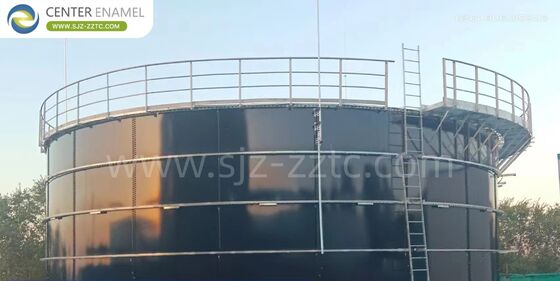
Center Enamel’s flagship technological advantage is our proprietary Glass-Fused-to-Steel (GFS) construction. By bonding glass to high-strength steel at temperatures between 820°C and 930°C, we create a surface that is exceptionally resistant to the corrosive and acidic nature of POME, far outperforming traditional coated steel. These robust GFS tanks are paired with our high-performance double membrane roofs, providing an airtight, total-containment solution for methane collection. This combination is highly space-efficient; the double membrane roof functions as an integrated gas holder, drastically reducing the total project footprint while eliminating the need for expensive, secondary ground-mounted gas storage tanks.
Versatile Storage Tank Cover Solutions
To meet the diverse spatial and containment requirements of industrial facilities, Center Enamel provides a comprehensive suite of specialized cover technologies:
Aluminum Geodesic Dome Roofs: Engineered for clear-span coverage with superior resistance to the atmospheric corrosion common in tropical climates.
Aluminum Alloy Trough Deck Roofs: A cost-effective, durable choice for storage applications where comprehensive, airtight seals are not required.
Stainless Steel Roofs: Ideal for environments requiring maximum longevity and structural integrity against chemical exposure.
FRP Roofs: Versatile, lightweight solutions available in both flat and domed configurations for diverse water and agricultural storage needs.
Essential Ancillary Equipment for Integrated Performance
Ensuring a fully functional facility requires a synchronized suite of support equipment. Center Enamel supplies all necessary peripherals to maintain peak plant performance, including high-capacity gas holders, durable lagoon membranes, and automated hot water boilers designed to regulate digester temperatures for optimal bacterial activity. For safety, we provide emergency flare systems and advanced desulfurization tanks to guarantee biogas purity. Furthermore, our high-efficiency lifting pumps and screw sludge dewatering machines are designed to streamline maintenance, significantly reducing downtime and maximizing the operational efficiency of the entire biogas system.
One-Stop Biogas Solutions for Honduras
Center Enamel serves as a comprehensive, one-stop solution provider, guiding Honduran partners through every phase of their biogas project journey. We manage the entire lifecycle—from initial site-specific assessment and customized engineering design to the delivery of premium components, expert installation, and project commissioning. By combining our international technical expertise with a deep understanding of local operational challenges, we ensure that palm oil mills in Honduras receive fully integrated, compliant, and durable systems. Our commitment is to deliver robust, high-performance infrastructure that helps local producers effectively transition to cleaner, more efficient, and more sustainable production methods.
Conclusion
The adoption of anaerobic digestion technology is a defining step toward the future sustainability of the Honduran palm oil sector. Through Center Enamel’s specialized USR process, corrosion-resistant GFS tanks, and turnkey support, operators can transform problematic POME into a consistent, profitable renewable energy asset. We are dedicated to providing the reliable infrastructure necessary to move the industry toward cleaner, more profitable operations. By investing in modern biogas infrastructure, Honduran operators can secure their economic future while fulfilling their environmental responsibilities to the local community and the global marketplace.
Frequently Asked Questions (FAQ)
1. Does the GFS tank material affect the quality of the biogas produced?
The GFS tank material is completely chemically inert and non-reactive, meaning it does not leach any substances into the effluent or interfere with the sensitive bacterial colonies responsible for biogas production. This ensures the output remains pure and stable.
2. How do you ensure the integrity of the double membrane roof under high-wind conditions?
The double membrane roofs are engineered for structural stability and include an automated air-cushion control system. This system adjusts pressure in real-time, providing both the necessary tension for gas storage and the required resilience against external wind loads.
3. Is the USR system suitable for mills with limited technical staff?
The USR is designed for high ease of operation. Its upflow design reduces the need for complex internal mechanical mixers that require frequent maintenance, allowing mill staff to monitor performance easily through our automated control dashboard.