-
Glass Fused To Steel Tanks (596)
-
Stainless Steel Tanks (434)
-
Fusion Bonded Epoxy Tanks (592)
-
Galvanized Steel Tanks (321)
-
Aluminum Dome Roofs (1336)
-
Wastewater Storage Tanks (232)
-
Welded Steel Tanks (457)
-
Pressure Vessels (295)
-
Anaerobic Digester (201)
-
Industrial Water Tanks (349)
-
Glass Lined Steel Tanks (180)
-
Bolted Steel Tanks (389)
-
Sludge Storage Tank (115)
-
Biogas Storage Tank (173)
-
Leachate Storage Tanks (133)
-
Agricultural Water Storage Tanks (179)
-
Fire Water Tank (166)
-
Grain Storage Silos (146)
-
Biogas Projects (425)
-
Wastewater Treatment Projects (838)
-
Double Membrane Roof (223)


|
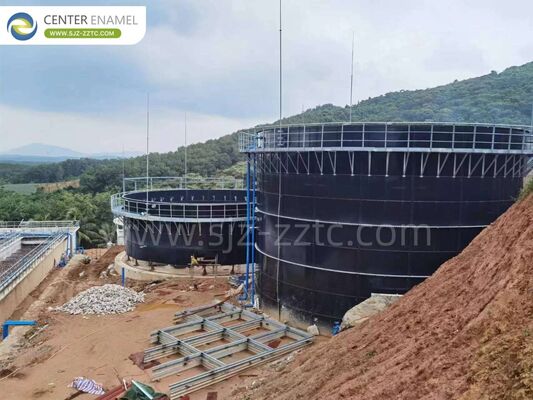
Leading EPC Contractor Solutions: GFS Tanks and Double Membrane Roof for Indonesia Pig Manure
| Place of Origin: | China |
| Brand Name: | CEC TANKS |
| Certification: | ISO 9001:2008, AWWA D103 , OSHA , BSCI |
| Model Number: | W |
| Minimum Order Quantity: | 1set |
| Price: | $5000~$20000 one set |
| Packaging Details: | PE poly-foam between each two steel plates ; wooden pallet and wooden |
| Delivery Time: | 10-30 days after deposit received |
| Payment Terms: | L/C,T/T |
| Supply Ability: | 60 sets per month |
|
Detail Information |
|||
| Place of Origin | China | Brand Name | CEC TANKS |
|---|---|---|---|
| Certification | ISO 9001:2008, AWWA D103 , OSHA , BSCI | Model Number | W |
| Tank Body Color: | Dark Green / Can Be Customized | Corrosion Integrity: | Excellent |
| Steel Plates Thickness: | 3mm To 12mm , Depends On The Tank Structure | Chemical Resistance: | Excellent |
| Size Of Panel: | 2.4M * 1.2M | Easy To Clean: | Smooth, Glossy, Inert, Anti-adhesion |
| Highlight: | EPC contractor wastewater treatment solutions,GFS tanks for pig manure,double membrane roof wastewater projects |
||
Product Description
Leading EPC Contractor Solutions: GFS Tanks and Double Membrane Roof for Indonesia Pig Manure
In Indonesia, the rapid growth of the intensive livestock industry, particularly in pig farming, has created a significant environmental dilemma: the management of massive quantities of swine manure. Traditional disposal methods are failing to keep pace with the high waste volumes, leading to hazardous environmental consequences. Untreated manure emits overpowering odors, poses severe risks of groundwater contamination, and releases potent greenhouse gases into the atmosphere. As Indonesia prioritizes agricultural modernization and environmental protection, local pig farms are under increasing pressure to transition away from outdated waste management practices toward integrated, sustainable, and highly efficient systems that convert waste challenges into clean energy assets.
The Strategic Advantages of Biogas Conversion
Transforming pig manure into biogas is a transformative approach for Indonesia’s agricultural sector. By utilizing anaerobic digestion, farms can achieve effective waste stabilization, drastically reducing their overall environmental footprint. Beyond pollution prevention, this process functions as a renewable energy generator, capturing biogas that serves as a reliable fuel source for heating, electricity, or converted into compressed natural gas (CNG) for farm utility. Additionally, the resulting digestate—after proper processing—functions as a high-value organic fertilizer. This fosters a sustainable circular economy, where nutrient-rich farm waste is recycled back into the soil to boost agricultural productivity.
Professional Biogas Solutions for Indonesia by Center Enamel
Center Enamel provides tailored, high-performance biogas solutions specifically engineered to meet the unique operational requirements of Indonesia’s farming environment. Drawing on over 36 years of international expertise, we function as a comprehensive EPC (Engineering, Procurement, and Construction) contractor, managing complex projects from initial site assessment to final commissioning. Our engineering team focuses on transforming complex organic waste streams into profitable, high-efficiency energy systems that meet international quality standards. By prioritizing long-term operational stability and ease of maintenance, Center Enamel ensures that Indonesian pig farms can achieve environmental compliance while maximizing their investment returns.
Streamlined Biogas Production and Pre-treatment Processes
The operational efficiency of any biogas facility starts with precise pre-treatment. Our solution begins with a mechanical bar screen that intercepts bulky solid impurities, protecting downstream systems from potential damage. The waste is then channeled into a homogenization tank, where sand and heavy particles are settled and removed, and the water flow is balanced to ensure a consistent, stable feed for the fermentation phase. This essential simplification of the waste composition drastically reduces the mechanical burden on downstream treatment units, ensuring smooth, uninterrupted operation throughout the entire plant.
Advanced CSTR Technology for High-Efficiency Fermentation
At the core of our biogas plants is the Continuous Stirred-Tank Reactor (CSTR) technology, which is ideal for managing high-concentration organic wastewater. Within this closed reactor, organic raw materials and specialized anaerobic microorganisms are thoroughly integrated through a high-efficiency mechanical stirring device. This consistent mixing environment promotes a "relatively complete" fermentation state, allowing for the maximum possible degradation of organic matter and achieving significantly higher biogas yields compared to traditional or less advanced anaerobic methods, even in the demanding climatic conditions often found in Indonesia.
Superior Infrastructure: GFS Tanks and Double Membrane Roof
Center Enamel combines cutting-edge materials and space-efficient engineering to deliver superior biogas infrastructure. Our Glass-Fused-to-Steel (GFS) tanks, manufactured using an advanced 2C2F double-coating layer and fired at high temperatures (820°C-930°C), provide industry-leading structural strength and exceptional resistance to corrosion, ensuring a lifespan exceeding 30 years. These are perfectly complemented by our innovative Double Membrane Roofs. This integration provides a cost-optimized, space-efficient gas storage solution that significantly reduces the project's physical footprint and lowers foundation construction costs compared to traditional ground-mounted gas holders.
Essential Auxiliary Equipment for Modern Biogas Plants
To ensure a seamless, fully functional biogas facility, we provide a complete, high-quality suite of specialized auxiliary equipment:
Gas Holder: Provides a safe, flexible, and reliable storage volume for generated biogas.
Solid-Liquid Separator: Efficiently processes digestate, splitting it into high-quality solid organic fertilizer and liquid discharge.
Dehydration and Desulfurization Tank: An essential unit that removes moisture and sulfur, ensuring the biogas is clean enough for engine and boiler standards.
Torch System: Safely manages excess biogas through controlled, clean combustion.
Lifting Pumps & Dewatering Machines: Ensure the efficient movement and processing of sludge throughout the plant’s entire lifecycle.
Center Enamel: Your One-Stop EPC Partner in Indonesia
Center Enamel is your dedicated, one-stop partner for comprehensive biogas infrastructure in Indonesia. As an industry-leading EPC contractor, we offer an all-inclusive service package that handles every phase of your project. From initial process design and core technology implementation to equipment supply and final on-site commissioning, we ensure each project meets rigorous international standards, including AWWA D103 and EuroCode. Our commitment provides Indonesian farmers with reliable, high-efficiency biogas solutions backed by comprehensive quality certifications, helping to bridge the gap between waste management challenges and sustainable energy growth.
Summary: A Sustainable Future for Indonesian Livestock
Transitioning toward sustainable waste management is vital for the future of Indonesia’s livestock industry. By integrating advanced CSTR technology, durable GFS tanks, and comprehensive EPC services, Center Enamel empowers Indonesian pig farmers to solve critical pollution challenges while capturing the immense value of renewable energy. Partnering with an experienced, professional EPC provider guarantees long-term operational success, improved environmental stewardship, and the transformation of animal manure from an environmental liability into a consistent, valuable resource.
Frequently Asked Questions
Q1: How long does the anaerobic digestion process take for pig manure?
Typically, the hydraulic retention time in a CSTR system ranges from 15 to 30 days, depending on specific waste characteristics and operating temperature. Our system optimizes this process by maintaining constant temperatures to ensure peak microbial performance.
Q2: What are the main benefits of using GFS tanks compared to concrete or painted steel?
GFS tanks provide superior corrosion resistance due to the inert glass-steel bond, ensuring a service life exceeding 30 years with minimal maintenance. Furthermore, they offer significantly faster installation times, which shortens the overall construction schedule for your project.
Q3: Can the digestate from the biogas process be used directly on farmland?
Yes. After solid-liquid separation, the liquid portion can be utilized as a nutrient-rich liquid fertilizer, and the solid fraction acts as an excellent organic soil conditioner, allowing farmers to effectively close the nutrient loop on their land.