-
Glass Fused To Steel Tanks (596)
-
Stainless Steel Tanks (434)
-
Fusion Bonded Epoxy Tanks (592)
-
Galvanized Steel Tanks (321)
-
Aluminum Dome Roofs (1316)
-
Wastewater Storage Tanks (231)
-
Welded Steel Tanks (457)
-
Pressure Vessels (295)
-
Anaerobic Digester (201)
-
Industrial Water Tanks (349)
-
Glass Lined Steel Tanks (180)
-
Bolted Steel Tanks (390)
-
Sludge Storage Tank (115)
-
Biogas Storage Tank (173)
-
Leachate Storage Tanks (133)
-
Agricultural Water Storage Tanks (179)
-
Fire Water Tank (166)
-
Grain Storage Silos (146)
-
Biogas Projects (425)
-
Wastewater Treatment Projects (788)
-
Double Membrane Roof (223)

|
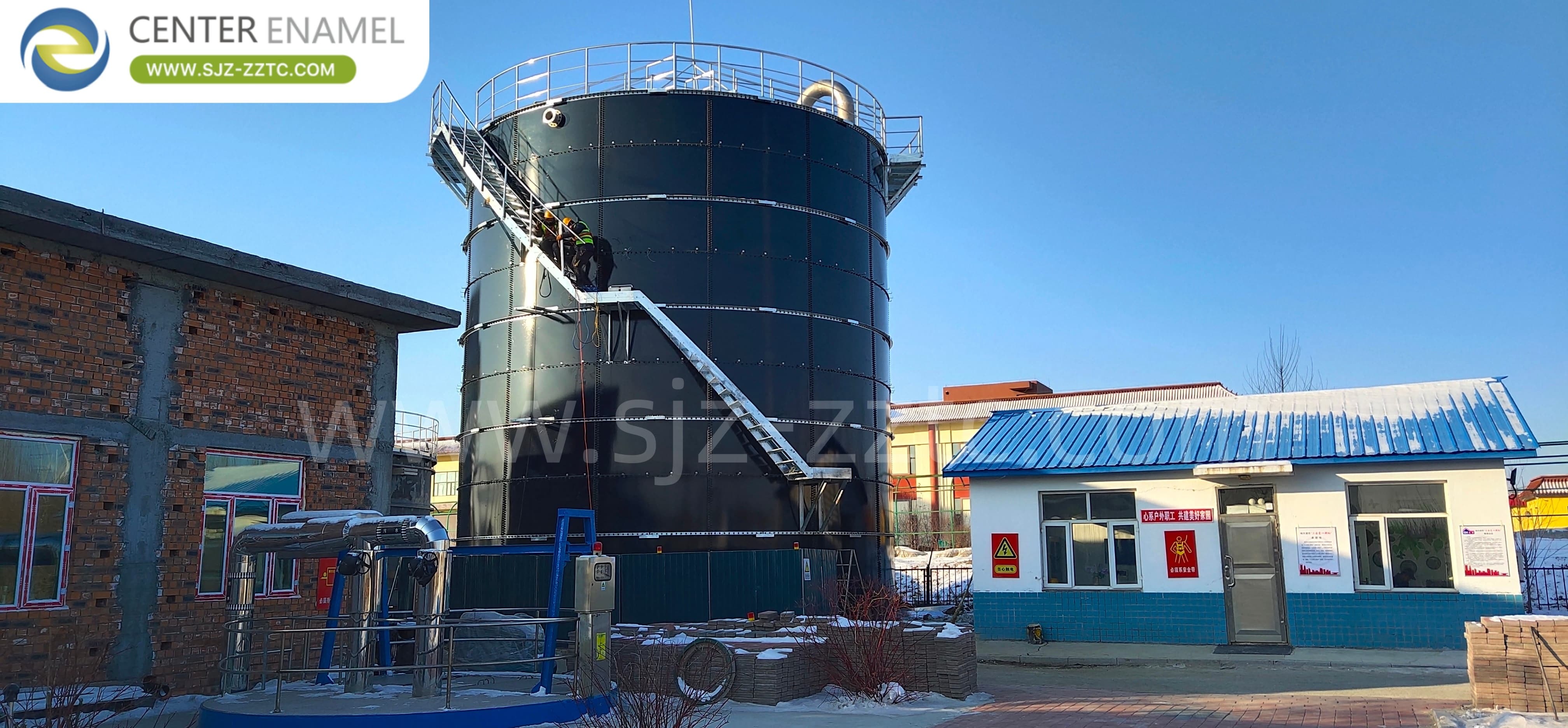
Advanced GFS Tanks and Biogas Solutions for New Zealand Livestock Manure Management
| Place of Origin: | China |
| Brand Name: | CEC TANKS |
| Certification: | ISO 9001:2008, AWWA D103 , OSHA , BSCI |
| Model Number: | W |
| Minimum Order Quantity: | 1set |
| Price: | $5000~$20000 one set |
| Packaging Details: | PE poly-foam between each two steel plates ; wooden pallet and wooden |
| Delivery Time: | 10-30 days after deposit received |
| Payment Terms: | L/C,T/T |
| Supply Ability: | 60 sets per month |
|
Detail Information |
|||
| Place of Origin | China | Brand Name | CEC TANKS |
|---|---|---|---|
| Certification | ISO 9001:2008, AWWA D103 , OSHA , BSCI | Model Number | W |
| Tank Body Color: | Dark Green / Can Be Customized | Corrosion Integrity: | Excellent |
| Steel Plates Thickness: | 3mm To 12mm , Depends On The Tank Structure | Chemical Resistance: | Excellent |
| Size Of Panel: | 2.4M * 1.2M | Easy To Clean: | Smooth, Glossy, Inert, Anti-adhesion |
| Highlight: | GFS tanks for livestock manure,biogas solutions New Zealand,wastewater treatment manure management |
||
Product Description
Advanced GFS Tanks and Biogas Solutions for New Zealand Livestock Manure Management
Fruit and vegetable waste is not the only organic challenge modern agriculture faces; livestock production generates immense volumes of animal manure daily. The primary sources of livestock manure include dairy operations, swine farms, poultry facilities, and beef feedlots. In highly concentrated farming regions, massive commercial livestock operations generate tons of liquid slurries, solid dung, and barn washwater every day. Because livestock manure possesses a high moisture content and is exceptionally rich in volatile organic solids, nutrients, and active pathogens, it undergoes rapid microbial decomposition if left untreated. This untreated waste leads to severe odor emissions, pest infestation, and dangerous nutrient runoff that can contaminate local waterways and groundwater tables, making immediate and effective agricultural waste management a critical priority for modern environmental planning.
Challenges of Livestock Manure Treatment in New Zealand
As a nation internationally recognized for its premium pastoral agriculture and dairy exports, New Zealand faces distinct ecological challenges in managing its massive agricultural waste footprint. The country has traditionally relied on land application or open effluent ponds to disperse dairy and swine manure. However, livestock manure contains high volumes of nitrogen and phosphorus, which heavily strains the local soil absorption capacity and leads to the eutrophication of natural waterways and lakes.
Furthermore, New Zealand's diverse regional climates and seasonal rainfalls accelerate the runoff of fresh agricultural waste, creating severe greenhouse gas compliance issues under strict national environmental policies. Relying purely on traditional storage ponds is an unsustainable long-term strategy as regulatory caps on nitrogen leaching tighten. Consequently, New Zealand's agricultural authorities are aggressively pushing for a circular economy, seeking advanced technological solutions to divert heavy organic fractions away from sensitive watersheds and toward high-efficiency resource recovery systems.
Transforming Livestock Manure into Biogas
The most sustainable pathway for processing livestock manure is anaerobic digestion (AD), a biological process that converts heavy organic burdens into valuable green energy. In a controlled anaerobic environment, specialized microorganisms break down the complex proteins, volatile fatty acids, and cellulose fibers present in the animal manure. This multi-stage biological breakdown—consisting of hydrolysis, acidogenesis, acetogenesis, and methanogenesis—ultimately generates renewable biogas, which is primarily composed of methane ($CH_4$) and carbon dioxide ($CO_2$).
The captured biogas can be scrubbed and utilized to generate green electricity, process heat for farm operations, or upgraded into biomethane to fuel local transportation networks. Simultaneously, the nutrient-rich digestate residue left behind after the digestion cycle can be processed into stabilized, high-quality organic fertilizer, successfully closing the farm-to-energy loop.
Benefits of Biogas Projects to New Zealand
Implementing dedicated livestock manure biogas projects offers multi-dimensional advantages aligned with New Zealand’s strict agricultural sustainability goals:
Waterway Protection: By containing and processing raw effluent in closed reactors, biogas projects prevent nutrient-rich runoff from contaminating pristine river systems.
Reduction of Carbon Footprint: Anaerobic digestion captures harmful methane emissions that would otherwise escape into the atmosphere from open manure lagoons, actively contributing to New Zealand's carbon neutrality target.
On-Farm Renewable Energy Generation: The clean electricity and heat generated from recovered biogas supplement local farm grids, reducing operational costs and enhancing local energy resilience.
Promotion of Circular Economy: Transforming raw agricultural effluent into stabilized, pathogen-free organic fertilizer allows farmers to replace chemical fertilizers with nutrient-dense organic alternatives, supporting green planning objectives.
Specialized Anaerobic Technologies: CSTR, UASB, USR, and IC
Selecting the appropriate technical process depends heavily on the total suspended solids (TSS) and organic composition of the livestock manure waste stream:
CSTR (Continuous Stirred Tank Reactor): This is the ideal technology for handling raw, thick animal manure or slurried poultry litter with high solid content. Its robust mechanical stirring systems prevent crust formation and solid stratification, ensuring optimal contact between volatile solids and the microbial biomass.
USR (Upflow Solids Reactor): Designed specifically for high-solid streams, USR reactors maximize solids retention time, allowing full degradation of complex bedded manures and dense agricultural residues.
UASB (Upflow Anaerobic Sludge Blanket): Best suited for the liquid-phase wastewater generated during parlor washing and initial manure separation stages. It relies on a dense granular sludge blanket to rapidly reduce high Chemical Oxygen Demand (COD) levels.
IC (Internal Circulation) Reactor: A highly efficient, high-rate system featuring a tall, space-saving footprint. It is perfect for agricultural facilities processing massive volumes of liquid-phase organic wastewater with minimal land usage.
Advantages of GFS Tanks in New Zealand's Biogas Projects
Center Enamel’s proprietary Glass-Fused-to-Steel (GFS) tanks serve as the premium containment solution for anaerobic digestion infrastructure:
Superior Corrosion Protection: The chemical fusion of glass and steel creates an inert coating that completely resists the aggressive organic acids and corrosive hydrogen sulfide ($H_2S$) gases generated during manure digestion.
Minimized Spatial Footprint: The modular, bolted construction allows these reactors to be assembled quickly within active farming sites without requiring sprawling construction zones or heavy concrete pouring.
Exceptional Engineering Quality: Manufactured under strict factory conditions, GFS tanks offer an operational lifespan exceeding 30 years with minimal ongoing structural maintenance.
Weather and Structural Resilience: Engineered to withstand harsh coastal climates, heavy seismic activities, and extreme structural loads, ensuring long-term operational safety.
Why Partner with Center Enamel?
Center Enamel stands out as a premier global EPC contractor and storage tank manufacturer, bringing unparalleled expertise to agricultural waste-to-energy projects:
Turnkey EPC Capabilities: We deliver full lifecycle management, encompassing detailed laboratory analysis, customized process design, GFS tank manufacturing, advanced automated control systems, and complete commissioning support.
Tailored Engineering Solutions: Every biogas solution is optimized based on the specific moisture, bedding fiber, and solid characteristics of the livestock waste stream.
Unmatched Technical Expertise: Decades of innovation in advanced anaerobic processes like CSTR, UASB, and IC ensure maximum methane yields and reliable operation.
Global Quality Compliance: Our systems conform to rigorous international design and environmental protection standards, ensuring seamless integration into strict regulatory frameworks.
Proven Global Success Stories
Center Enamel has a decorated track record of executing large-scale industrial wastewater and organic waste treatment projects worldwide:
Case1: Biogas Project in France
Process stage: CSTR
Tank dimensions: φ18.33m x 8.4m (H) (1 unit)
Total volume: 2,215 m³ (1 unit)
Completion year: 2021
Case2: Biogas Project in Canada
Tank dimensions: φ8.4m x 7.2m (H) (2 units)
Total volume: 798 m³
Completion year: 2024
Accelerating agricultural waste diversification requires innovative, robust engineering solutions. By deploying advanced anaerobic digestion technologies—such as the CSTR process—housed within industry-leading Glass-Fused-to-Steel (GFS) tanks, modern livestock operations can transform manure from an environmental burden into a reliable stream of clean, green energy. Partnering with an experienced EPC contractor like Center Enamel ensures that agricultural enterprises achieve optimal operational stability, maximize resource recovery, and build a resilient foundation for a truly circular economy.