-
Glass Fused To Steel Tanks (596)
-
Stainless Steel Tanks (434)
-
Fusion Bonded Epoxy Tanks (592)
-
Galvanized Steel Tanks (321)
-
Aluminum Dome Roofs (1316)
-
Wastewater Storage Tanks (231)
-
Welded Steel Tanks (457)
-
Pressure Vessels (295)
-
Anaerobic Digester (201)
-
Industrial Water Tanks (349)
-
Glass Lined Steel Tanks (180)
-
Bolted Steel Tanks (390)
-
Sludge Storage Tank (115)
-
Biogas Storage Tank (173)
-
Leachate Storage Tanks (133)
-
Agricultural Water Storage Tanks (179)
-
Fire Water Tank (166)
-
Grain Storage Silos (146)
-
Biogas Projects (425)
-
Wastewater Treatment Projects (788)
-
Double Membrane Roof (223)

|
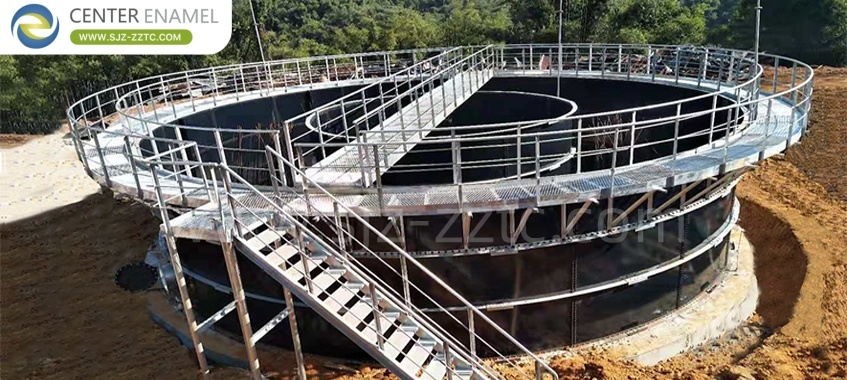
Innovative Anaerobic Technologies and A2O Process for Malaysia Municipal Wastewater Treatment Project
| Place of Origin: | China |
| Brand Name: | CEC TANKS |
| Certification: | ISO 9001:2008, AWWA D103 , OSHA , BSCI |
| Model Number: | W |
| Minimum Order Quantity: | 1set |
| Price: | $5000~$20000 one set |
| Packaging Details: | PE poly-foam between each two steel plates ; wooden pallet and wooden |
| Delivery Time: | 10-30 days after deposit received |
| Payment Terms: | L/C, T/T |
| Supply Ability: | 60 sets per month |
|
Detail Information |
|||
| Place of Origin | China | Brand Name | CEC TANKS |
|---|---|---|---|
| Certification | ISO 9001:2008, AWWA D103 , OSHA , BSCI | Model Number | W |
| Tank Body Color: | Dark Green / Can Be Customized | Corrosion Integrity: | Excellent |
| Steel Plates Thickness: | 3mm To 12mm , Depends On The Tank Structure | Chemical Resistance: | Excellent |
| Size Of Panel: | 2.4M * 1.2M | Easy To Clean: | Smooth, Glossy, Inert, Anti-adhesion |
| Highlight: | Anaerobic wastewater treatment technology,A2O process Malaysia project,Municipal wastewater treatment solutions |
||
Product Description
Innovative Anaerobic Technologies and A2O Process for Malaysia Municipal Wastewater Treatment Project
Rapid demographic shifts, urban centralization, and industrial growth have profoundly transformed the landscape of municipal utility management across modernizing nations. Among these infrastructure challenges, managing municipal wastewater—the complex, high-volume organic effluent generated by urban households, commercial activities, and centralized sewerage networks—presents a demanding yet critical priority for localized public health and environmental protection.
As Malaysia actively drives its green infrastructure masterplans and expands its major metropolitan centers, upgrading municipal wastewater infrastructure has become an absolute necessity. In Malaysia’s tropical maritime climate, characterized by year-round high temperatures, heavy seasonal monsoon downpours, and rapid urbanization, managing municipal sewage and the resulting heavy sludge presents serious operational burdens.
Unmanaged municipal sewage undergoes rapid biological degradation under tropical conditions, triggering severe odor issues, compromising public sanitation, and risking the biological contamination of vital local water catchments and rivers. Mitigating this intense ecological and urban pressure demands advanced engineering powered by specialized anaerobic technologies.
The Municipal Wastewater Treatment Process
Converting highly heterogeneous municipal sewage into environmentally safe, compliant discharge relies on an engineered, multi-stage treatment framework. Within modern treatment facilities, the transformation follows a structured biological and mechanical pathway to stabilize heavy organic loads:
Primary Screening and Clarification: Large suspended solids, grit, and debris are mechanically separated to protect downstream equipment from abrasions and clogs.
Anaerobic Digestion Pathway: The concentrated high-solid organic sludge collected during clarification enters an oxygen-free reactor. Inside, complex polymers and proteins are broken down by extracellular bacterial enzymes (Hydrolysis) and converted into volatile fatty acids (Acidogenesis).
Biogas Synthesis: Microorganisms catabolize these intermediates into acetic acid, carbon dioxide, and hydrogen (Acetogenesis). Finally, highly sensitive methanogenic archaea consume these compounds to generate high-value bio-methane (Methanogenesis).
Secondary Clarification and Disinfection: The remaining liquid effluent undergoes final settling and pathogen disinfection to meet strict local environmental quality standards before environmental release or reuse.
Strategic Benefits of Municipal Wastewater Projects for Malaysia
Implementing dedicated municipal wastewater treatment infrastructure delivers multifaceted ecological and socioeconomic rewards aligned with Malaysia’s sustainable development and green economy targets:
Mitigation of Environmental Pollution: Enclosed treatment configurations eliminate widespread odor issues and protect regional groundwater networks and river basins from chemical and biological contamination.
Decentralized Renewable Power Generation: Capturing the biogas generated during anaerobic sludge digestion provides treatment plants with a self-sustaining energy source, reducing regional grid reliance and greenhouse gas emissions.
Production of High-Value Organic Fertilizer: The nutrient-rich, stabilized digestate remaining after anaerobic processing can be safely repurposed as organic fertilizer, supporting regional agricultural communities and promoting zero-waste circular goals.
Core Anaerobic Process Technologies: A2O, CSTR, UASB, USR, and IC
Selecting the ideal reactor configuration depends heavily on the chemical oxygen demand (COD) and total suspended solids (TSS) profile of the targeted waste stream. Center Enamel delivers specialized engineering expertise across five primary process technologies to maximize operational stability:
CSTR (Continuous Stirred Tank Reactor Process): The premier choice for high-solid municipal sludge treatment. Its active mechanical agitation system maintains a completely homogeneous digestion environment, eliminates thermal stratification, prevents surface crusting or scum formation, and maximizes biogas yields from thick slurry inputs.
A2O (Anaerobic-Anoxic-Oxic Process): A highly efficient biological layout configured specifically for the simultaneous removal of nitrogen, phosphorus, and organic carbon from liquid-phase urban wastewater.
UASB (Upflow Anaerobic Sludge Blanket): A high-rate process tailored for liquid-phase wastewater where effluent flows upward through a dense, self-granulating sludge blanket, achieving exceptional COD removal within a compact footprint.
USR (Upflow Solids Reactor): Specifically engineered for waste streams with highly elevated suspended solids, lengthening particulate retention time to ensure complete biological conversion of stubborn matter.
IC (Internal Circulation) Reactor: An ultra-high-rate, next-generation layout utilizing a dual-stage internal circulation loop propelled by self-generated biogas pressure to handle intense organic loading rates.
Application Advantages of GFS Tanks in Malaysia
The operational longevity of a tropical municipal wastewater project depends heavily on the resilience of its containment systems. Center Enamel’s proprietary Glass-Fused-to-Steel (GFS) Tanks deliver premier performance tailored for demanding environments:
Superior Corrosion Resistance: Municipal sludge digestion creates an aggressive biochemical environment rich in corrosive hydrogen sulfide ($H_2S$) gas. The inert glass coating molecularly fused to premium steel plates at temperatures exceeding 800°C creates an impermeable shield that completely resists chemical degradation and rust.
High Environmental and Weather Resilience: Malaysia's tropical climate requires structural elasticity against heavy monsoon rains and high humidity. The modular, bolted construction of GFS Tanks offers engineered flexibility, delivering far greater crack resistance than rigid, traditional concrete structures.
Rapid, Localized Construction: Completely prefabricated off-site, GFS Tanks are shipped modularly and assembled quickly using a top-down jacking mechanism, eliminating extended concrete pouring times and minimizing on-site labor requirements.
Expandable Footprint: Bolted steel configurations optimize vertical storage, minimizing land use while allowing municipalities to easily scale up containment capacity as urban populations grow.
Why Partner with Center Enamel for Biogas Projects
Collaborating with Center Enamel as an experienced turnkey EPC partner ensures outstanding technical execution and long-term project viability:
End-to-End Turnkey Delivery: Center Enamel manages the entire project lifecycle, providing custom process engineering, automated PLC controls integration, rapid on-site assembly, and full commissioning.
Tailored Substrate Engineering: Our engineering team optimizes internal digestion and mixing configurations to match specific organic loads, acidity variations, and local tropical climate conditions.
Comprehensive Systems Integration: Beyond manufacturing industry-leading GFS digesters, we seamlessly integrate crucial auxiliary technologies, including advanced double-membrane gas holders, specialized mixers, and multi-stage biogas purification systems.
Extensive Global Experience: With successful waste-to-energy and wastewater installations deployed across more than 100 countries, Center Enamel satisfies strict regulatory standards worldwide.
Proven Project Reference Case Studies
Center Enamel’s engineering excellence is demonstrated across a diverse global portfolio of large-scale installation references:
Case1: Saudi Arabia Municipal Wastewater Treatment Project
Tank Dimensions: φ24.06 × 4.85 m (H) — 5 Units
Total Volume: 11,020 m³
Completion Date: 2024
Case2: Indonesia Municipal Firewater Project
Application: Firewater Storage
Project Location: Indonesia
Tank Dimensions: φ7.64 × 34.8 m (H) — 1 Unit
Total Tank Volume: 1,594 m³
Completion Date: 2018
Developing resilient, sustainable municipal infrastructure is an essential step as industrializing nations drive toward a low-carbon, circular economy. Deploying specialized anaerobic technologies powered by the advanced CSTR process and premium GFS Tanks provides municipalities and environmental cooperatives with an efficient, highly durable pathway to manage the growing challenges of urban wastewater. By entering into a strategic partnership with Center Enamel, project stakeholders secure direct access to world-class process engineering, field-proven technologies, and highly resilient containment systems.