-
Glass Fused To Steel Tanks (596)
-
Stainless Steel Tanks (434)
-
Fusion Bonded Epoxy Tanks (592)
-
Galvanized Steel Tanks (321)
-
Aluminum Dome Roofs (1316)
-
Wastewater Storage Tanks (231)
-
Welded Steel Tanks (457)
-
Pressure Vessels (295)
-
Anaerobic Digester (201)
-
Industrial Water Tanks (349)
-
Glass Lined Steel Tanks (180)
-
Bolted Steel Tanks (390)
-
Sludge Storage Tank (115)
-
Biogas Storage Tank (173)
-
Leachate Storage Tanks (133)
-
Agricultural Water Storage Tanks (179)
-
Fire Water Tank (166)
-
Grain Storage Silos (146)
-
Biogas Projects (425)
-
Wastewater Treatment Projects (788)
-
Double Membrane Roof (223)

|
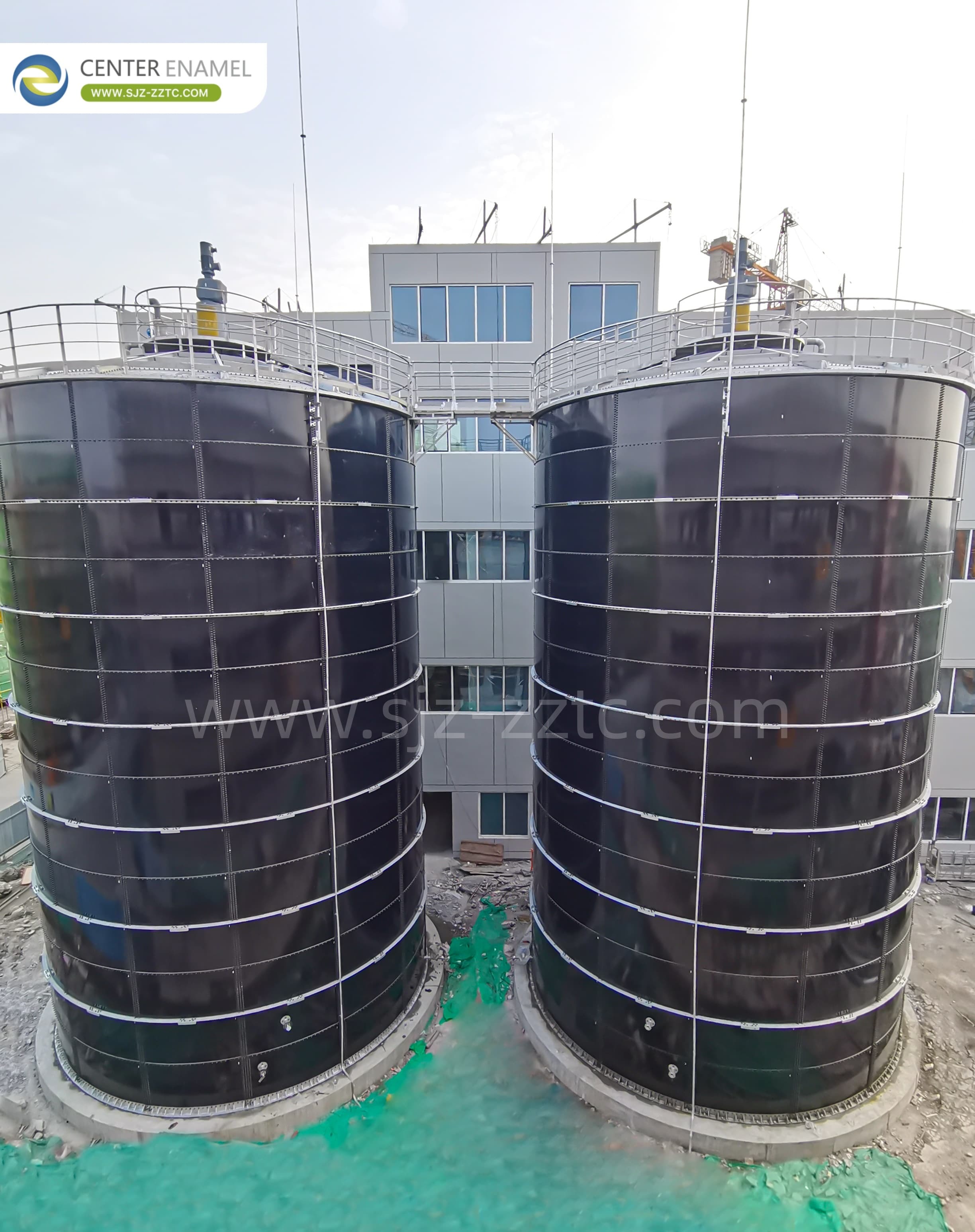
Sustainable Biogas Power and USR Process for Myanmar Distillers Grains Biogas Project
| Place of Origin: | China |
| Brand Name: | CEC TANKS |
| Certification: | ISO 9001:2008, AWWA D103 , OSHA , BSCI |
| Model Number: | W |
| Minimum Order Quantity: | 1set |
| Price: | $5000~$20000 one set |
| Packaging Details: | PE poly-foam between each two steel plates ; wooden pallet and wooden |
| Delivery Time: | 10-30 days after deposit received |
| Payment Terms: | L/C, T/T |
| Supply Ability: | 60 sets per month |
|
Detail Information |
|||
| Place of Origin | China | Brand Name | CEC TANKS |
|---|---|---|---|
| Certification | ISO 9001:2008, AWWA D103 , OSHA , BSCI | Model Number | W |
| Tank Body Color: | Dark Green / Can Be Customized | Corrosion Integrity: | Excellent |
| Steel Plates Thickness: | 3mm To 12mm , Depends On The Tank Structure | Chemical Resistance: | Excellent |
| Size Of Panel: | 2.4M * 1.2M | Easy To Clean: | Smooth, Glossy, Inert, Anti-adhesion |
| Highlight: | sustainable biogas power system,USR process wastewater treatment,distillers grains biogas project |
||
Product Description
Sustainable Biogas Power and USR Process for Myanmar Distillers Grains Biogas Project
Rapid global urbanization, the expansion of commercial bio-refining sectors, and evolving clean energy mandates have fundamentally transformed industrial biomass utilization across contemporary manufacturing hubs. Among various organic industrial byproducts, distillers grains—the high-strength, nutrient-dense residue of yeast fermentation and alcohol distillation processes—present a unique challenge and a valuable resource for localized utility operations.
In agricultural and expanding industrial processing markets like Myanmar, the production of distillers grains from domestic processing facilities and distilleries has scaled up significantly. Processing these bulk residues presents severe logistical and environmental bottlenecks. The high moisture content and highly acidic nature of dense distillers grains create an immediate operational challenge for food and beverage processors. Conventional, land-intensive disposal methods or unmanaged sludge lagoons are entirely unsustainable, posing serious risks of localized groundwater contamination and heavy odor pollution in the surrounding communities. Left unmanaged, these high-solid materials risk straining local municipal ecosystems. Resolving these challenges requires an advanced waste-to-energy framework powered by specialized anaerobic digestion and state-of-the-art biogas power technology, converting a substantial industrial byproduct into a secure, localized source of green energy.
The Digestion Pathway: How Distillers Grains Transform into Biogas
Converting complex, high-solid distillers grains into high-yield renewable fuel depends on efficient biological stabilization. Within an enclosed, oxygen-free anaerobic environment, specialized consortia of microorganisms degrade complex organic polymers through four distinct chemical phases:
Hydrolysis: Extracellular enzymes secreted by specialized bacteria hydrolyze the rigid structural carbohydrates, complex proteins, and residual lipids found in distillers grains, breaking them down into soluble monomers like amino acids and simple sugars.
Acidogenesis: Acidogenic bacterial populations ferment these soluble organic components, converting them into short-chain volatile fatty acids (VFAs), alcohols, and lactic acids.
Acetogenesis: Acetogenic microorganisms further catabolize the accumulated VFAs, transforming them into vital precursor substrates: acetic acid, carbon dioxide (CO2), and hydrogen gas (H2).
Methanogenesis: In the final stage, strictly anaerobic methanogenic archaea consume the newly synthesized acetic acid and hydrogen to yield biogas—a valuable mixture consisting primarily of methane (CH4) and carbon dioxide (CO2).
Once generated, this clean biogas can be systematically scrubbed, compressed, and upgraded to run high-efficiency combined heat and power (CHP) systems, providing industrial plants with continuous electricity and process steam.
Strategic Benefits of Distillers Grains Biogas Projects for Myanmar
Implementing a dedicated industrial waste-to-energy project for distillers grains delivers significant ecological and economic advantages tailored to Myanmar's development initiatives:
Mitigating Industrial Power Shortages: By capturing and utilizing bio-methane right at the production facility, manufacturing zones can establish independent, decentralized power generation loops, stabilizing operational utility costs and generating reliable biogas power to decrease reliance on frequently unstable regional grids.
Advanced Environmental and Watershed Protection: Confining spent distillery residue inside engineered systems eliminates the odor issues, surface runoff, and severe soil or water contamination typical of open-air waste accumulation in hot, tropical climates.
Production of Premium Organic Bio-Fertilizers: The nutrient-rich digestate discharged from the anaerobic process can be processed into a premium organic fertilizer, offering local agricultural communities an affordable and highly sustainable alternative to expensive, imported chemical inputs.
Core Anaerobic Process Technologies: CSTR, UASB, USR, and IC
Selecting the appropriate reactor configuration is essential when dealing with the high chemical oxygen demand (COD) and thick suspended solids characteristic of distillery waste. Center Enamel delivers tailored engineering solutions across four primary anaerobic processes to ensure stable system performance:
USR (Upflow Solids Reactor): Specifically developed for organic waste streams with an exceptionally high concentration of suspended solids (SS), such as dense distillers grains. By structurally extending the retention time of solid particles within the primary active digestion zone, it facilitates total biological breakdown of complex organic fibers.
CSTR (Continuous Stirred Tank Reactor Process): The ideal solution for high-solid, viscous organic feedstocks like concentrated distillers grains. Its robust mechanical or hydraulic mixing assembly ensures a perfectly uniform digestion environment, preventing scum formation, eliminating thermal stratification, and maximizing biogas conversion rates from dense inputs.
UASB (Upflow Anaerobic Sludge Blanket): A high-rate configuration optimized for liquid-phase wastewater and industrial spent wash. Influent flows upward through a dense, self-granulating anaerobic sludge blanket, achieving remarkable chemical oxygen demand (COD) reduction rates within a compact footprint.
IC (Internal Circulation) Reactor: An advanced, multi-stage, high-load system utilizing a unique dual-stage internal circulation loop. Driven by self-generated biogas pressure, it is optimized to process extreme organic loading rates with superior efficiency and a minimal space footprint.
The Advantages of GFS Tanks in Myanmar's Biogas Infrastructure
The multi-decade operational reliability of a distillers grains biogas project is contingent upon the chemical and structural resilience of its digester containment units. Center Enamel’s proprietary Glass-Fused-to-Steel (GFS) Tanks provide unparalleled performance advantages for intense industrial applications:
Exceptional Corrosion and Chemical Resistance: Anaerobic breakdown of distillers grains yields highly aggressive organic acids and corrosive hydrogen sulfide (H2S) gas. Center Enamel's GFS tanks feature an inert glass coating molecularly fused to premium steel plates at temperatures exceeding 800°C, creating an impermeable barrier that fully resists chemical attack and rust.
High Environmental and Climate Resilience: Myanmar's varied geography features extreme seasonal temperatures, heavy monsoons, and high seismic risk zones. The modular, bolted construction of GFS tanks offers engineered structural elasticity, delivering far greater impact and weather resistance than rigid, crack-prone concrete structures.
Rapid Assembly and Low Site Disruption: Prefabricated entirely off-site under strict factory conditions, GFS tank panels are shipped directly to the project site and assembled quickly using a top-down jacking system. This eliminates long concrete curing delays, heavy welding requirements, and logistical disruptions in crowded industrial zones.
Unmatched Longevity and Safety: Unlike conventional concrete structures that are prone to cracking and microscopic chemical leaching over time, GFS containment systems maintain complete fluid and gas integrity, ensuring maximum environmental compliance and safe, leak-free operation.
Why Partner with Center Enamel for Biogas Projects
Choosing Center Enamel as your specialized engineering, procurement, and construction (EPC) partner ensures complete execution security and optimal operational efficiency:
Full-Service Turnkey Project Management: Center Enamel handles every single phase of the infrastructure lifecycle—from initial custom process design and state-of-the-art automated manufacturing to complete automated PLC integration, rapid on-site assembly, and full commissioning.
Customized Substrate and Engineering Optimization: Our expert engineers fine-tune internal gas-mixing ratios, heating jackets, and auxiliary components to precisely match the specific solid loading, acidity, and chemical traits of the target industrial waste stream.
Seamless Auxiliary Systems Integration: Beyond manufacturing industry-leading GFS digesters, Center Enamel seamlessly integrates vital technical systems, including high-durability double-membrane gas holders, complex desulfurization units, and precision multi-stage biogas purification systems.
Proven Global Engineering Footprint: With thousands of successful installations deployed across more than 100 countries, Center Enamel brings decades of field-tested compliance and technical innovation to fulfill the most stringent industrial and environmental standards.
Proven Project Reference Case Studies
Center Enamel’s robust engineering capability is highlighted by successful, large-scale waste-to-energy projects worldwide:
Case 1: France Biogas Project
Process Stage: CSTR
Tank Dimensions: φ18.33 × 8.4 m (H) — 1 Unit
Total Volume: 2,215 m³ — 1 Unit
Completion Date: 2021
Case 2: Canada Biogas Project
Tank Dimensions: φ8.4 × 7.2 m (H) — 2 Units
Total Volume: 798 m³
Completion Date: 2024
Establishing modern, high-efficiency waste-to-energy infrastructure is a vital prerequisite for progressive industrial centers aiming for a zero-waste, low-carbon future. Leveraging specialized anaerobic solutions paired with advanced USR or CSTR processes and premium GFS tanks allows industrial distilleries and manufacturing plants to transform operational liabilities into profitable green energy assets. Partnering with Center Enamel ensures immediate access to world-class engineering expertise, field-proven containment systems, and reliable, long-term project viability.