-
Glass Fused To Steel Tanks (596)
-
Stainless Steel Tanks (434)
-
Fusion Bonded Epoxy Tanks (592)
-
Galvanized Steel Tanks (321)
-
Aluminum Dome Roofs (1316)
-
Wastewater Storage Tanks (231)
-
Welded Steel Tanks (457)
-
Pressure Vessels (295)
-
Anaerobic Digester (201)
-
Industrial Water Tanks (349)
-
Glass Lined Steel Tanks (180)
-
Bolted Steel Tanks (390)
-
Sludge Storage Tank (115)
-
Biogas Storage Tank (173)
-
Leachate Storage Tanks (133)
-
Agricultural Water Storage Tanks (179)
-
Fire Water Tank (166)
-
Grain Storage Silos (146)
-
Biogas Projects (425)
-
Wastewater Treatment Projects (788)
-
Double Membrane Roof (223)

|
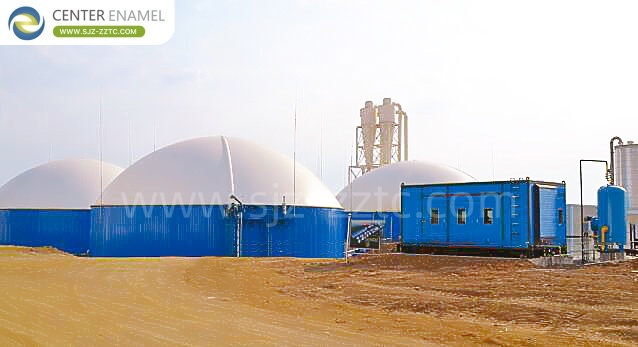
Reliable Anaerobic Solutions and GFS Tanks for Laos Kitchen Waste Biogas Project
| Place of Origin: | China |
| Brand Name: | CEC TANKS |
| Certification: | ISO 9001:2008, AWWA D103 , OSHA , BSCI |
| Model Number: | W |
| Minimum Order Quantity: | 1set |
| Price: | $5000~$20000 one set |
| Packaging Details: | PE poly-foam between each two steel plates ; wooden pallet and wooden |
| Delivery Time: | 10-30 days after deposit received |
| Payment Terms: | L/C, T/T |
| Supply Ability: | 60 sets per month |
|
Detail Information |
|||
| Place of Origin | China | Brand Name | CEC TANKS |
|---|---|---|---|
| Certification | ISO 9001:2008, AWWA D103 , OSHA , BSCI | Model Number | W |
| Tank Body Color: | Dark Green / Can Be Customized | Corrosion Integrity: | Excellent |
| Steel Plates Thickness: | 3mm To 12mm , Depends On The Tank Structure | Chemical Resistance: | Excellent |
| Size Of Panel: | 2.4M * 1.2M | Easy To Clean: | Smooth, Glossy, Inert, Anti-adhesion |
| Highlight: | anaerobic solutions for kitchen waste,GFS tanks biogas project,wastewater treatment biogas tanks |
||
Product Description
Reliable Anaerobic Solutions and GFS Tanks for Laos Kitchen Waste Biogas Project
Rapid population growth, accelerated urbanization, and evolving consumer habits have fundamentally altered the landscape of municipal waste management in modern urban centers. Among the various streams of refuse, municipal solid waste—specifically kitchen waste—presents a complex disposal challenge. Kitchen waste, which consists of organic kitchen scraps, food leftovers, and biodegradable packaging, represents a massive portion of the daily refuse generated in residential zones, local markets, restaurants, and hotels.
In a developing ASEAN nation like Laos, the surge in municipal solid waste poses distinct operational pressures. Laos generates massive volumes of organic waste annually, a significant percentage of which consists of wet organic matter with high moisture content. Historically, much of this waste ends up in open dumps or unengineered landfills near expanding cities like Vientiane. Under the tropical climate of Laos, unmanaged organic waste undergoes rapid, uncontrolled anaerobic decomposition, releasing massive quantities of greenhouse gases and producing highly concentrated, toxic leachate that poses risks to local soil and vital water networks. If left untreated, this staggering volume becomes a severe environmental burden; however, when segregated and managed through modern biological waste-to-energy frameworks, it serves as a highly valuable substrate for green energy generation.
The Digestion Pathway: How Kitchen Waste Transforms into Biogas
Converting heterogeneous kitchen waste into a reliable energy source relies on advanced biological frameworks via anaerobic digestion. In this engineered process, specialized microbial communities break down organic matter in a completely oxygen-free environment through four distinct biological phases:
Hydrolysis: Complex organic polymers, such as carbohydrates, proteins, and lipids found in food scraps, are broken down by extracellular enzymes into soluble monomers like amino acids and simple sugars.
Acidogenesis: Acid-forming bacteria quickly ferment these soluble monomers, converting them into volatile fatty acids (VFAs), alcohols, and lactic acids.
Acetogenesis: Acetogenic microorganisms further catabolize the VFAs and alcohols, synthesizing them into acetic acid, carbon dioxide (CO2), and hydrogen gas (H2).
Methanogenesis: In the final stage, highly sensitive methanogenic archaea consume the accumulated acetic acid and hydrogen to generate biogas, a renewable fuel composed primarily of methane (CH4) and carbon dioxide (CO2).
Once captured and conditioned, this biogas can be converted into green electricity, used for localized thermal heating, or upgraded into vehicle fuel.
Strategic Benefits of Kitchen Waste Biogas Projects for Laos’s Development
Implementing a dedicated kitchen waste biogas project delivers multifaceted ecological and socioeconomic rewards aligned with sustainable development and circular economy frameworks:
Decentralized Renewable Power: Transforming urban kitchen waste into electricity provides local grids or commercial facilities with clean energy, reinforcing localized energy stability and lowering reliance on expensive imported electricity and fossil fuels.
Climate Change Mitigation: Capturing methane at the source prevents harmful fugitive emissions from escaping into the atmosphere, contributing directly to national carbon reduction and climate action targets.
Diversion from Landfills: Processing organic fractions via anaerobic digestion dramatically reduces the physical volume of wet waste entering strained provincial landfills, thereby extending landfill lifespans and lowering municipal management costs.
Enriched Organic Fertilizer: The nutrient-dense digestate remaining after the digestion process can be processed into premium organic fertilizer, offering agricultural communities a cost-effective alternative to expensive chemical imports.
Core Anaerobic Process Technologies: CSTR, UASB, USR, and IC
Selecting the appropriate reactor configuration is essential when dealing with the variable, high-solid characteristics of municipal organic waste. Center Enamel provides specialized engineering expertise across four primary anaerobic solutions:
CSTR (Continuous Stirred Tank Reactor Process): The premier choice for high-solid organic substrates, including sorted kitchen waste and thick organic slurries. Its active mechanical agitation system ensures a completely homogeneous environment, preventing surface crusting and maximizing biogas yields.
UASB (Upflow Anaerobic Sludge Blanket): A high-rate process designed for liquid-phase organic wastewater. Liquid flows upward through a dense, self-granulating anaerobic sludge blanket, achieving exceptional chemical oxygen demand (COD) removal within a highly compact footprint.
USR (Upflow Solids Reactor): Specifically engineered for waste streams with elevated suspended solids (SS). By lengthening the retention time of solid particles within the digestion zone, it ensures comprehensive biological conversion of stubborn particulate matter.
IC (Internal Circulation) Reactor: An ultra-high-rate, next-generation system utilizing a dual-stage internal circulation loop propelled by self-generated biogas. Optimized for massive industrial scales, it handles extreme organic loading rates with superior efficiency.
The Advantages of GFS Tanks in Laos's Biogas Infrastructure
The operational longevity of any kitchen waste biogas project depends heavily on the resilience of its containment systems. Center Enamel’s proprietary GFS Tanks (Glass-Fused-to-Steel) deliver premier structural and chemical performance tailored for tropical municipal environments:
Superior Corrosion Resistance: Kitchen waste digestion generates an aggressive chemical environment rich in volatile organic acids and corrosive hydrogen sulfide (H2S) gas. The inert glass coating molecularly fused to the steel plates creates an impermeable shield that completely resists chemical degradation.
High Environmental Resilience: Built to withstand tropical climates characterized by high heat and intense seasonal monsoons, the modular, bolted construction of GFS Tanks offers engineered structural elasticity, delivering far greater impact and seasonal climate resistance than rigid, crack-prone concrete.
Rapid, Localized Construction: Completely prefabricated off-site, GFS Tanks are shipped modularly and assembled quickly using a top-down jacking mechanism. This eliminates extended on-site concrete pouring and curing times, minimizing labor requirements in remote or developing regional areas.
Expandable and Flexible Footprint: Bolted steel tank configurations optimize vertical storage, minimizing the physical land footprint required. This modular design allows facilities to scale up or reconfigure their capacity easily as incoming waste volumes expand over time.
Why Partner with Center Enamel for Biogas Projects
Collaborating with Center Enamel as an experienced turnkey EPC partner ensures outstanding technical execution and long-term project viability:
End-to-End Turnkey Delivery: Center Enamel manages the entire project lifecycle, providing custom process engineering, state-of-the-art manufacturing, automated PLC controls integration, rapid on-site assembly, and commissioning.
Tailored Substrate Engineering: Because kitchen waste composition varies significantly by region, our engineering team optimizes the internal digestion configuration to match local organic characteristics and regional climate conditions.
Comprehensive Systems Integration: Beyond manufacturing industry-leading GFS Tanks, we seamlessly integrate crucial auxiliary technologies, including advanced double-membrane gas holders, specialized mixers, and multi-stage biogas purification systems.
Extensive Global Experience: With successful waste-to-energy installations deployed across more than 100 countries, Center Enamel adapts proven international innovations to satisfy local regulatory standards and unique operating environments.
Proven Project Reference Case Studies
Center Enamel’s engineering excellence is demonstrated across a diverse portfolio of international large-scale biogas installations:
Case 1: Canada Biogas Project
Tank Dimensions: φ8.4 × 7.2 m (H) — 2 Units
Total Volume: 798 m³
Completion Date: 2024
Case 2: Sweden Biogas Project
Tank Dimensions: φ19.11 × 19.2 m (H) — 1 Unit
Total Volume: 5,510 m³
Completion Date: 2024
Developing resilient, sustainable waste-to-energy infrastructure is an essential step as municipal and commercial sectors drive towards a low-carbon, circular economy. Deploying specialized anaerobic solutions powered by advanced CSTR processes and premium GFS Tanks provides municipalities with an efficient, highly durable pathway to manage the growing challenges of organic waste. By entering into a strategic partnership with Center Enamel, project stakeholders secure direct access to world-class engineering, field-proven technologies, and highly resilient containment systems. This comprehensive approach satisfies modern environmental mandates, ensuring long-term green development goals are met with outstanding technical and commercial success.