-
Glass Fused To Steel Tanks (596)
-
Stainless Steel Tanks (434)
-
Fusion Bonded Epoxy Tanks (592)
-
Galvanized Steel Tanks (321)
-
Aluminum Dome Roofs (1316)
-
Wastewater Storage Tanks (231)
-
Welded Steel Tanks (457)
-
Pressure Vessels (295)
-
Anaerobic Digester (201)
-
Industrial Water Tanks (349)
-
Glass Lined Steel Tanks (180)
-
Bolted Steel Tanks (390)
-
Sludge Storage Tank (115)
-
Biogas Storage Tank (173)
-
Leachate Storage Tanks (133)
-
Agricultural Water Storage Tanks (179)
-
Fire Water Tank (166)
-
Grain Storage Silos (146)
-
Biogas Projects (425)
-
Wastewater Treatment Projects (788)
-
Double Membrane Roof (223)

|
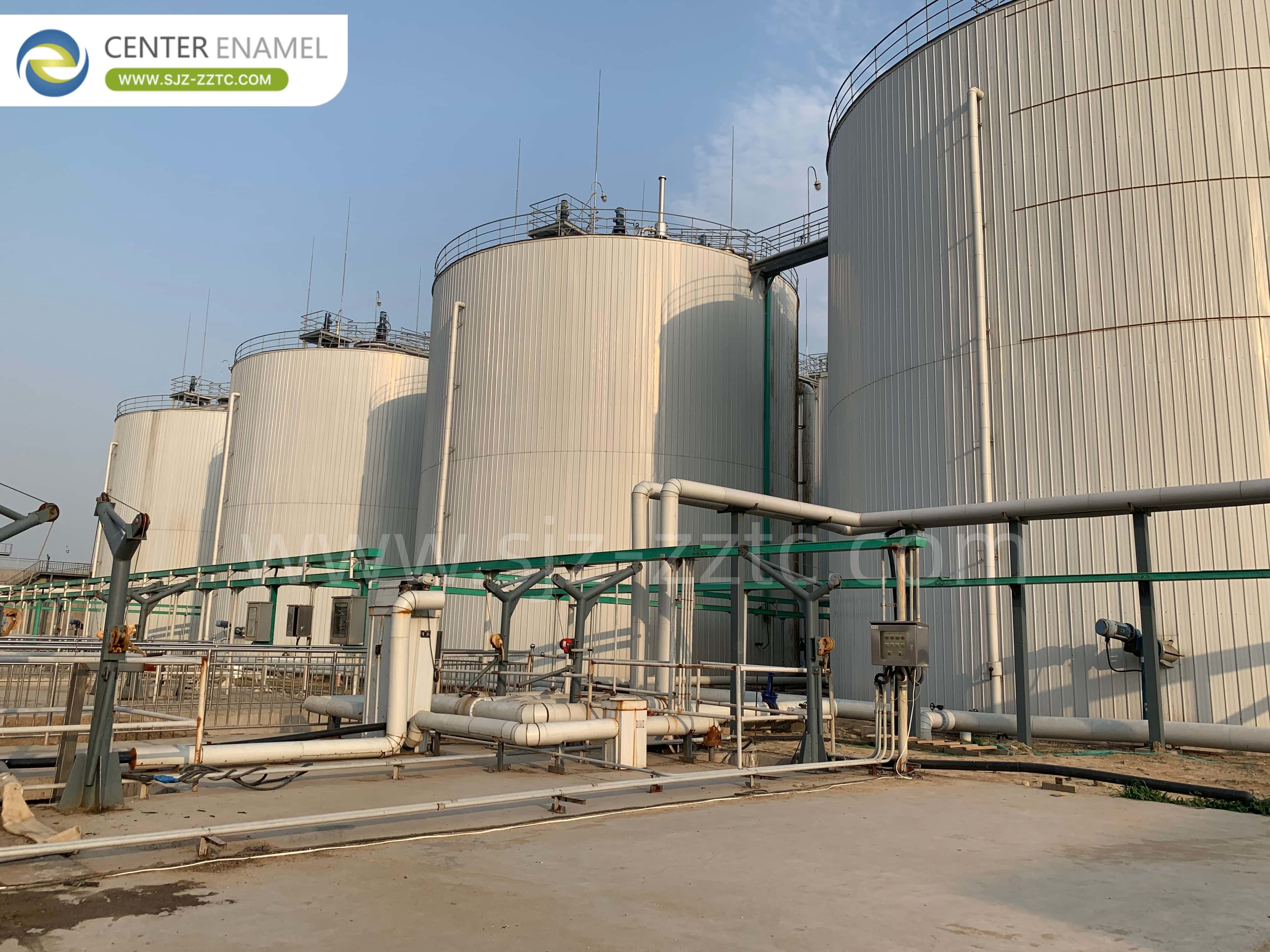
Advanced Anaerobic Solutions and GFS Tanks for Cambodia Bagasse Biogas Projects
| Place of Origin: | China |
| Brand Name: | CEC TANKS |
| Certification: | ISO 9001:2008, AWWA D103 , OSHA , BSCI |
| Model Number: | W |
| Minimum Order Quantity: | 1set |
| Price: | $5000~$20000 one set |
| Packaging Details: | PE poly-foam between each two steel plates ; wooden pallet and wooden |
| Delivery Time: | 10-30 days after deposit received |
| Payment Terms: | L/C, T/T |
| Supply Ability: | 60 sets per month |
|
Detail Information |
|||
| Place of Origin | China | Brand Name | CEC TANKS |
|---|---|---|---|
| Certification | ISO 9001:2008, AWWA D103 , OSHA , BSCI | Model Number | W |
| Tank Body Color: | Dark Green / Can Be Customized | Corrosion Integrity: | Excellent |
| Steel Plates Thickness: | 3mm To 12mm , Depends On The Tank Structure | Chemical Resistance: | Excellent |
| Size Of Panel: | 2.4M * 1.2M | Easy To Clean: | Smooth, Glossy, Inert, Anti-adhesion |
| Highlight: | Anaerobic biogas solutions Cambodia,GFS tanks bagasse projects,Wastewater treatment biogas systems |
||
Product Description
Advanced Anaerobic Solutions and GFS Tanks for Cambodia Bagasse Biogas Projects
Cambodia is experiencing rapid demographic growth, accelerated urbanization, and an expanding food processing sector. This economic transition has significantly intensified organic waste generation, positioning waste management as a top priority for sustainable development and circular economy frameworks. Similarly, in neighboring agrarian economies like Cambodia, the sugarcane processing sector generates vast quantities of solid agricultural residues known as bagasse. Implementing advanced Anaerobic Solutions has emerged as a cornerstone strategy for converting these heavy organic burdens into clean, renewable energy. Partnering with an expert EPC contractor to execute high-performance Bagasse Biogas Projects is now the recognized industry benchmark for achieving green growth and energy security.
The Challenges of Bagasse Disposal in Cambodia
Cambodia’s sugar production industry has grown substantially, but it leaves behind millions of tons of fibrous sugarcane residue, or bagasse. Historically, sugarcane bagasse has been treated as a low-value byproduct. When left unmanaged, massive volumes of this organic residue cause severe environmental degradation and public health risks. Disposed of in open municipal dumps, unengineered landfills, or left in massive agricultural stock piles, it undergoes rapid, uncontrolled decomposition.
This open-air degradation releases vast amounts of methane ($CH_4$), a potent greenhouse gas that significantly drives global climate change. Furthermore, during the monsoon season, the generation of highly concentrated, toxic leachate saturates the surrounding soil and contaminates precious groundwater reserves, while producing foul odors and attracting dangerous disease vectors that threaten nearby communities. Burning bagasse for low-efficiency heat also contributes to severe localized air pollution, creating an urgent need for sustainable biogas technology.
How Bagasse Transforms into Biogas: The Digestion Pathway
The biological conversion of complex agricultural bagasse into reliable clean energy is achieved through anaerobic digestion, a natural process where specialized microorganisms break down organic substances in an environment completely devoid of oxygen. The digestion pathway proceeds through four essential biological stages:
Hydrolysis: Complex organic polymers, including the tough cellulose, hemicellulose, and lipids found in bagasse, are broken down into simple, soluble monomers like amino acids, sugars, and fatty acids.
Acidogenesis: Acid-forming bacteria ferment these monomers, transforming them into volatile fatty acids (VFAs), lactic acids, and alcohols.
Acetogenesis: Acetogenic microorganisms further digest the VFAs and alcohols, synthesizing them into acetic acid, carbon dioxide ($CO_2$), and hydrogen gas ($H_2$).
Methanogenesis: Highly specialized methanogenic archaea consume the accumulated acetic acid and hydrogen to produce biogas, which primarily consists of methane ($CH_4$) and carbon dioxide ($CO_2$).
Once captured, this biogas can be directly utilized for green electricity generation, industrial heating, or refined into compressed biomethane.
Benefits of Bagasse Biogas Projects for Cambodia’s Development
Deploying specialized Bagasse Biogas Projects provides Cambodia with a definitive, profitable pathway to eliminate heavy environmental liabilities. The main socio-economic and ecological benefits include:
Renewable Energy Generation: Provides decentralized electricity and industrial thermal energy to power sugar mills, reducing Cambodia's reliance on expensive fossil fuel imports and stabilizing local power grids.
Mitigating Climate Change: Captures harmful greenhouse gases like methane ($CH_4$) before they escape into the atmosphere, contributing directly to Cambodia's national carbon reduction targets.
Circular Bio-Economy: The nutrient-rich digestate byproduct left behind after anaerobic digestion serves as an exceptional organic fertilizer, restoring depleted agricultural soils and cutting down chemical fertilizer expenses for local farmers.
Economic Cost Reduction: Significantly minimizes localized waste management costs and avoids the legal and environmental penalties associated with illegal dumping or open burning.
Core Anaerobic Technologies: CSTR, UASB, USR, and IC
Deploying the optimal reactor configuration is critical for handling the highly variable and dense composition of organic agricultural waste. Center Enamel specializes in four primary anaerobic processes tailored for specific waste characteristics:
CSTR (Continuous Stirred Tank Reactor): Uniquely suited for high-solid organic waste substrates such as thick sugarcane bagasse, kitchen waste, and agricultural residues. Its continuous mechanical mixing mechanism ensures a completely homogeneous environment, preventing surface scum formation and optimizing volatile solids destruction. The CSTR process is the primary choice for solid bagasse digestion.
UASB (Upflow Anaerobic Sludge Blanket): A high-rate liquid treatment process perfectly configured for liquid-phase organic wastewater with moderate organic loads. Liquid waste flows upward through a dense, self-granulating anaerobic sludge blanket, achieving high chemical oxygen demand (COD) removal within a compact footprint.
USR (Upflow Solids Reactor): Specifically engineered to process waste streams containing heavy concentrations of suspended solids (SS). By extending the retention time of solid organic particles inside the reactor, it ensures total biological breakdown and dramatically improves overall biogas yields.
IC (Internal Circulation) Reactor: An advanced, next-generation ultra-high-rate reactor that leverages a dual-stage internal circulation loop propelled automatically by self-generated biogas. Capable of handling extreme organic loading rates, it is ideal for large-scale, high-strength industrial processing operations.
The Advantages of GFS Tanks in Cambodia Bagasse Biogas Projects
The long-term operational success of a Biogas Project depends directly on the structural integrity of its main containment reactors. Center Enamel implements its proprietary GFS Tanks (Glass-Fused-to-Steel) to deliver elite structural performance:
Unmatched Corrosion and Chemical Resistance: Bagasse digestion generates an aggressive environment full of volatile organic acids and highly corrosive hydrogen sulfide ($H_2S$) gas. The inert glass layer molecularly fused to the steel plates forms an impermeable barrier that resists intense chemical wear, vastly outlasting standard carbon steel or concrete.
Weather and Environmental Resilience: Southeast Asia faces significant risks from monsoon flooding, tropical cyclones, and localized seismic activities. The modular, bolted layout of GFS Tanks provides engineered structural elasticity, giving the tanks far superior impact and seismic resistance compared to rigid, crack-prone concrete infrastructure.
Rapid Installation and Simplified Logistics: Prefabricated completely off-site, GFS Tanks are delivered modularly and assembled swiftly utilizing specialized top-down jacking systems. This eliminates prolonged on-site concrete pouring and curing times, significantly lowering specialized labor needs in remote rural agricultural zones.
Scalable Footprint: The optimized vertical profile of bolted steel tanks maximizes volumetric fluid storage within a heavily minimized land footprint, allowing agricultural facilities to seamlessly expand modularly as incoming waste volumes grow.
Why Partner with Center Enamel for Biogas Projects
Collaborating with Center Enamel as an experienced turnkey EPC partner delivers exceptional technological and operational advantages:
Complete End-to-End Turnkey Integration: We handle the full lifecycle of the project, including tailored process design, advanced manufacturing, system procurement, rapid field installation, and automated PLC control systems integration.
Customized Engineering Excellence: Because organic agricultural profiles change drastically by region, our technical team precision-engineers each anaerobic layout to flawlessly match local raw substrates and regional environmental criteria.
Comprehensive Technology Suite: In addition to manufacturing premium GFS Tanks, we design and integrate essential auxiliary systems, including double-membrane biogas holders, heavy-duty mixers, and specialized biogas purification systems.
Global Track Record: With countless successful waste-to-energy projects built across more than 100 countries, Center Enamel seamlessly adapts proven international innovations to comply with local industrial regulations and distinct climate conditions.
Proven Project Reference Case Studies
Center Enamel's robust engineering capabilities and global project footprint are reflected in our premier large-scale biogas installations:
Case 1: Sweden Biogas Project
Tank Dimensions: φ19.11 × 19.2 m (H) — 1 Unit
Total Volume: 5,510 m³
Completion Date: 2024
Case 2: France Biogas Project
Process Type: CSTR
Tank Dimensions: φ18.33 × 8.4 m (H) — 1 Unit
Total Volume: 2,215 m³ — 1 Unit
Completion Date: 2021
Building resilient, sustainable waste infrastructure is crucial as agricultural economies aggressively drive their green transition toward an eco-friendly, zero-waste economy. Deploying specialized anaerobic solutions powered by advanced CSTR processes and premium GFS Tanks provides municipal bodies and commercial food industries with an efficient, sustainable pathway to handle agricultural byproducts. By entering a strategic partnership with Center Enamel, stakeholders unlock direct access to top-tier international engineering, field-proven technologies, and highly durable containment systems. This comprehensive approach easily satisfies modern environmental protection mandates, ensuring that long-term green development and climate goals are met with outstanding technical and commercial success.