-
Glass Fused To Steel Tanks (596)
-
Stainless Steel Tanks (434)
-
Fusion Bonded Epoxy Tanks (592)
-
Galvanized Steel Tanks (321)
-
Aluminum Dome Roofs (1316)
-
Wastewater Storage Tanks (231)
-
Welded Steel Tanks (457)
-
Pressure Vessels (295)
-
Anaerobic Digester (201)
-
Industrial Water Tanks (349)
-
Glass Lined Steel Tanks (180)
-
Bolted Steel Tanks (390)
-
Sludge Storage Tank (115)
-
Biogas Storage Tank (173)
-
Leachate Storage Tanks (133)
-
Agricultural Water Storage Tanks (179)
-
Fire Water Tank (166)
-
Grain Storage Silos (146)
-
Biogas Projects (425)
-
Wastewater Treatment Projects (788)
-
Double Membrane Roof (223)

|
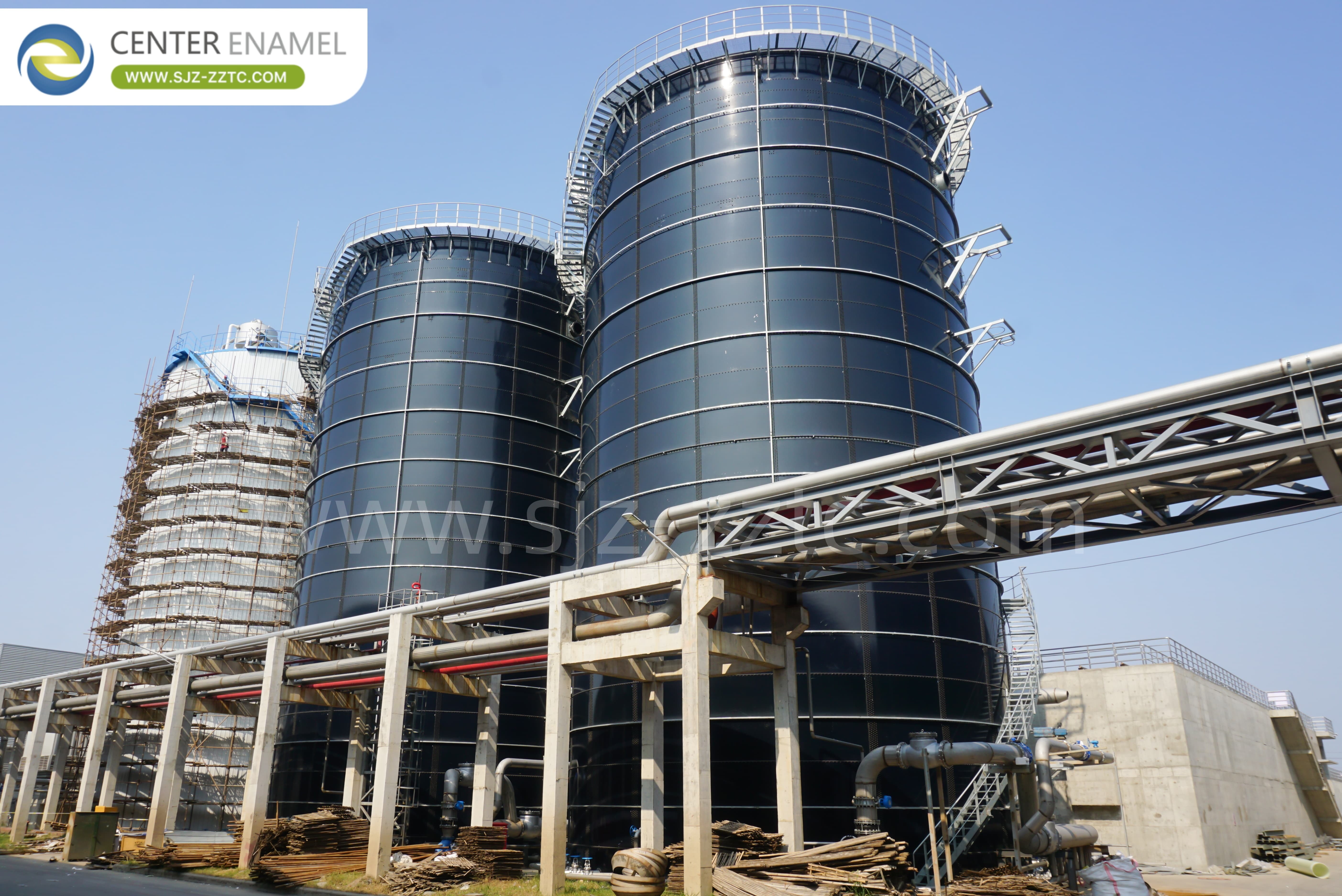
Leading Anaerobic Solutions for Laos Garden Waste Biogas Projects
| Place of Origin: | China |
| Brand Name: | CEC TANKS |
| Certification: | ISO 9001:2008, AWWA D103 , OSHA , BSCI |
| Model Number: | W |
| Minimum Order Quantity: | 1set |
| Price: | $5000~$20000 one set |
| Packaging Details: | PE poly-foam between each two steel plates ; wooden pallet and wooden |
| Delivery Time: | 10-30 days after deposit received |
| Payment Terms: | L/C, T/T |
| Supply Ability: | 60 sets per month |
|
Detail Information |
|||
| Place of Origin | China | Brand Name | CEC TANKS |
|---|---|---|---|
| Certification | ISO 9001:2008, AWWA D103 , OSHA , BSCI | Model Number | W |
| Tank Body Color: | Dark Green / Can Be Customized | Corrosion Integrity: | Excellent |
| Steel Plates Thickness: | 3mm To 12mm , Depends On The Tank Structure | Chemical Resistance: | Excellent |
| Size Of Panel: | 2.4M * 1.2M | Easy To Clean: | Smooth, Glossy, Inert, Anti-adhesion |
| Highlight: | Laos garden waste biogas solutions,anaerobic wastewater treatment projects,biogas project waste treatment |
||
Product Description
Leading Anaerobic Solutions for Laos Garden Waste Biogas Projects
Laos, actively advancing its green economic development and environmental protection goals, faces a distinct ecological challenge in managing massive quantities of organic municipal solid residues, public park trimmings, and urban landscaping debris. As urban centers expand, implementing sustainable waste-to-energy technologies has become a vital priority for local authorities.
This article explores how advanced anaerobic digestion systems—specifically high-rate Internal Circulation (IC) reactor technology—efficiently transform highly fibrous, high-solid garden residues into reliable, renewable energy streams. By designing and deploying premium Glass-Fused-to-Steel (GFS) tanks, Center Enamel delivers comprehensive, turnkey process infrastructure that eliminates localized waste accumulation, minimizes carbon footprints, and firmly accelerates Laos' long-term transition toward a sustainable, zero-waste circular economy.
The Challenge of Garden Waste Management in Laos
Laos generates immense volumes of garden waste daily, including dense tree branches, roadside grass clippings, structural foliage, and tough agricultural biomass residues. Traditional disposal methods such as open-dumping or landfilling are highly unsustainable due to dwindling space and strict environmental regulations. Furthermore, mass open-burning of horticultural yard trimmings is heavily restricted because it causes severe air pollution and releases extensive greenhouse gases into the atmosphere. Because garden waste consists of dense, woody lignocellulosic structures that naturally degrade at an exceptionally slow rate, municipal and industrial clearing networks urgently require space-optimized, highly efficient biological recycling technology to handle these growing waste streams.
How Garden Waste Transforms into Biogas: The Digestion Process
Converting raw, bulky garden waste into useful, high-yield combustible bioenergy depends on anaerobic digestion—a controlled, sequential biological process driven by specialized bacterial cultures operating in an environment completely free of oxygen. This biochemical transformation advances systematically across four core process stages:
Hydrolysis: Complex organic polymers, solid cellulose fractions, and dense plant fibers are biologically liquefied and broken down into smaller, water-soluble molecules such as simple sugars.
Acidogenesis: Acid-forming microorganisms quickly ferment these dissolved components, converting them into volatile fatty acids (VFAs), organic acids, and simple alcohols.
Acetogenesis: Specialized acetogenic strains metabolize the volatile fatty acids further, synthesizing them directly into acetic acid, hydrogen gas ($H_2$), and carbon dioxide ($CO_2$).
Methanogenesis: In the final production phase, sensitive methanogenic archaea consume the accumulated acetic acid and hydrogen inputs, outputting a high-yield biogas stream consisting primarily of methane ($CH_4$) and carbon dioxide ($CO_2$). This captured gas is readily channeled into driving green electrical generators or supplying direct thermal heating for industrial manufacturing.
Benefits of Garden Waste Biogas Projects for Laos
Developing advanced garden waste-to-energy biogas infrastructure offers several multi-dimensional advantages for Laos' national development:
Substantial Land Saving: Relocating massive organic waste streams from expansive outdoor sorting yards into compact, vertical anaerobic reactors helps conserve precious land zones.
Mitigating Greenhouse Gas Impact: Securing raw organic mass within fully enclosed, airtight digestion vessels prevents uncontrolled methane release, directly supporting national carbon mitigation targets.
Reliable Decentralized Clean Power: Converting localized green waste into high-quality biomethane or clean electricity generates a steady, independent supply of renewable energy for rural or municipal grids.
High-Value Resource Recovery: The nutrient-dense digestate remaining after gas extraction serves as a premium input for organic fertilizers, supporting agricultural regions and local urban green spaces.
Core Anaerobic Technologies: CSTR, UASB, USR, and IC
Selecting the ideal bioreactor layout is vital to manage the heavy particulate content and diverse organic loading rates typical of garden waste streams. Center Enamel maintains extensive engineering expertise across four main anaerobic digestion methods:
IC (Internal Circulation) Reactor: A highly efficient, next-generation deep reactor featuring an integrated dual-stage internal circulation loop driven by self-generated biogas buoyancy. It excels at managing exceptionally heavy volumetric organic loading rates and provides high-rate mixing to accelerate the digestion of high-capacity industrial waste streams.
CSTR (Continuous Stirred Tank Reactor): Features high-powered mechanical mixing setups that preserve a fully uniform consistency throughout the tank fluid, successfully suppressing surface scum crusting and facilitating steady organic conversion for high-solid waste.
USR (Upflow Solids Reactor): Specifically configured for waste streams with high total suspended solids (SS), retaining particulate organic matter inside the digestion zone for an extended period to guarantee thorough breakdown.
UASB (Upflow Anaerobic Sludge Blanket): A responsive liquid-phase design where wastewater moves upward through a dense granular sludge bed, rapidly reducing soluble chemical oxygen demand (COD) within a space-saving profile.
Advantages of GFS Tanks in Laos' Biogas Projects
The physical durability and long-term chemical resistance of containment units are crucial to ensuring consistent operational lifespans for regional waste facilities. Center Enamel incorporates premium Glass-Fused-to-Steel (GFS) tanks to deliver unparalleled performance benefits under demanding tropical conditions:
Superior Resistance to Corrosion: The biological decomposition of green waste produces aggressive fatty acids and highly corrosive hydrogen sulfide ($H_2S$) gas. The inert glass coating fused onto steel panels creates a tough, impermeable layer that entirely outlasts standard concrete or welded steel tanks.
Rapid Modular Building & Delivery: Prefabricated completely inside a strict factory environment, GFS panels are shipped directly to the project site and erected rapidly using synchronized jacks. This completely eliminates lengthy concrete pouring and curing times, drastically cutting localized site labor demands.
High Weather and Climate Resilience: The flexible, modular bolted structural profile allows GFS tanks to effortlessly absorb ambient humidity, heavy seasonal monsoon rainfall, and sharp temperature fluctuations without developing structural fractures.
Compact Footprint and Easy Expansion: The vertical configuration ensures maximized volumetric storage capacity while utilizing very little land area, making it easy to scale up by adding matching modular tank units as waste volumes grow over time.
Why Partner with Center Enamel
Choosing Center Enamel as your specialized Engineering, Procurement, and Construction (EPC) contractor delivers extensive engineering, technological, and lifecycle management advantages:
Turnkey Project Packages: We manage the entire lifecycle, encompassing custom biological process design, premium GFS tank production, advanced equipment sourcing, rapid field installation, and automated commissioning.
Custom Technical Tailoring: Our engineering group customizes the complete anaerobic setup to align precisely with local organic input characteristics and specific regional environmental regulations.
Fully Integrated Equipment Solutions: In addition to manufacturing premium containment tanks, we engineer and supply critical ancillary components, including double-membrane gas covers, custom agitation mixers, and advanced biogas purification units.
Extensive Global Credentials: Having successfully deployed storage and biological treatment systems in over 100 countries, Center Enamel effectively matches international waste-to-energy breakthroughs with the specific environmental and climatic requirements of Southeast Asia.
Industry-Proven Project Case Studies
Center Enamel’s reliable manufacturing standards and global design experience are demonstrated through major international biogas installations:
Case1: Turkey Food Waste Treatment Project
Process: CSTR
Tank Dimensions: φ16.81 × 16.8 m (H) (2 Units)
Total Volume: 7,452 m³
Completion Date: 2020
Case2: Canada Biogas Project
Tank Dimensions: φ8.4 × 7.2 m (H) (2 Units)
Total Volume: 798 m³
Completion Date: 2024
Constructing modern garden waste biogas projects utilizing optimized IC reactor processes and premier Glass-Fused-to-Steel (GFS) tanks provides municipal authorities and commercial organic processors in Laos with a highly reliable, lucrative method to resolve modern environmental waste challenges. By forming a strategic engineering partnership with Center Enamel, project stakeholders gain immediate access to field-proven anaerobic configurations and highly resilient containment technology. This holistic approach effectively minimizes daily waste disposal expenditures, ensures strict compliance with environmental discharge mandates, and yields a dependable source of clean, renewable energy to support Laos' long-term sustainable future.