-
Glass Fused To Steel Tanks (596)
-
Stainless Steel Tanks (434)
-
Fusion Bonded Epoxy Tanks (592)
-
Galvanized Steel Tanks (321)
-
Aluminum Dome Roofs (1316)
-
Wastewater Storage Tanks (231)
-
Welded Steel Tanks (457)
-
Pressure Vessels (295)
-
Anaerobic Digester (201)
-
Industrial Water Tanks (349)
-
Glass Lined Steel Tanks (180)
-
Bolted Steel Tanks (390)
-
Sludge Storage Tank (115)
-
Biogas Storage Tank (173)
-
Leachate Storage Tanks (133)
-
Agricultural Water Storage Tanks (179)
-
Fire Water Tank (166)
-
Grain Storage Silos (146)
-
Biogas Projects (425)
-
Wastewater Treatment Projects (788)
-
Double Membrane Roof (223)

|
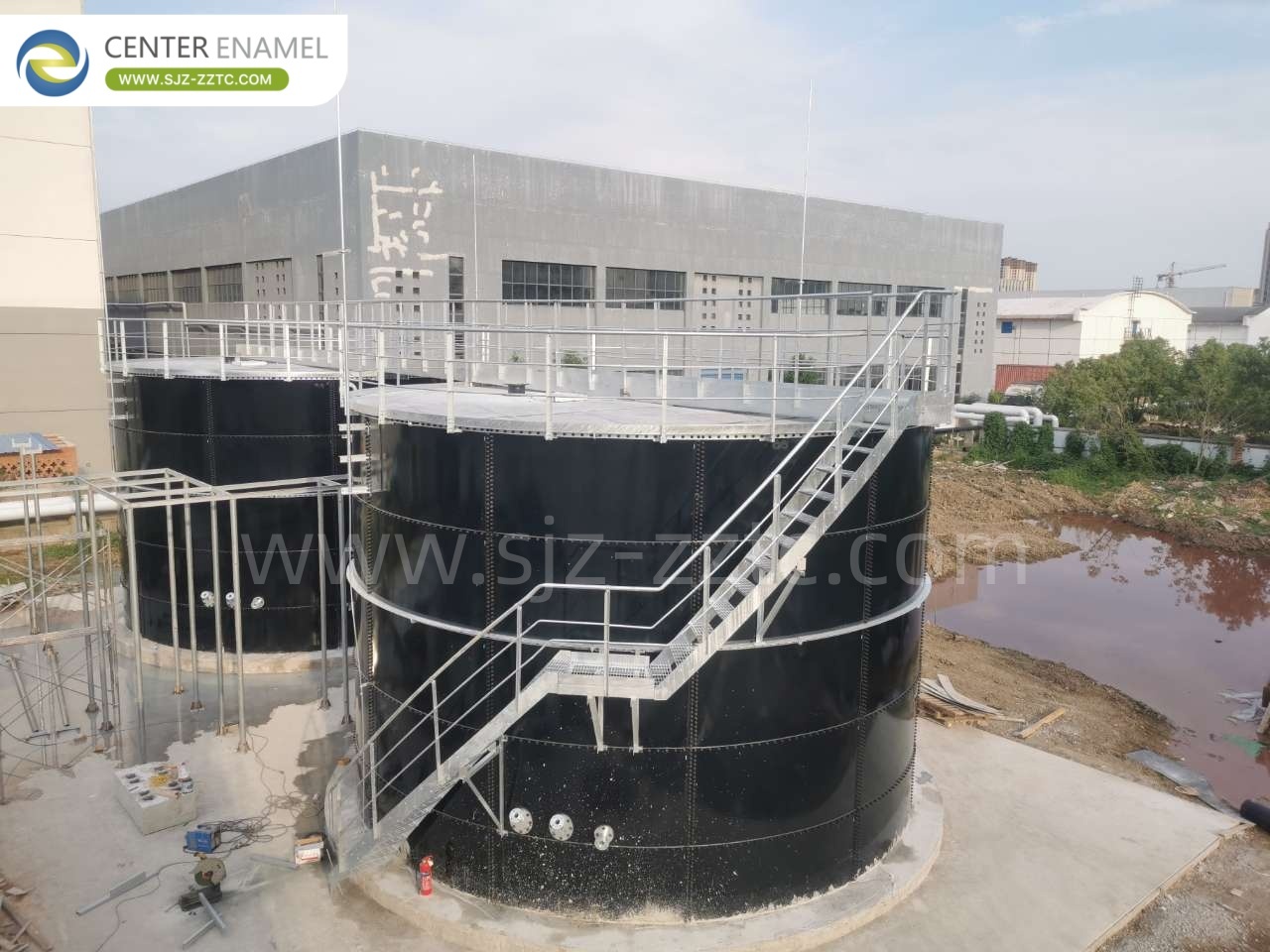
Reliable USR Process for Philippines Cassava Processing Wastewater Biogas Projects
| Place of Origin: | China |
| Brand Name: | CEC TANKS |
| Certification: | ISO 9001:2008, AWWA D103 , OSHA , BSCI |
| Model Number: | W |
| Minimum Order Quantity: | 1set |
| Price: | $5000~$20000 one set |
| Packaging Details: | PE poly-foam between each two steel plates ; wooden pallet and wooden |
| Delivery Time: | 10-30 days after deposit received |
| Payment Terms: | L/C, T/T |
| Supply Ability: | 60 sets per month |
|
Detail Information |
|||
| Place of Origin | China | Brand Name | CEC TANKS |
|---|---|---|---|
| Certification | ISO 9001:2008, AWWA D103 , OSHA , BSCI | Model Number | W |
| Tank Body Color: | Dark Green / Can Be Customized | Corrosion Integrity: | Excellent |
| Steel Plates Thickness: | 3mm To 12mm , Depends On The Tank Structure | Chemical Resistance: | Excellent |
| Size Of Panel: | 2.4M * 1.2M | Easy To Clean: | Smooth, Glossy, Inert, Anti-adhesion |
| Highlight: | USR process biogas wastewater treatment,Philippines cassava wastewater biogas,wastewater treatment projects with warranty |
||
Product Description
Reliable USR Process for Philippines Cassava Processing Wastewater Biogas Projects
In recent years, the Philippines has actively propelled its agricultural sector and rural economy by prioritizing high-value crop production and upgrading industrial agro-processing capacities. Among its primary agricultural commodities, cassava plays an indispensable strategic role, particularly across key producing regions such as Northern Mindanao, the Bangsamoro Autonomous Region in Muslim Muslim Mindanao (BARMM), and parts of the Visayas.
In the Philippines, cassava serves as a versatile staple and a crucial feedstock for diverse industrial applications, including native starch extraction, animal feed formulations, food processing, and bioethanol production. However, the continuous scaling up of processing mills generates vast volumes of high-strength liquid byproducts daily. To ensure sustainable industrial growth, integrating advanced biogas projects has emerged as a vital pathway—allowing local processors to capture clean energy while achieving strict environmental compliance.
Sources and Environmental Hazards of Cassava Processing Wastewater
The commercial extraction of cassava starch and subsequent manufacturing processes require intensive water consumption, leading to a continuous output of heavily loaded organic wastewater. The primary sources of this complex effluent include:
Root Washing and Peeling Stage: The initial cleaning and skin-removal operations generate significant quantities of wash water heavily laden with soil, sand, peel fragments, and residual raw starch particles.
Starch Extraction and Separation Stage: The subsequent crushing, rasping, and centrifugal separation processes release a high-density, highly acidic wastewater stream characterized by exceptionally elevated Chemical Oxygen Demand (COD) and extensive Total Suspended Solids (SS).
When discharged into the surrounding environment without rigorous treatment, this agro-industrial effluent presents critical risks to local ecosystems and public health. Deposited in open, unlined lagoons or natural waterways, it undergoes rapid uncontrolled anaerobic decomposition, releasing substantial volumes of methane ($CH_4$) and other greenhouse gases into the atmosphere. Concurrently, the highly acidic, low-pH leachate and natural toxic compounds—such as cyanogenic glycosides inherent in raw cassava roots—can seep into adjacent soil layers. This poses a severe contamination risk to precious local groundwater networks, while generating noxious odor nuisances and destroying aquatic habitats through rapid eutrophication.
How Cassava Wastewater Transforms into Biogas
The conversion of organic cassava wastewater into clean, combustible bioenergy occurs through anaerobic digestion—a well-established biological sequence where specialized bacterial cultures break down volatile organic components in a completely oxygen-free environment. This intricate biochemical pathway operates through four sequential biological stages:
Hydrolysis: Large, complex organic structures, including residual starch polymers and raw cellulose fibers, are dissolved and simplified into smaller, soluble units like simple sugars.
Acidogenesis: Acid-producing microorganisms ferment these newly created soluble compounds, converting them into volatile fatty acids (VFAs), diverse organic acids, and simple alcohols.
Acetogenesis: Specialized acetogenic bacteria break down the volatile fatty acids further, transforming them into acetic acid, hydrogen gas ($H_2$), and carbon dioxide ($CO_2$).
Methanogenesis: In the final step, highly sensitive methanogenic archaea metabolize the accumulated acetic acid and hydrogen, outputting a high-yield biogas stream primarily composed of methane ($CH_4$) and carbon dioxide ($CO_2$).
Once safely captured, this biogas can be utilized to generate clean electricity, provide industrial thermal heating for starch drying ovens, or be upgraded into biomethane.
Core Anaerobic Technologies: CSTR, UASB, USR, and IC
Selecting an appropriate biological process configuration is vital to successfully manage the fluctuating organic loading rates and high suspended solids typical of cassava processing effluents. Center Enamel offers specialized expertise across four distinct anaerobic processes:
CSTR (Continuous Stirred Tank Reactor): This process represents an exceptional choice for treating waste streams with high solid fractions or thick organic pulps. Its powerful mechanical mixing systems maintain a completely uniform biological environment, successfully suppressing surface scum formation.
UASB (Upflow Anaerobic Sludge Blanket): A highly responsive, high-rate liquid-phase process ideally suited for pre-settled cassava wastewater. Liquid waste moves upward through a dense, self-assembled granular sludge bed, rapidly degrading soluble COD within a space-saving plant footprint.
USR (Upflow Solids Reactor): The USR Process is specifically configured to manage waste streams containing high total suspended solids (SS), making it excellent for un-settled cassava pulp and wash water. The reactor design works by retaining particulate organic matter within the digestion zone for extended periods, ensuring thorough breakdown and superior biogas production.
IC (Internal Circulation) Reactor: A next-generation, high-rate deep reactor featuring an integrated dual-stage internal circulation loop driven by self-generated biogas buoyancy. It excels at handling exceptionally heavy volumetric organic loading rates, making it highly suitable for large-scale, automated industrial starch mills.
Advantages of GFS Tanks in Philippines Cassava Wastewater Biogas Projects
The long-term performance of any industrial waste-to-energy project depends directly on the structural reliability of its main containment reactors. Center Enamel incorporates its world-class Glass-Fused-to-Steel (GFS Tanks) to provide unparalleled performance benefits under demanding industrial conditions:
Exceptional Chemical and Corrosion Shielding: The anaerobic degradation of acidic cassava wastewater generates harsh organic acids and highly corrosive hydrogen sulfide ($H_2S$) gas. The inert glass shell fused onto the steel panel cores creates a robust, impermeable layer that completely isolates the steel from chemical wear, outperforming traditional concrete or welded steel.
Adaptability to Tropical and Typhoon Conditions: The Philippines experiences intense tropical typhoons, heavy monsoon rainfall, and frequent seismic activity. The modular, bolted construction of GFS Tanks provides superior structural flexibility, allowing the containment vessels to withstand high wind loads and seismic variations without developing structural cracks.
Rapid On-Site Installation and Logistics: Prefabricated completely within a controlled factory environment, GFS Tanks are delivered modularly to the project site and erected swiftly using specialized jacks. This eliminates prolonged concrete curing phases and lowers localized labor requirements, ensuring quick project commissioning.
Optimized Land Footprint and Scalability: The vertical tank layout provides vast volumetric storage while occupying minimal land area. This compact design allows factory operators to seamlessly add matching modular units as processing capacities and incoming waste volumes expand over time.
Why Partner with Center Enamel for Biogas Projects
Choosing Center Enamel as your specialized EPC contractor offers extensive operational and technological advantages:
Turnkey Engineering Packages: We supply an all-inclusive project lifecycle service, spanning custom biological process design, premium GFS Tanks manufacturing, precision auxiliary equipment sourcing, rapid field installation, and smart automation system commissioning.
Tailored Technical Solution Design: Understanding that wastewater composition varies based on production scales and regional processing styles, our expert engineers configure every anaerobic plant layout to precisely match local waste properties and regional environmental parameters.
Fully Integrated Equipment Suite: Beyond producing premium containment tanks, we engineer and deploy crucial process components, such as double-membrane gas holders, tailored mixing systems, and advanced biogas purification units.
Extensive Global Project Track Record: With successfully commissioned storage and treatment systems in over 100 countries, Center Enamel effectively aligns global waste-to-energy innovations with local standards and climatic demands in Southeast Asia.
Industry-Proven Project Case Studies
Center Enamel's global design capabilities and robust engineering standards are demonstrated through major international waste-to-energy installations:
Case1: Indonesia Biogas Project
Application: Anaerobic Reactors for Palm Oil Wastewater Treatment Plant
Tank Models: Ø17.58 × 8.4 m; Ø16.82 × 7.2 m
Number of Tanks: 3 GFS Tanks
Installation Date: 2013
Case2: Turkey Food Waste Treatment Project
Process: CSTR
Tank Dimensions: φ16.81 × 16.8 m (H) — 2 Units Unit
Total Volume: 7,452 m³
Completion Date: 2020
Developing durable, modern infrastructure is essential as the Philippines intensifies its dedication to green economic growth, strict industrial discharge compliance, and sustainable resource recovery. Constructing specialized cassava processing wastewater biogas projects based on advanced anaerobic systems and high-grade Glass-Fused-to-Steel (GFS Tanks) provides commercial starch processors and municipal authorities with a highly reliable, lucrative method to resolve environmental waste challenges.
By forming a strategic partnership with Center Enamel, municipal and industrial stakeholders secure direct access to world-class process engineering, field-proven anaerobic configurations, and resilient containment systems. This comprehensive approach easily meets stringent local environmental mandates, greatly lowers daily waste disposal expenditures, and yields a dependable source of clean energy—ensuring the Philippines' long-term environmental protection and renewable energy targets are successfully achieved.