-
Glass Fused To Steel Tanks (596)
-
Stainless Steel Tanks (434)
-
Fusion Bonded Epoxy Tanks (592)
-
Galvanized Steel Tanks (321)
-
Aluminum Dome Roofs (1316)
-
Wastewater Storage Tanks (231)
-
Welded Steel Tanks (457)
-
Pressure Vessels (295)
-
Anaerobic Digester (201)
-
Industrial Water Tanks (349)
-
Glass Lined Steel Tanks (180)
-
Bolted Steel Tanks (390)
-
Sludge Storage Tank (115)
-
Biogas Storage Tank (173)
-
Leachate Storage Tanks (133)
-
Agricultural Water Storage Tanks (179)
-
Fire Water Tank (166)
-
Grain Storage Silos (146)
-
Biogas Projects (425)
-
Wastewater Treatment Projects (788)
-
Double Membrane Roof (223)

|
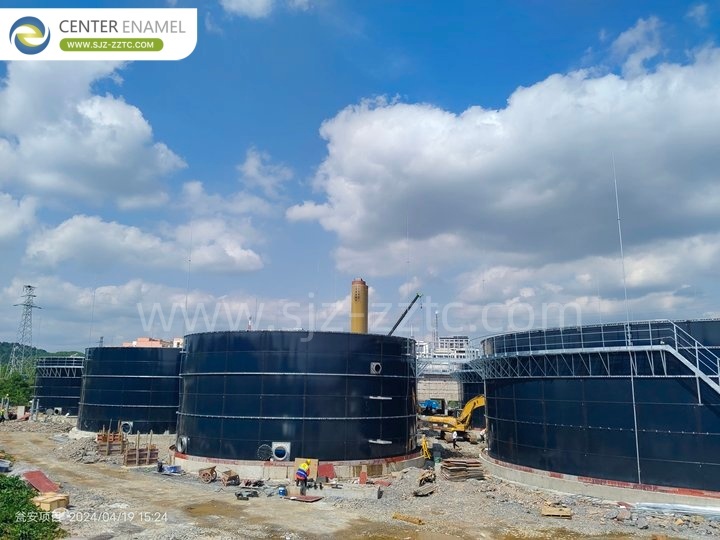
Advanced Anaerobic Technologies and CSTR Process for Thailand Food Waste Biogas Projects
| Place of Origin: | China |
| Brand Name: | CEC TANKS |
| Certification: | ISO 9001:2008, AWWA D103 , OSHA , BSCI |
| Model Number: | W |
| Minimum Order Quantity: | 1set |
| Price: | $5000~$20000 one set |
| Packaging Details: | PE poly-foam between each two steel plates ; wooden pallet and wooden |
| Delivery Time: | 10-30 days after deposit received |
| Payment Terms: | L/C, T/T |
| Supply Ability: | 60 sets per month |
|
Detail Information |
|||
| Place of Origin | China | Brand Name | CEC TANKS |
|---|---|---|---|
| Certification | ISO 9001:2008, AWWA D103 , OSHA , BSCI | Model Number | W |
| Tank Body Color: | Dark Green / Can Be Customized | Corrosion Integrity: | Excellent |
| Steel Plates Thickness: | 3mm To 12mm , Depends On The Tank Structure | Chemical Resistance: | Excellent |
| Size Of Panel: | 2.4M * 1.2M | Easy To Clean: | Smooth, Glossy, Inert, Anti-adhesion |
| Highlight: | anaerobic digestion Thailand food waste,CSTR biogas wastewater treatment,food waste biogas project Thailand |
||
Product Description
Advanced Anaerobic Technologies and CSTR Process for Thailand Food Waste Biogas Projects
Thailand is experiencing robust economic expansion, steady population growth, and a rapidly developing tourism and hospitality sector . This dynamic socio-economic transition has drastically escalated the generation of organic waste, positioning comprehensive food waste management as a top priority for the nation's sustainable development and circular economy roadmaps . To address this intensifying environmental issue, the integration of advanced Anaerobic Technologies has emerged as a cornerstone strategy for converting organic burdens into clean, high-value renewable energy resources . Implementing full-scale Food Waste Biogas Projects featuring an optimized CSTR Process represents the current industry benchmark for achieving green growth and carbon neutrality goals across Thailand .
Sources and Environmental Hazards of Food Waste in Thailand
The enormous quantities of food waste generated daily across Thailand stem from several primary urban and commercial sectors:
Commercial and Urban Hospitality: Immense volumes of organic refuse are produced by luxury hotels, restaurants, shopping malls, corporate cafeterias, and sprawling traditional night markets in densely populated urban zones like Bangkok and Phuket .
Agro-Industries and Manufacturing: Significant amounts of organic residues, residual fruit and vegetable crop materials, and processing wastes originate from localized agricultural processing units and food manufacturing facilities .
When left unmanaged, this staggering load of organic waste poses severe threats to public health and local environments . Deposited in open municipal dumps or poorly designed landfills, it undergoes rapid, uncontrolled anaerobic decomposition, releasing massive amounts of methane ($CH_4$)—a highly potent greenhouse gas that significantly worsens global climate change . Furthermore, the resulting high-strength, toxic leachate permeates the surrounding soil and contaminates precious groundwater reserves, while producing foul, noxious odors and attracting dangerous disease vectors that threaten nearby communities .
How Food Waste Transforms into Biogas
The biological transformation of complex food waste into reliable clean energy is achieved through anaerobic digestion, a multi-stage process where specialized microorganisms systematically break down organic substances in an environment completely devoid of oxygen . The digestion pathway proceeds through four essential biological stages :
Hydrolysis: Complex, heavy organic polymers (proteins, carbohydrates, and lipids) are initially dissolved and broken down into simple, soluble monomers like amino acids, sugars, and fatty acids .
Acidogenesis: Specialized acid-forming bacteria ferment these newly formed monomers, transforming them into volatile fatty acids (VFAs), lactic acids, and alcohols .
Acetogenesis: Acetogenic microorganisms further break down the VFAs and alcohols, synthesizing them into acetic acid, carbon dioxide ($CO_2$), and hydrogen gas ($H_2$) .
Methanogenesis: In the final critical phase, highly specialized methanogenic archaea consume the accumulated acetic acid and hydrogen to output biogas, which primarily consists of methane ($CH_4$) and carbon dioxide ($CO_2$) . This captured biogas can be directly utilized for green electricity generation, clean industrial thermal heating, or refined into compressed biomethane .
Core Anaerobic Technologies: CSTR, UASB, USR, and IC
Deploying the optimal bioreactor design is critical for successfully managing the highly variable and dense composition of food waste . Center Enamel excels at engineering four primary anaerobic processes customized for distinct waste properties :
CSTR (Continuous Stirred Tank Reactor): The CSTR Process is uniquely suited for high-solid organic waste substrates such as thick kitchen slurries, food processing residues, and fruit pulp . Its continuous mechanical mixing mechanism ensures a completely homogeneous environment, preventing surface scum crusting and maximizing volatile solids destruction .
UASB (Upflow Anaerobic Sludge Blanket): A high-rate liquid treatment process perfectly configured for liquid-phase food processing wastewater with moderate organic loads . Liquid waste flows vertically through a dense, self-granulating anaerobic sludge blanket, achieving exceptional chemical oxygen demand (COD) removal rates within a highly compact footprint .
USR (Upflow Solids Reactor): Specifically engineered to process waste streams containing heavy concentrations of suspended solids (SS) . By extending the retention time of heavy solid organic particles inside the reactor, it ensures total biological breakdown and dramatically improves overall biogas yields .
IC (Internal Circulation) Reactor: An advanced, next-generation ultra-high-rate reactor that leverages a dual-stage internal circulation loop propelled automatically by self-generated biogas . Capable of handling extreme organic loading rates, it is ideal for large-scale, high-volume industrial processing and brewery operations .
The Advantages of GFS Tanks in Thailand Food Waste Biogas Projects
The long-term operational success of a Food Waste Biogas Project depends directly on the structural integrity of its main containment reactors . Center Enamel implements its proprietary GFS Tanks (Glass-Fused-to-Steel) to deliver elite structural performance :
Unmatched Corrosion and Chemical Resistance: Food waste digestion creates an aggressive environment full of volatile organic acids and highly corrosive hydrogen sulfide ($H_2S$) gas . The inert glass layer molecularly fused to the steel plates forms an impermeable barrier that resists intense chemical wear, vastly outlasting standard carbon steel or concrete .
Seismic and Structural Resilience: To protect against unexpected structural shifts, the modular, bolted layout of GFS Tanks provides built-in structural elasticity, giving the tanks far superior flexibility and impact resistance compared to rigid, crack-prone concrete infrastructure .
Rapid Modular Assembly and Logistics: Prefabricated completely off-site, GFS Tanks are delivered modularly and assembled swiftly utilizing specialized top-down jacking systems . This eliminates prolonged on-site concrete pouring and curing times, significantly lowering specialized labor needs and minimizing plant disruption .
Scalable and High-Density Footprint: The optimized vertical profile of bolted steel tanks maximizes volumetric fluid storage within a heavily minimized land footprint, allowing facilities to seamlessly expand modularly as incoming waste volumes grow .
Why Partner with Center Enamel for Biogas Projects
Collaborating with Center Enamel as an experienced turnkey EPC partner delivers exceptional technological and operational advantages :
Complete End-to-End Turnkey Integration: We handle the full lifecycle of the project, including tailored process design, advanced manufacturing, system procurement, rapid field installation, and automated PLC control systems integration .
Customized Engineering Excellence: Because organic food waste profiles change drastically by region and culinary culture, our technical team precision-engineers each anaerobic layout to flawlessly match local raw substrates and regional environmental criteria .
Comprehensive Technology Suite: In addition to manufacturing premium GFS Tanks, we design and integrate essential auxiliary systems, including double-membrane biogas holders, heavy-duty mixers, and specialized biogas purification systems .
Global Track Record: With countless successful waste-to-energy projects built across more than 100 countries, Center Enamel seamlessly adapts proven international innovations to comply with Thailand's industrial regulations and distinct climate conditions .
Proven Project Reference Case Studies
Center Enamel's robust engineering capabilities and global project footprint are reflected in our premier large-scale biogas installations :
Case1: Indonesia Biogas Project
Application: Anaerobic Reactors for Palm Oil Wastewater Treatment Plant
Tank Models: Ø17.58 × 8.4 m; Ø16.82 × 7.2 m
Number of Tanks: 3 GFS Tanks
Installation Date: 2013
Case2: Turkey Food Waste Treatment Project
Process: CSTR
Tank Dimensions: φ16.81 × 16.8 m (H) — 2 Units Unit
Total Volume: 7,452 m³
Completion Date: 2020
Building resilient, sustainable waste infrastructure is crucial as Thailand aggressively drives its green transition toward an eco-friendly, zero-waste economy . Deploying specialized Food Waste Biogas Projects powered by advanced anaerobic processes like the CSTR Process and premium GFS Tanks provides municipal bodies and commercial food industries with a definitive, profitable pathway to eliminate heavy environmental liabilities . By entering a strategic partnership with Center Enamel, stakeholders unlock direct access to top-tier international engineering, field-proven Anaerobic Solutions, and highly durable containment systems . This comprehensive approach easily satisfies modern environmental protection mandates, significantly minimizes localized waste management costs, and generates a consistent stream of renewable energy—ensuring that Thailand's long-term green development and climate goals are met with outstanding technical and commercial success .