-
Glass Fused To Steel Tanks (596)
-
Stainless Steel Tanks (434)
-
Fusion Bonded Epoxy Tanks (592)
-
Galvanized Steel Tanks (321)
-
Aluminum Dome Roofs (1316)
-
Wastewater Storage Tanks (231)
-
Welded Steel Tanks (457)
-
Pressure Vessels (295)
-
Anaerobic Digester (201)
-
Industrial Water Tanks (349)
-
Glass Lined Steel Tanks (180)
-
Bolted Steel Tanks (390)
-
Sludge Storage Tank (115)
-
Biogas Storage Tank (173)
-
Leachate Storage Tanks (133)
-
Agricultural Water Storage Tanks (179)
-
Fire Water Tank (166)
-
Grain Storage Silos (146)
-
Biogas Projects (425)
-
Wastewater Treatment Projects (788)
-
Double Membrane Roof (223)

|
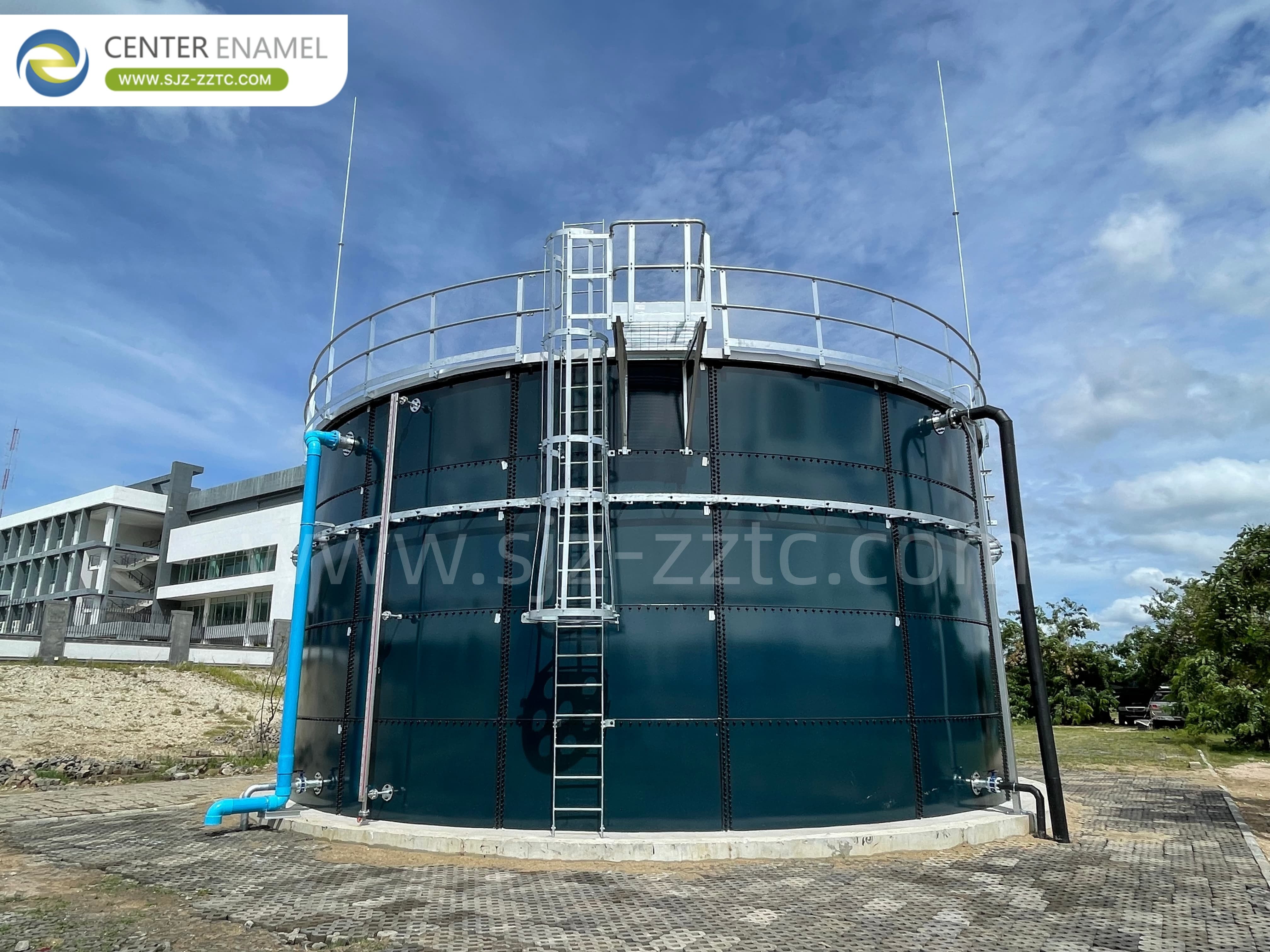
Leading Biogas Solutions and GFS Tanks for Bangladesh Chicken Manure Biogas Project
| Place of Origin: | China |
| Brand Name: | CEC TANKS |
| Certification: | ISO 9001:2008, AWWA D103 , OSHA , BSCI |
| Model Number: | W |
| Minimum Order Quantity: | 1set |
| Price: | $5000~$20000 one set |
| Packaging Details: | PE poly-foam between each two steel plates ; wooden pallet and wooden |
| Delivery Time: | 10-30 days after deposit received |
| Payment Terms: | L/C, T/T |
| Supply Ability: | 60 sets per month |
|
Detail Information |
|||
| Place of Origin | China | Brand Name | CEC TANKS |
|---|---|---|---|
| Certification | ISO 9001:2008, AWWA D103 , OSHA , BSCI | Model Number | W |
| Tank Body Color: | Dark Green / Can Be Customized | Corrosion Integrity: | Excellent |
| Steel Plates Thickness: | 3mm To 12mm , Depends On The Tank Structure | Chemical Resistance: | Excellent |
| Size Of Panel: | 2.4M * 1.2M | Easy To Clean: | Smooth, Glossy, Inert, Anti-adhesion |
| Highlight: | biogas solutions for chicken manure,GFS tanks for wastewater treatment,Bangladesh biogas project tanks |
||
Product Description
Leading Biogas Solutions and GFS Tanks for Bangladesh Chicken Manure Biogas Project
As Bangladesh actively pursues agricultural modernization and works to enhance domestic livestock networks to secure food self-sufficiency, the national poultry industry has undergone a massive transition. Traditional, small-scale backyard farming methods are rapidly being replaced by intensive, highly automated broiler and layer chicken production facilities. While this structural shift successfully satisfies the rising domestic demand for poultry meat and eggs, it simultaneously generates an immense volume of "high-strength" agricultural waste. Managing this concentrated livestock effluent effectively has become a critical environmental and operational challenge for poultry producers across the country.
Environmental Hazards of Direct Chicken Manure Discharge
In Bangladesh’s tropical monsoon climate, which is characterized by heavy seasonal flooding and high temperatures, the improper management or direct discharge of untreated chicken manure poses severe environmental risks:
Water Resource Contamination: Torrential rainwater runoff from open manure storage areas easily leaches high concentrations of nitrates, phosphorus, and organic pollutants into local river basins and vital groundwater networks. This triggers rapid eutrophication, depleting dissolved oxygen and devastating freshwater aquatic life.
Atmospheric Emissions: The uncontrolled decomposition of poultry litter releases substantial amounts of ammonia ($NH_3$) and methane ($CH_4$). As a highly potent greenhouse gas, uncaptured methane significantly impacts regional air quality and complicates national climate mitigation efforts.
Biosecurity and Community Tension: Intensive poultry operations located near expanding residential zones often face community pushback due to intense odor profiles and pest breeding. Furthermore, untreated avian waste serves as a biological reservoir for dangerous pathogens, compromising strict farm biosecurity.
Wastewater Treatment Policies in Bangladesh
To address these escalating ecological hazards, the Government of Bangladesh, through the Ministry of Environment, Forest and Climate Change (MoEFCC) and the Department of Environment (DoE), has steadily tightened effluent discharge standards for agricultural enterprises. Environmental protection regulations mandate that commercial livestock operations adopt standardized waste stabilization and pollution control systems. Concurrently, national green energy initiatives and renewable energy policies actively encourage the integration of waste-to-energy technologies, transforming compliance from a regulatory burden into a sustainable economic driver.
From Waste to Energy: The Chicken Manure Biogas Process
Converting high-solid chicken manure into valuable bioenergy relies on a highly structured, multi-stage anaerobic digestion process:
Pre-treatment and Collection: Chicken manure and farm wash-water are systematically collected and transferred to a homogenization sump where optimal total solids (TS) concentrations are adjusted.
Anaerobic Digestion: The prepared slurry is introduced into a sealed anaerobic reactor where specialized microbial communities break down complex organic polymers via four synchronized biological stages: hydrolysis, acidogenesis, acetogenesis, and methanogenesis.
Biogas Capture: The ultimate biological byproduct is raw biogas (composed primarily of methane), which accumulates securely at the top of the digestion system.
Resource Maximization: The harvested biogas is desulfurized to remove corrosive hydrogen sulfide ($H_2S$) and channeled into a Combined Heat and Power (CHP) unit to generate onsite electricity and heat, while the nutrient-rich digestate is recovered as premium organic fertilizer.
Advanced Engineering: Specialized Anaerobic Processes
Center Enamel designs and delivers an array of core anaerobic process technologies tailored to accommodate varying agricultural wastewater and solids profiles:
Anaerobic Solutions & CSTR Process: The CSTR (Completely Stirred Tank Reactor) process is widely considered the gold standard for high-solids livestock waste like chicken manure. It utilizes continuous mechanical agitation to keep heavy solids uniformly suspended, entirely eliminating sludge settling or scum formation, ensuring continuous gas production.
USR (Upflow Solids Reactor): Engineered explicitly for high suspended solids (SS) streams, offering excellent organic loading rates and maximum breakdown of dense organic fibers.
UASB (Upflow Anaerobic Sludge Blanket): Perfectly suited for liquid effluents, utilizing a dense granular sludge bed to achieve high-efficiency Chemical Oxygen Demand (COD) reduction.
IC (Internal Circulation) Reactor: A highly specialized, high-rate system that utilizes internal gas-lift circulation, ideal for high-volume, deep treatment of industrial-scale agricultural wastewater.
Application Advantages of GFS Tanks in Chicken Biogas Projects
For rural and industrial anaerobic digester construction, Glass-Fused-to-Steel (GFS) tanks serve as the premium choice for reactor infrastructure:
Unmatched Corrosion Resistance: The chemical fusion of glass onto steel sheets creates an inert barrier that easily withstands aggressive $H_2S$ gas and volatile fatty acids generated during poultry waste digestion.
Rapid Modular Construction: GFS tanks are bolted together seamlessly onsite. This eliminates the long curing times associated with concrete structures, allowing for rapid deployment in remote farming areas.
Climatic Resilience: Designed to handle Bangladesh’s continuous high humidity, intense tropical rainfall, and seasonal flooding without cracking, peeling, or structural degradation.
Minimal Maintenance & Longevity: The smooth, ultra-low-friction enamel surface prevents scale buildup, ensuring a dependable service lifespan exceeding 30 years with exceptionally low maintenance costs.
Why Choose Center Enamel?
Partnering with Center Enamel guarantees distinct engineering and operational advantages for modern agricultural biogas facilities:
Full EPC Turnkey Capabilities: We offer comprehensive project packages, encompassing biological process calculation, specialized tank manufacturing, pipeline integration, onsite installation, and final system commissioning.
Global Standard Compliance: Our engineering designs and GFS tank fabrications comply strictly with premier international standards, including AWWA D103, OSHA, and ISO certifications, guaranteeing structural safety.
Decades of Proven Expertise: With a robust international portfolio covering successful project deployments across more than 100 countries, Center Enamel possesses the technical depth to adapt wastewater and biogas systems to specific regional climates and feedstock variations.
Global Success Stories: Proven Project Cases
Case1: France Biogas Project
Process Stage: CSTR
Tank Dimensions: φ18.33 × 8.4 m (H) — 1 Unit
Total Volume: 2,215 m³ — 1 Unit
Completion Date: 2021
Case2: Canada Biogas Project
Tank Dimensions: φ8.4 × 7.2 m (H) — 2 Units
Total Volume: 798 m³
Completion Date: 2024
For Bangladesh's expanding poultry sector, integrating advanced chicken manure biogas solutions using the high-efficiency CSTR process and Glass-Fused-to-Steel (GFS) tanks represents a major milestone toward environmental and operational sustainability. Center Enamel’s specialized engineering expertise empowers local poultry producers to comfortably meet strict national environmental standards while drastically reducing operational utility costs. By transforming hazardous avian waste into reliable, renewable electricity and high-grade organic fertilizer, Bangladeshi farms can easily establish a profitable circular economy. This advanced infrastructure effectively protects the nation’s pristine natural ecosystems, controls agricultural odor, and enhances long-term food security for decades to come.