-
Glass Fused To Steel Tanks (596)
-
Stainless Steel Tanks (434)
-
Fusion Bonded Epoxy Tanks (592)
-
Galvanized Steel Tanks (321)
-
Aluminum Dome Roofs (1316)
-
Wastewater Storage Tanks (231)
-
Welded Steel Tanks (457)
-
Pressure Vessels (295)
-
Anaerobic Digester (201)
-
Industrial Water Tanks (349)
-
Glass Lined Steel Tanks (180)
-
Bolted Steel Tanks (390)
-
Sludge Storage Tank (115)
-
Biogas Storage Tank (173)
-
Leachate Storage Tanks (133)
-
Agricultural Water Storage Tanks (179)
-
Fire Water Tank (166)
-
Grain Storage Silos (146)
-
Biogas Projects (425)
-
Wastewater Treatment Projects (788)
-
Double Membrane Roof (223)

|
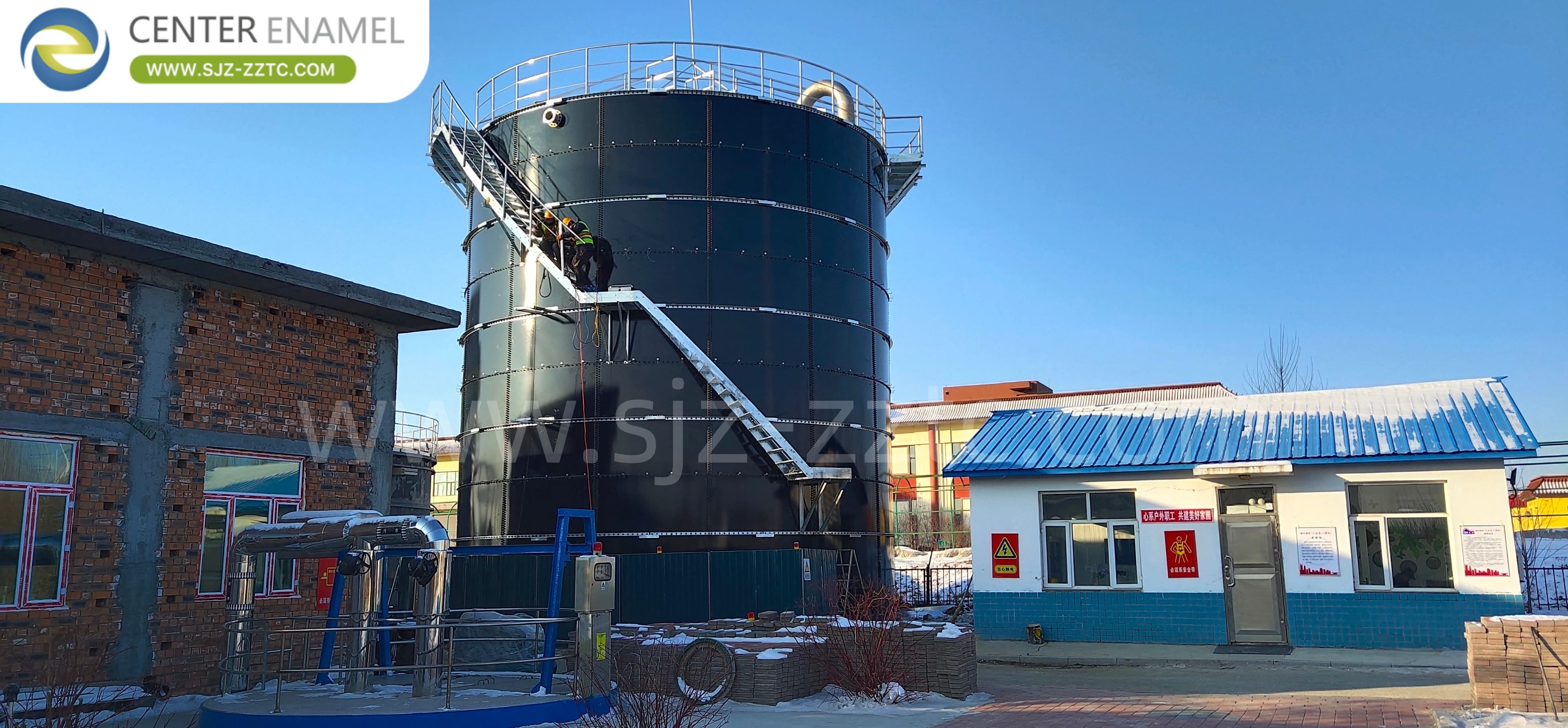
Transforming Pig Waste: Advanced Anaerobic Solutions and GFS Tanks in Bangladesh
| Place of Origin: | China |
| Brand Name: | CEC TANKS |
| Certification: | ISO 9001:2008, AWWA D103 , OSHA , BSCI |
| Model Number: | W |
| Minimum Order Quantity: | 1set |
| Price: | $5000~$20000 one set |
| Packaging Details: | PE poly-foam between each two steel plates ; wooden pallet and wooden |
| Delivery Time: | 10-30 days after deposit received |
| Payment Terms: | L/C, T/T |
| Supply Ability: | 60 sets per month |
|
Detail Information |
|||
| Place of Origin | China | Brand Name | CEC TANKS |
|---|---|---|---|
| Certification | ISO 9001:2008, AWWA D103 , OSHA , BSCI | Model Number | W |
| Tank Body Color: | Dark Green / Can Be Customized | Corrosion Integrity: | Excellent |
| Steel Plates Thickness: | 3mm To 12mm , Depends On The Tank Structure | Chemical Resistance: | Excellent |
| Size Of Panel: | 2.4M * 1.2M | Easy To Clean: | Smooth, Glossy, Inert, Anti-adhesion |
| Highlight: | pig waste anaerobic treatment solutions,GFS tanks for wastewater treatment,Bangladesh wastewater treatment projects |
||
Product Description
Transforming Pig Waste: Advanced Anaerobic Solutions and GFS Tanks in Bangladesh
As Bangladesh continues to enhance its agricultural productivity and diversify its livestock sector, the swine industry—though a niche market compared to poultry—is gaining recognition for its role in supporting specific local communities and regional food security. However, the transition toward organized farming brings a critical environmental challenge: the management of high-strength organic waste. For pig farms across Bangladesh, adopting advanced Anaerobic Solutions is no longer a choice but a strategic necessity to balance industrial growth with environmental stewardship. By combining high-efficiency processes like the IC (Internal Circulation) Reactor with durable Glass-Fused-to-Steel (GFS) Tanks, farm operators are successfully turning hazardous pig manure into a source of clean, renewable energy.
The Landscape of Bangladesh’s Swine Sector
The swine industry in Bangladesh is primarily concentrated in specific regions, including the Chittagong Hill Tracts and areas with diverse ethnic communities. While traditionally a small-scale subsistence activity, there is a gradual shift toward more intensive management to improve yield and biosecurity. This modernization supports local livelihoods but generates concentrated volumes of "high-strength" organic waste. Pig manure is particularly challenging to treat due to its high organic loading, high ammonia levels, and the presence of suspended solids, requiring sophisticated anaerobic digestion technology for effective stabilization.
Environmental Hazards of Direct Pig Manure Discharge
In Bangladesh’s unique riverine and flood-prone geography, the direct discharge or improper disposal of pig manure leads to severe environmental hazards:
Water Contamination: Leaching of nitrates, phosphorus, and pathogens into the complex network of rivers and groundwater, which are essential for domestic use and aquaculture.
Atmospheric Pollution: The decomposition of untreated manure releases significant quantities of methane ($CH_4$) and ammonia, contributing to local air quality issues and global climate change.
Odor and Community Impact: Intensive farming near residential or water-sensitive areas often faces social pressure due to overwhelming odors and pest breeding.
Biosecurity Risks: Untreated waste serves as a reservoir for pathogens, threatening both animal health and the safety of the surrounding environment.
Wastewater Treatment Policies in Bangladesh
In response to increasing industrial and agricultural pollution, the Government of Bangladesh, through the Department of Environment (DoE), has established the "Environment Conservation Rules." These regulations set strict effluent discharge standards for livestock and industrial sectors. Furthermore, the national push for "Green Energy" and the promotion of biogas through agencies like IDCOL (Infrastructure Development Company Limited) encourage farms to adopt waste-to-energy models. Compliance with these environmental mandates is now essential for the long-term sustainability of the livestock sector.
From Waste to Energy: The Pig Manure Biogas Process
Converting pig manure into biogas is a controlled biological process that extracts maximum value from agricultural by-products:
Collection: Pig slurry and wash-water are gathered in a centralized collection sump.
Anaerobic Digestion: The organic waste is fed into an Anaerobic Reactor. Inside this oxygen-free environment, bacteria break down matter through four stages: hydrolysis, acidogenesis, acetogenesis, and methanogenesis.
Methane Capture: The primary byproduct is biogas (mostly methane), which is captured and stored within the digester system.
Resource Recovery: Purified biogas generates electricity or cooking fuel, while the remaining nutrient-rich digestate serves as high-quality organic fertilizer for local crops.
Advanced Engineering: Specialized Anaerobic Processes
Center Enamel provides a suite of anaerobic technologies designed to handle varying livestock wastewater characteristics:
IC (Internal Circulation) Reactor: A high-rate reactor that utilizes internal gas-lift to circulate water. It is perfect for large-scale operations requiring high-efficiency COD removal and high organic loading rates.
CSTR (Completely Stirred Tank Reactor): The standard for high-solids manure, using mechanical stirring to ensure uniform digestion and prevent settling.
UASB (Upflow Anaerobic Sludge Blanket): Best for liquid-heavy effluents, utilizing a granular sludge blanket for rapid treatment.
USR (Upflow Solids Reactor): Specifically designed for waste with high suspended solids, allowing for the maximum breakdown of complex fibers.
Application Advantages of GFS Tanks in Pig Biogas Projects
For biogas projects in Bangladesh, Glass-Fused-to-Steel (GFS) Tanks are the premier choice for reactor infrastructure:
Superior Corrosion Resistance: The glass-to-steel bond protects the vessel from corrosive $H_2S$ and organic acids generated during digestion.
Rapid Modular Construction: Bolted GFS tanks can be installed quickly, even in regions with challenging logistics, significantly shortening construction timelines.
Climate Resilience: They withstand Bangladesh’s high humidity, heavy monsoon rainfall, and intense UV exposure without degradation or cracking.
Low Maintenance & Long Life: The smooth surface prevents scale buildup, ensuring a service life exceeding 30 years with minimal operational costs.
Why Choose Center Enamel?
Center Enamel is a global leader in environmental engineering with a proven track record:
Turnkey EPC Solutions: We provide comprehensive services from biological process design and tank manufacturing to onsite installation and commissioning.
International Quality Standards: Our GFS tanks are manufactured in accordance with AWWA D103, OSHA, and ISO standards, ensuring safety and performance.
Decades of Expertise: With projects in over 100 countries, we possess the engineering depth to adapt technology to local climatic and operational needs.
Advanced R&D: Continuous innovation in anaerobic technology ensures our clients receive the most efficient "waste-to-energy" systems available.
Global Success Stories: Proven Project Cases
Case1: Canada Biogas Project
Tank Dimensions: φ8.4 × 7.2 m (H) — 2 Units
Total Volume: 798 m³
Completion Year: 2024
Case2: Indonesia Biogas Project
Tank Application: Palm Oil Wastewater Treatment Plant
Tank Model: Ø19.86 × 8.4 m
Number of Tanks: 3 GFS Tanks
Installation: 7 personnel, 40 days
Installation Date: November 2009
For Bangladesh's growing swine industry, the integration of Anaerobic Solutions using the IC process and GFS tanks represents a powerful shift toward sustainable agriculture. Center Enamel’s comprehensive engineering expertise empowers farm owners to meet strict environmental regulations while significantly lowering energy costs. By converting pig manure into renewable power, farms in Bangladesh can achieve a sustainable "circular economy" that protects the nation's natural resources and enhances long-term operational profitability for decades.