-
Glass Fused To Steel Tanks (596)
-
Stainless Steel Tanks (434)
-
Fusion Bonded Epoxy Tanks (592)
-
Galvanized Steel Tanks (321)
-
Aluminum Dome Roofs (1316)
-
Wastewater Storage Tanks (231)
-
Welded Steel Tanks (457)
-
Pressure Vessels (295)
-
Anaerobic Digester (201)
-
Industrial Water Tanks (349)
-
Glass Lined Steel Tanks (180)
-
Bolted Steel Tanks (390)
-
Sludge Storage Tank (115)
-
Biogas Storage Tank (173)
-
Leachate Storage Tanks (133)
-
Agricultural Water Storage Tanks (179)
-
Fire Water Tank (166)
-
Grain Storage Silos (146)
-
Biogas Projects (425)
-
Wastewater Treatment Projects (788)
-
Double Membrane Roof (223)

|
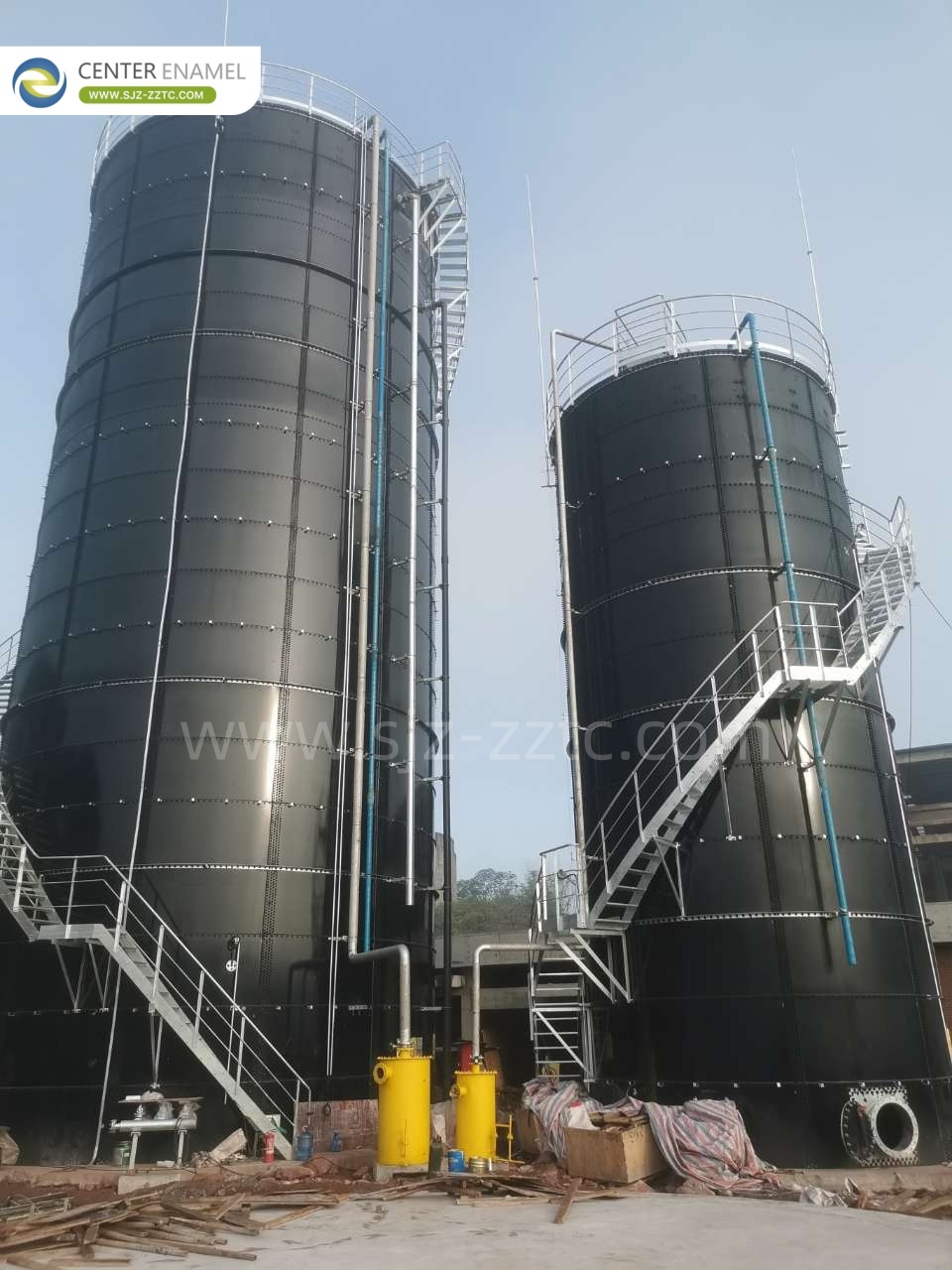
Transforming Cattle Manure: Biogas Solutions & GFS Tanks in Myanmar
| Place of Origin: | China |
| Brand Name: | CEC TANKS |
| Certification: | ISO 9001:2008, AWWA D103 , OSHA , BSCI |
| Model Number: | W |
| Minimum Order Quantity: | 1set |
| Price: | $5000~$20000 one set |
| Packaging Details: | PE poly-foam between each two steel plates ; wooden pallet and wooden |
| Delivery Time: | 10-30 days after deposit received |
| Payment Terms: | L/C, T/T |
| Supply Ability: | 60 sets per month |
|
Detail Information |
|||
| Place of Origin | China | Brand Name | CEC TANKS |
|---|---|---|---|
| Certification | ISO 9001:2008, AWWA D103 , OSHA , BSCI | Model Number | W |
| Tank Body Color: | Dark Green / Can Be Customized | Corrosion Integrity: | Excellent |
| Steel Plates Thickness: | 3mm To 12mm , Depends On The Tank Structure | Chemical Resistance: | Excellent |
| Size Of Panel: | 2.4M * 1.2M | Easy To Clean: | Smooth, Glossy, Inert, Anti-adhesion |
| Highlight: | biogas solutions for cattle manure,GFS tanks for wastewater treatment,cattle manure biogas project Myanmar |
||
Product Description
Transforming Cattle Manure: Biogas Solutions & GFS Tanks in Myanmar
As Myanmar’s agricultural sector undergoes a strategic modernization, the livestock industry—particularly cattle farming for both dairy and beef—has emerged as a vital contributor to the national economy and rural livelihoods. However, the transition toward more intensive farming practices brings a critical environmental challenge: the management of massive volumes of animal waste. For cattle enterprises across Myanmar, adopting advanced Biogas Solutions is no longer a choice but a strategic necessity to balance productivity with environmental stewardship. By combining high-efficiency anaerobic processes like the UASB (Upflow Anaerobic Sludge Blanket) with durable Glass-Fused-to-Steel (GFS) Tanks, farm operators are successfully turning hazardous cattle manure into a source of clean, renewable energy.
The Landscape of Myanmar’s Cattle Sector
Myanmar possesses a significant cattle population, traditionally used for draught power but increasingly focused on meat and milk production to meet growing domestic and regional demand. The industry is seeing a shift from backyard farming toward semi-intensive and intensive management systems. While this industrialization supports food security, it generates a significant amount of "high-strength" organic waste that requires specialized handling to prevent environmental degradation.
Environmental Hazards of Direct Manure Discharge
In Myanmar’s tropical climate, characterized by heavy monsoon seasons, the direct discharge or improper disposal of cattle manure leads to severe environmental hazards:
Water Contamination: Leaching of nitrates, phosphates, and pathogens into the Irrawaddy and Salween River basins, as well as local groundwater supplies used by rural communities.
Atmospheric Pollution: The decomposition of untreated manure releases large quantities of methane ($CH_4$) and ammonia, contributing to the local greenhouse gas footprint and air quality issues.
Soil Degradation: Excessive raw manure application can lead to nutrient overloading, affecting soil pH and long-term agricultural productivity.
Biosecurity Risks: Untreated waste serves as a breeding ground for flies and pathogens, increasing the risk of disease transmission among livestock and humans.
Wastewater Treatment Policies in Myanmar
In recent years, the Myanmar government, through the Ministry of Agriculture, Livestock and Irrigation, has been promoting sustainable farming practices. While specific livestock waste regulations are still evolving, there is a clear national push toward "Green Growth" and renewable energy adoption. New environmental guidelines encourage large-scale farms to implement standardized waste management systems to protect natural water resources and reduce carbon emissions, aligning with regional ASEAN environmental standards.
From Waste to Energy: How Cattle Manure Produces Biogas
Converting cattle manure into biogas is a controlled biological process that extracts maximum value from agricultural by-products:
Collection: Manure and shed effluent are gathered in a centralized sump or mixing tank.
Pre-treatment: The waste is often screened to adjust the solids concentration before entering the reactor.
Anaerobic Digestion: The slurry is fed into an oxygen-free reactor where bacteria break down organic matter through four biological stages: hydrolysis, acidogenesis, acetogenesis, and methanogenesis.
Biogas Capture: The process generates biogas (a mix of methane and carbon dioxide), which is stored and purified.
Energy Recovery: The purified gas is used for onsite cooking, heating, or generating electricity via a Combined Heat and Power (CHP) system.
Advanced Engineering: Specialized Anaerobic Processes
Center Enamel provides a suite of anaerobic technologies designed to handle varying livestock waste characteristics:
UASB (Upflow Anaerobic Sludge Blanket): Optimized for liquid-heavy effluents, utilizing a granular sludge blanket for rapid treatment and high-efficiency COD removal.
CSTR (Completely Stirred Tank Reactor): The standard for high-solids manure, using mechanical stirring to ensure uniform digestion and prevent settling.
USR (Upflow Solids Reactor): Specifically designed for waste with high suspended solids, allowing for the maximum breakdown of complex organic fibers.
IC (Internal Circulation) Reactor: A high-rate reactor using internal gas-lift for circulation, ideal for large-scale industrial dairy processing.
Application Advantages of GFS Tanks in Biogas Projects
For biogas projects in Myanmar, Glass-Fused-to-Steel (GFS) Tanks offer significant advantages over traditional concrete or carbon steel:
Superior Corrosion Resistance: The glass-to-steel bond creates an inert barrier against corrosive $H_2S$ and organic acids.
Rapid Modular Construction: Bolted GFS tanks can be installed quickly in remote areas without the need for large-scale concrete pouring.
Heat & UV Stability: They withstand Myanmar's intense tropical heat and UV radiation without cracking or degradation.
Expandability: The modular nature allows farms to increase tank capacity as their livestock numbers grow.
Why Choose Center Enamel?
Center Enamel is a global leader in environmental engineering with a proven track record:
EPC Capabilities: We provide turnkey solutions, covering everything from biological process design to equipment manufacturing and onsite installation.
Global Quality Standards: Our GFS tanks meet or exceed international standards like AWWA D103, OSHA, and ISO.
Decades of Expertise: With projects in over 100 countries, we understand how to adapt technology to local climatic and operational needs.
Global Success Stories: Proven Project Cases
Case1: Malaysia Biogas Project
Tank Dimensions: φ22.93 × 12.325 m (H) — 1 Unit
Total Volume: 5,087 m³ — 1 Unit
Completion Year: 2025
Case2: Indonesia Biogas Project
Application: Anaerobic Reactors for Palm Oil Wastewater Treatment Plant
Tank Models: Ø17.58 × 8.4 m; Ø16.82 × 7.2 m
Number of Tanks: 3 GFS Tanks
Installation Date: 2013
For Myanmar's growing cattle industry, the integration of Biogas Solutions using the UASB process and GFS tanks represents a powerful shift toward sustainable agriculture. Center Enamel’s comprehensive engineering expertise allows farm owners to meet environmental responsibilities while significantly lowering energy costs. By converting manure into renewable power, Myanmar’s farms can achieve a sustainable circular economy that protects natural resources and enhances long-term operational profitability.