
-
Glass Fused To Steel Tanks (596)
-
Stainless Steel Tanks (434)
-
Fusion Bonded Epoxy Tanks (592)
-
Galvanized Steel Tanks (321)
-
Aluminum Dome Roofs (1316)
-
Wastewater Storage Tanks (231)
-
Welded Steel Tanks (457)
-
Pressure Vessels (295)
-
Anaerobic Digester (201)
-
Industrial Water Tanks (349)
-
Glass Lined Steel Tanks (180)
-
Bolted Steel Tanks (390)
-
Sludge Storage Tank (115)
-
Biogas Storage Tank (173)
-
Leachate Storage Tanks (133)
-
Agricultural Water Storage Tanks (179)
-
Fire Water Tank (166)
-
Grain Storage Silos (146)
-
Biogas Projects (425)
-
Wastewater Treatment Projects (788)
-
Double Membrane Roof (223)

|
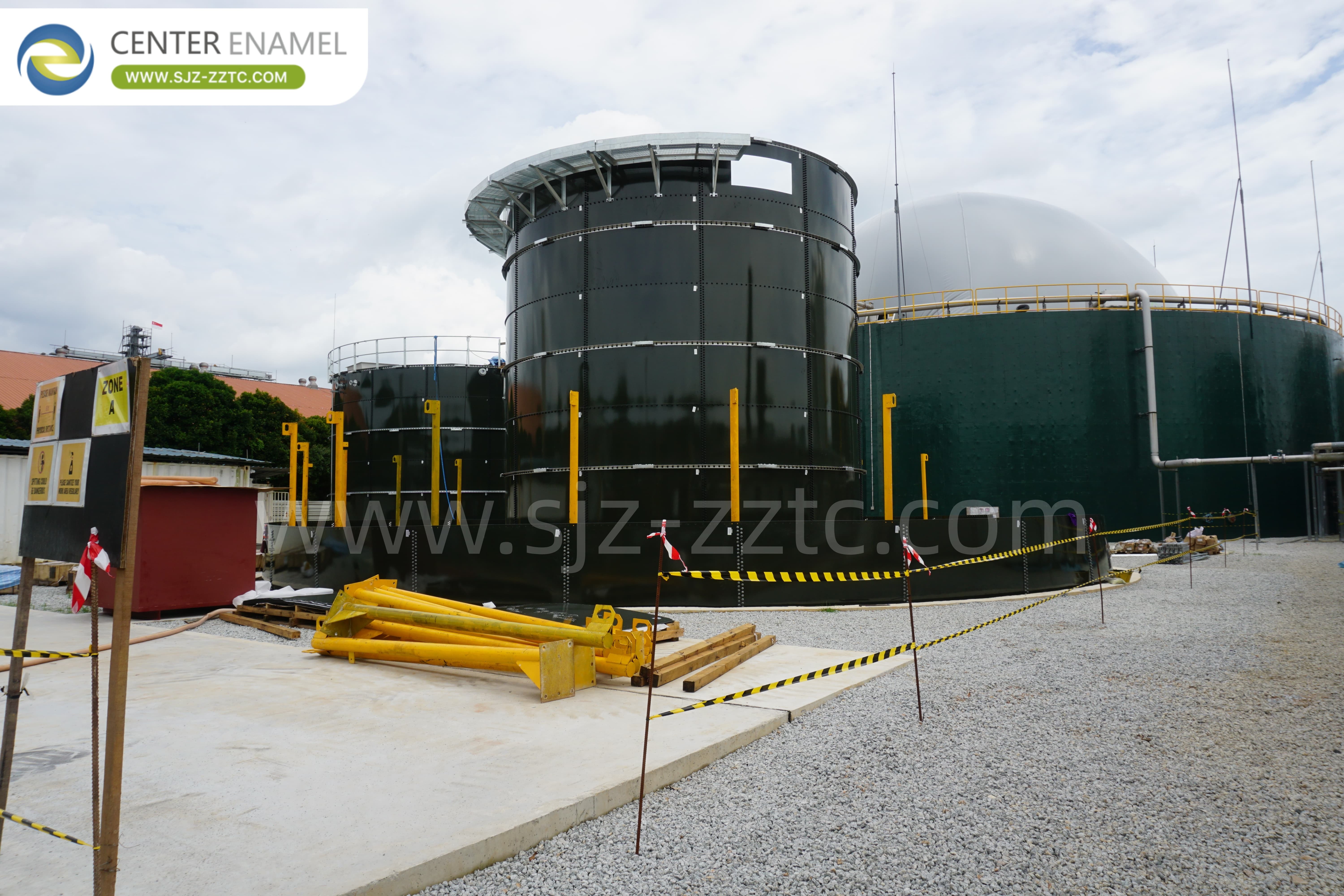
Sustainable Anaerobic Solutions for Textile Wastewater Treatment Projects in Ethiopia
| Place of Origin: | China |
| Brand Name: | CEC TANKS |
| Certification: | ISO 9001:2008, AWWA D103 , OSHA , BSCI |
| Model Number: | W |
| Minimum Order Quantity: | 1set |
| Price: | $5000~$20000 one set |
| Packaging Details: | PE poly-foam between each two steel plates ; wooden pallet and wooden |
| Delivery Time: | 10-30 days after deposit received |
| Payment Terms: | L/C, T/T |
| Supply Ability: | 60 sets per month |
|
Detail Information |
|||
| Place of Origin | China | Brand Name | CEC TANKS |
|---|---|---|---|
| Certification | ISO 9001:2008, AWWA D103 , OSHA , BSCI | Model Number | W |
| Tank Body Color: | Dark Green / Can Be Customized | Corrosion Integrity: | Excellent |
| Steel Plates Thickness: | 3mm To 12mm , Depends On The Tank Structure | Chemical Resistance: | Excellent |
| Size Of Panel: | 2.4M * 1.2M | Easy To Clean: | Smooth, Glossy, Inert, Anti-adhesion |
| Highlight: | sustainable anaerobic textile wastewater treatment,textile wastewater treatment Ethiopia,anaerobic wastewater treatment projects |
||
Product Description
Sustainable Anaerobic Solutions for Textile Wastewater Treatment Projects in Ethiopia
As a rising star in the global garment manufacturing sector, Ethiopia’s textile industry has become a primary driver of the nation’s industrialization strategy. However, this rapid growth brings significant environmental responsibilities. To ensure that industrial expansion does not compromise the country’s precious water resources, Center Enamel, a premier global EPC contractor, utilizes advanced UASB bioreactors and proprietary Glass-Fused-to-Steel (GFS) tanks to provide sustainable wastewater management for Ethiopia’s textile industrial parks.
The Landscape of the Ethiopian Textile Industry
Ethiopia has positioned itself as a competitive hub for textile and apparel manufacturing in Africa, thanks to its abundant labor force, low energy costs, and preferential trade access to Western markets. The government has established numerous state-of-the-art industrial parks, such as Hawassa and Bole Lemi, attracting major global brands and manufacturers. As the "Made in Ethiopia" label gains international recognition, the textile sector is moving toward large-scale, integrated production. This shift necessitates a sophisticated environmental infrastructure to manage the increasing volumes of industrial effluent generated by dyeing and finishing processes.
Ethiopia Textile Wastewater Challenges and Regulatory Policy
The Ethiopian government, through the Environment, Forest, and Climate Change Commission (EFCCC), has implemented strict environmental standards to protect its river basins. Most modern industrial parks in Ethiopia are designed with the mandate of Zero Liquid Discharge (ZLD) or extremely high discharge standards to safeguard the local ecosystem.
The challenges facing the industry include:
High Organic Loading: Effluent from desizing and scouring processes contains high levels of BOD and COD.
Chemical Pollution: The use of synthetic dyes and chemicals in dyeing units leads to toxic and colored wastewater that is difficult to treat through conventional methods.
Water Scarcity: In many regions, water is a finite resource, making efficient treatment and recycling essential for the continuity of manufacturing operations.
Understanding Textile Wastewater: Sources and Hazards
Textile wastewater is primarily generated during "wet processing," which includes:
Desizing & Scouring: These stages release starch-based sizing agents, waxes, and fats, leading to high organic concentrations.
Dyeing & Printing: The most visible pollutant, discharging unfixed dyes and heavy metal mordants that can devastate aquatic life.
Bleaching & Mercerizing: These steps involve the use of strong oxidants and alkalis, resulting in high pH fluctuations that require careful neutralization before biological treatment.
Integrated Textile Wastewater Treatment Process
Center Enamel provides comprehensive, integrated systems designed for the specific needs of Ethiopian textile mills:
Pre-treatment: Using mechanical bar screens and equalization tanks to regulate flow and pH. Chemical coagulation and flocculation are often used as a primary step to remove suspended solids and color.
Anaerobic Treatment (The Core Stage): Utilizing technologies like the UASB bioreactor to break down complex organic matter. This stage is crucial for reducing high COD levels while producing biogas as a byproduct.
Aerobic Post-treatment: Following anaerobic digestion, processes such as Sequencing Batch Reactors (SBR) or Activated Sludge systems are used to further reduce organic pollutants and nutrients.
Tertiary Treatment & Recovery: Utilizing Ultrafiltration (UF) and Reverse Osmosis (RO) to achieve high-quality treated water suitable for recycling back into the production process.
Core Anaerobic Technologies: CSTR, UASB, USR, and IC
Center Enamel offers a suite of anaerobic solutions tailored to different wastewater characteristics:
UASB (Upflow Anaerobic Sludge Blanket): The preferred choice for many textile projects. It uses a granular sludge blanket to treat high-volume, liquid-phase wastewater with high efficiency and a small footprint.
CSTR (Continuous Stirred Tank Reactor): Ideal for wastewater with high solid content or fibrous materials, ensuring a homogeneous reaction through constant stirring.
USR (Upflow Solids Reactor): Designed specifically for high-concentration organic wastewater with high suspended solids.
IC (Internal Circulation) Reactor: A high-rate reactor that uses the biogas produced to drive internal circulation, offering superior stability and treatment capacity for large-scale operations.
The Foundation of Excellence: Glass-Fused-to-Steel (GFS) Tanks
Center Enamel’s proprietary GFS tanks are the industry standard for wastewater storage and treatment vessels:
Superior Corrosion Resistance: The fusion of glass and steel provides an inert coating that resists the aggressive chemical nature of textile dyes and cleaning agents.
Modular and Fast Construction: The bolted design is ideal for the rapid development of Ethiopia's industrial parks, allowing for much shorter installation times compared to concrete.
Durability and Low Maintenance: With a design life exceeding 30 years, GFS tanks provide a long-term, low-maintenance solution for industrial infrastructure.
Why Choose Center Enamel as Your EPC Contractor?
As a specialized EPC contractor, Center Enamel offers:
One-Stop Solutions: From design and engineering to tank manufacturing and on-site installation.
International Expertise: With over 30 years of experience and projects in 100+ countries, we bring global best practices to Ethiopia.
Proven Reliability: Our systems are engineered to meet the strictest environmental regulations while optimizing operational costs.
Proven Success: Global Project Highlights
Case 1: Madagascar Textile Factory Wastewater Treatment Project
Tank Dimensions:
φ25.22*4.2 m (H) 1 unit
φ12.23*3.6 m (H) 1 unit
Total Volume: 2527 m³
Completion Time: 2024
Case 2: Ethiopia Textile Industry Wastewater Treatment Project
Tank Dimensions:
φ12.23*4.8 m (H) 1 unit
φ19.87*6.0 m (H) 1 unit
φ23.69*7.2 m (H) 1 unit
φ25.22*4.8 m (H) 2 units
φ24.46*6.0 m (H) 3 units
φ19.11*6.0 m (H) 1 unit
φ8.41*4.2 m (H) 1 unit
φ6.88*3.6 m (H) 2 units
φ13.76*6.0 m (H) 1 unit
φ28.28*7.2 m (H) 2 units
φ3.82*3.6 m (H) 5 units
φ17.58*6.0 m (H) 1 unit
φ4.59*3.6 m (H) 1 unit
φ6.88*3.6 m (H) 1 unit
Total tank volume: 32838 m³
Completion date: 2019
For Ethiopia's textile sector, sustainable wastewater management is the key to maintaining its competitive edge in the global market. Center Enamel’s UASB bioreactors and GFS tanks provide a powerful, cost-effective framework for addressing complex industrial effluent. By integrating advanced anaerobic digestion with robust storage solutions, we help Ethiopian manufacturers reduce their environmental impact and move closer to Zero Liquid Discharge goals. Our commitment to high-quality engineering ensures that the "Made in Ethiopia" brand remains synonymous with both excellence and environmental stewardship.